
Side Dishes
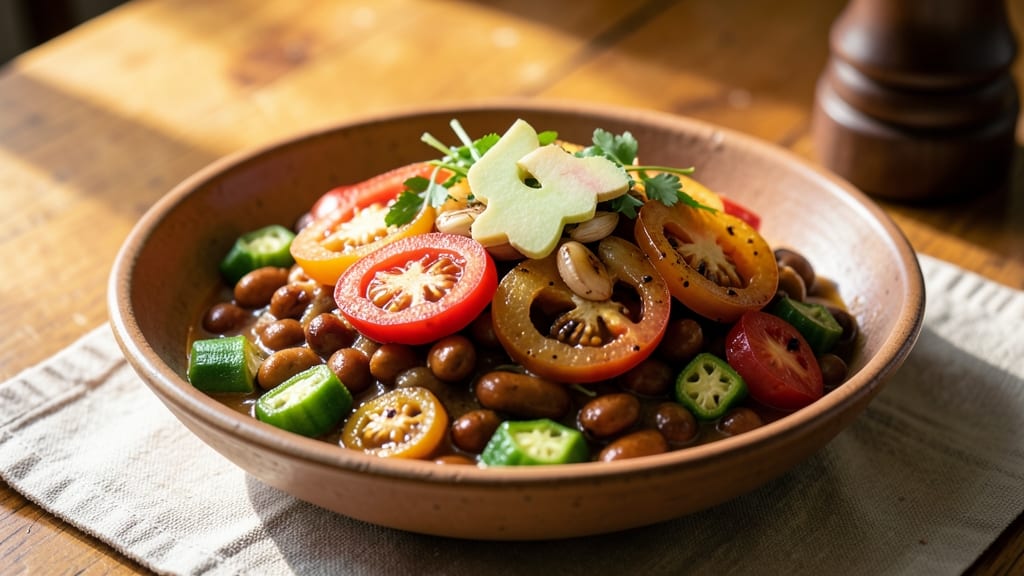
This African mung bean recipe transforms humble ingredients into a rich, okra-thickened one-pot that captures the soul of West African cuisine. The secret lies in slow-cooking mung beans with aromatic spices, tomatoes, and fresh okra until the stew develops a velvety texture and deep, savory flavor—no blender required.
I first discovered this dish while researching traditional Nigerian ewedu stew, but this version simplifies the process for home cooks while keeping the authenticity intact.
The beauty of this recipe is its versatility and heartiness—perfect as a standalone vegan meal or paired with fufu, rice, or crusty bread.
Mung beans provide a mild, nutty base that absorbs the bold flavors of ginger, garlic, and thyme, while okra naturally thickens the stew into a luscious, clingy consistency. Unlike many African dishes that require multiple pots, this one-pot method keeps cleanup minimal while delivering restaurant-quality results.
What makes this recipe special is how it balances tradition with modern convenience. The slow-cooking process (about 45 minutes) allows flavors to meld deeply, while the okra adds a subtle sliminess that's characteristic of many West African stews.
The result is a dish that's both comforting and complex—earthy from the beans, tangy from the tomatoes, and aromatic from the spices. It's the kind of meal that tastes even better the next day, making it ideal for meal prep.
Serve this stew with your choice of African grains or bread to create a complete, satisfying dish. Whether you're cooking for family, friends, or just craving a taste of home, this recipe delivers bold flavors without the fuss. Let's get cooking—your taste buds will thank you.
Ingredients for african mung bean
West African pantry staples meet fresh produce for a stew that's both comforting and complex.
| Ingredient | Amount | Notes |
|---|---|---|
| Mung Beans 🌾 | 1 ½ cups | Uncooked, rinsed thoroughly |
| Fresh Okra 🥒 | 1 lb | Trimmed, sliced into 1-inch pieces |
| Medium Tomatoes 🍅 | 4 whole | Diced, skin removed (optional) |
| Yellow Onion 🧅 | 1 whole | Diced, about 1 cup |
| Fresh Ginger 🌿 | 2 tbsp | Grated, finely chopped |
| Garlic Cloves 🧄 | 4 cloves | Minced, about 1 tbsp |
| Fresh Thyme Leaves 🌿 | ¼ cup | Chopped, stems removed |
| Ground Cumin 🌶️ | 1 tsp | Toasted for deeper flavor |
| Ground Coriander 🌿 | 1 tsp | Freshly ground preferred |
| Smoked Paprika 🌶️ | ½ tsp | For subtle smokiness |
| Salt 🧂 | 1 ½ tsp | Diamond Crystal preferred |
| Black Peppercorns 🌶️ | ½ tsp | Freshly cracked |
| Vegetable Oil 🫒 | ¼ cup | High smoke point preferred |
| Water 💧 | 6 cups | Filtered or spring water |
| Lemon Juice 🍋 | 2 tbsp | Freshly squeezed |
The mung beans are the foundation—rinsed thoroughly to remove any dirt before cooking. For okra, farmers markets often have the freshest selection, but grocery store okra works too—just look for firm pods without blemishes. Fresh thyme is ideal, but dried thyme at one-third the amount works in a pinch. The tomatoes should be ripe but firm; heirloom varieties add extra depth of flavor. If you can't find fresh okra, frozen okra slices are a decent substitute though texture will differ slightly.
No fresh thyme? Dried thyme or oregano will work, though the flavor profile shifts slightly. Want more heat? Add a pinch of cayenne or a dash of habanero powder. The smoked paprika gives this stew its signature depth—Penzeys or Goya brands are reliable sources. For the ginger, if you can't find fresh, ground ginger at half the amount is a time-saving alternative. The lemon juice brightens everything at the end, so don't skip it—freshly squeezed makes all the difference compared to bottled.
This stew tastes even better the next day as flavors meld. Store in an airtight container in the fridge for up to 5 days. For meal prep, double the recipe and freeze portions for up to 3 months. The okra will thicken the stew naturally—if it's too thin, simmer uncovered for 5-10 minutes to reduce. Serve with steamed rice or fufu to soak up all that rich, okra-thickened goodness.
Why You'll Love This Recipe
- No-Fuss Staple: I swear by this for nights when I’m too tired to think. Toss in the mung beans (soaked overnight, but you can cheat with canned if desperate), chop the okra and tomatoes roughly—no need for precision—and let the ginger and onions build flavor while you do other things.
- Umami Bomb: That ginger-onion base? It’s the star. The tomatoes break down into a tangy sauce, the okra adds a satisfying snap, and the mung beans soak it all up like a sponge. Honestly, it’s the kind of dish where every bite makes you want to reach for another spoonful.
- Leftover Goldmine: This stew only gets better after a day or two. The flavors meld, the beans soften just right, and it reheats like a dream. I’ve taken it to potlucks, packed it for work, and even served it cold in wraps—it’s that adaptable.
- Pocketbook Hero: Mung beans are dirt cheap, okra grows like weeds in my garden, and the rest of the ingredients are pantry basics. For under $5, I feed four people a hearty, protein-packed meal that actually tastes like it belongs on a table. No compromises, just smart cooking.
Step-by-Step instructions for African mung beans with okra-thickened flavor
This hearty one-pot dish delivers rich, spiced mung beans with okra's natural thickening power.
Prepare the Base Ingredients
Start by rinsing the 1.5 cups mung beans thoroughly under cold water to remove any debris. In a large pot, heat the 0.25 cup vegetable oil over medium heat until shimmering. Add the 1 whole yellow onion (diced) and cook for 3-4 minutes until softened and translucent. This forms the aromatic foundation.
Add the 2 tbsp fresh ginger and 4 cloves garlic cloves (minced), stirring for 30 seconds until fragrant. Immediately add the 1 tsp ground cumin, 1 tsp ground coriander, and 0.5 tsp smoked paprika, mixing for 20 seconds to toast the spices and release their flavors. The spices should smell deeply aromatic—this is your flavor anchor.
Build the Okra-Thickened Broth
Increase heat to medium-high and add the 1 lb fresh okra (sliced) and 4 whole medium tomatoes (diced). Cook for 5-6 minutes, stirring occasionally, until the okra begins to soften and release its natural thickening properties. The mixture should develop a slightly sticky texture as the okra breaks down.
Pour in the 6 cups water and bring to a gentle boil. Reduce heat to low and add the 1.5 tsp salt and 0.5 tsp black peppercorns (cracked). Stir to dissolve the salt completely. The broth should simmer steadily—if it bubbles too vigorously, reduce heat slightly to maintain control.
Cook the Mung Beans to Perfect Tenderness
Add the rinsed 1.5 cups mung beans to the simmering broth. Partially cover the pot and cook for 30-35 minutes, stirring occasionally, until the beans are tender but still hold their shape. You'll know they're ready when they're easily pierced with a fork but don't fall apart—this ensures they maintain texture while absorbing flavor.
After 25 minutes, add the 0.25 cup fresh thyme leaves (chopped) to infuse the dish with herbal brightness. If the broth reduces too much and becomes thick before the beans are done, add ½ cup water to maintain the proper consistency. The beans should be cooking in a flavorful, slightly thickened broth by this point.
Finish with Bright Acid and Final Adjustments
Once the mung beans are tender, stir in the 2 tbsp lemon juice and cook for an additional 2-3 minutes. This bright acidity cuts through the richness of the dish, balancing all the flavors. Taste and adjust seasoning if needed—you may need a touch more salt or pepper to enhance the overall depth.
Remove from heat and let the dish sit covered for 5 minutes. This resting period allows the flavors to meld completely and the okra to fully thicken the broth naturally. The final texture should be hearty yet tender, with a subtle okra thickness that coats each spoonful.
Serve Warm with Complementary Sides
Ladle the spiced mung beans into serving bowls, ensuring each portion gets a generous share of the flavorful broth. The dish should be served immediately while warm, as the okra-thickened texture is best enjoyed fresh. Pair with crusty bread or steamed greens to complete the meal.
This one-pot creation delivers all the warmth of African cuisine in a single, satisfying dish—perfect for hearty meals where every bite carries layers of spice and texture. The okra's natural thickening creates a luxurious mouthfeel without requiring additional thickeners, making this recipe both traditional and practical.
Pro Tips For Making African Mung Bean
- SOAK BEANS OVERNIGHT: I learned this the hard way—skipping the soak makes the beans turn to mush no matter how long you cook them. Use 2 cups of water per cup of beans, cover, and let them sit for at least 12 hours. The longer they soak, the creamier the final texture, and you’ll save 30 minutes of simmering time later.
- SLICE OKRA THINLY: Thick okra chunks stay crunchy and unappealing, while thin slices melt into the stew. Cut them into ¼-inch rounds and blanch in boiling water for 30 seconds before adding to the pot—this softens them just enough to blend without turning to slime.
- SAUTÉ ONIONS LOW AND SLOW: After burning three batches, I finally figured out that African mung bean stew isn’t a race. Cook the onions on medium-low heat for 10–12 minutes until they’re deep golden, not browned. Rushed onions add bitterness that lingers even after the tomatoes take over.
- PUREE TOMATOES FIRST: Sounds weird, but it works: Blend the tomatoes into a smooth paste before adding them to the pot. This ensures the acidity distributes evenly and prevents the okra from curdling. Skip the straining—just pulse until silky, and the sauce will be velvety without extra effort.
Creative variations of african mung bean
West African Moi Moi
Transform your mung beans into moi moi, a beloved Nigerian steamed bean pudding. Replace the okra with an extra ½ cup blended cooked mung beans mixed into the broth, then add 1 tsp baking powder and 1 tbsp tomato paste before steaming in banana leaves or parchment paper.
The result is a firm, flavorful pudding that’s perfect for celebrations. 🌿
Ghanaian Koose
For a koose-style dish, blend the cooked mung beans with ½ cup coconut milk and 1 tsp nutmeg after cooking. Serve with fufu or banku (fermented cassava) for a creamy, comforting texture.
This coastal Ghanaian variation often includes dried shrimp (optional for non-vegan versions), but the beans shine on their own with the added coconut richness. 🥥
Spicy Ethiopian Wat
Infuse your stew with Ethiopian flavors by adding 1 tbsp berbere spice blend (available at African markets) and ½ cup chopped jalapeños during the final 10 minutes of cooking.
Serve with injera (Ethiopian flatbread) for a bold, spicy twist. The berbere’s complex heat elevates the mung beans into a hearty wat—a staple in Ethiopian cuisine. 🌶️
South African Mielie-Meal Mash-Up
Blend half the cooked mung beans into a smooth paste and mix with 1 cup mielie-meal (cornmeal) and 1 cup water to create a thick, porridge-like consistency. Cook until creamy, then top with sautéed onions and a drizzle of oil. This fusion dish bridges African comfort foods beautifully. 🌽
Okra-Free Thickened Stew
Skip the okra and thicken the stew using 2 tbsp cornstarch mixed with 2 tbsp water. Stir in during the last 5 minutes of cooking for a glossy, velvety finish. This method works well for those who prefer a smoother texture without okra’s natural sliminess. 💫
Fermented Okpe Style
For a fermented twist, soak the mung beans in water with 1 tsp salt for 24 hours before cooking. The fermentation enhances umami depth, mimicking the flavor of okpe (fermented melon seeds) used in Nigerian stews. Use this method for a richer, tangier base. ⏳
Nutrition facts
Frequently asked questions
Can I substitute dried mung beans for fresh?
Use 1.5 cups dried mung beans (soaked for 4 hours or overnight) instead of the fresh variety. Dried beans need extra soaking time to soften properly. Drain and rinse well before adding to the pot to remove any excess starch that could make the stew too thick.
What if I can't find fresh okra?
Frozen okra works perfectly—just thaw it first. For a completely okra-free version, use 2 tbsp cornstarch mixed with 2 tbsp water as a thickener during the last 5 minutes of cooking. The texture will be smoother but still hearty.
How do I make this dish spicier?
Add ½ tsp cayenne pepper or 1 tbsp habanero powder when toasting the spices in Step 1. For extra heat, stir in 1 chopped Scotch bonnet pepper with the okra. Adjust to taste—African cuisine loves bold flavors, so don't be shy with the spice!
Can I make this recipe in a pressure cooker?
Yes! Use the same ingredients but reduce water to 4 cups. Cook on high pressure for 12 minutes after adding the beans, then natural release for 10 minutes. The pressure cooker cuts time by nearly half while keeping all the rich flavors intact. Perfect for busy weeknights!
What's the best way to store leftovers?
Let the stew cool completely, then store in an airtight container in the fridge for up to 5 days. For longer storage, freeze portions for 3 months. Reheat gently on the stove with a splash of water to restore the okra's natural thickness. The flavors actually improve after resting!