
Main Courses
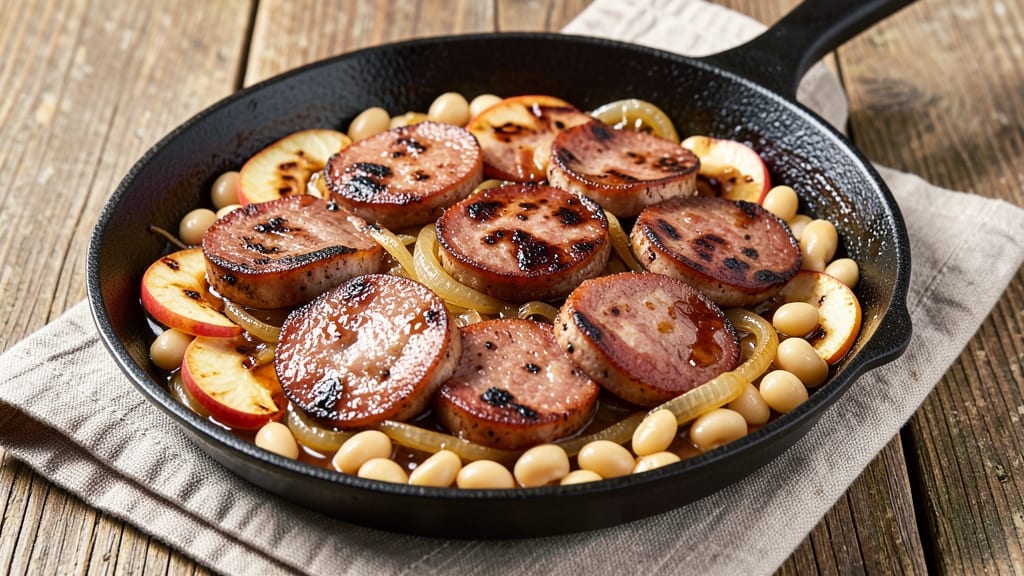
The apple sausage and white bean skillet transforms humble ingredients into a hearty, restaurant-worthy meal with just one pan and 30 minutes of hands-on time. The secret lies in crispy sausage slices and caramelized apples that create a perfect balance of smoky, sweet, and savory flavors—no fancy techniques required.
This dish proves that weeknight dinners can be both impressive and effortless, especially when you leverage the natural sweetness of apples and the rich, smoky depth of sausage.
What sets this recipe apart is the way the ingredients work together: tender white beans soak up the flavors while the sausage develops a golden, crispy crust. A touch of apple cider vinegar brightens the dish, cutting through the richness and adding a subtle tang that elevates every bite.
The result is a skillet packed with texture—crispy edges, tender meat, and creamy beans—all finished with a sprinkle of fresh herbs for a pop of color and freshness.
This skillet is versatile enough for a weeknight family dinner or a cozy weekend brunch, yet substantial enough to impress guests. The caramelized apples add a touch of sweetness that pairs beautifully with the smoky sausage, while the white beans provide a satisfying, protein-rich base.
It’s the kind of dish that tastes even better the next day, making it perfect for meal prep or leftovers.
Ready to create a dish that’s as satisfying as it is simple? The key is patience—letting the sausage sear properly and the apples caramelize slowly. Trust the process, and you’ll end up with a skillet that’s crispy on the edges, tender in the center, and packed with flavor.
Let’s get cooking!
Ingredients for apple sausage and white bean skillet
Pantry staples meet fresh produce for this smoky, sweet, and savory skillet masterpiece.
| Ingredient | Amount | Notes |
|---|---|---|
| Apple Sausage (Smoked or Sweet) 🥓 | 12 oz | Sliced into half-moons |
| Canned White Beans 🫘 | 1 ½ cups | Drained and rinsed (cannellini or great northern) |
| Apples | 2 medium | Honeycrisp or Fuji, thinly sliced (about 2 cups) |
| Yellow Onion 🧅 | 1 whole | Thinly sliced (about 1 cup) |
| Garlic Cloves 🧄 | 3 cloves | Minced for depth |
| Apple Cider Vinegar 🍎 | 1 tbsp | For brightness |
| Olive Oil 🫒 | 2 tbsp | Extra-virgin for richness |
| Dried Thyme 🌿 | 1 tsp | Or 1 tbsp fresh |
| Salt 🧂 | 1 tsp | Kosher or sea salt |
| Black Pepper 🌶️ | ½ tsp | Freshly ground |
| Fresh Parsley 🌿 | ¼ cup | Chopped for garnish |
| Vegetable Broth 💧 | ½ cup | Low-sodium preferred |
The sausage makes this dish—look for high-quality smoked or sweet varieties at Whole Foods or your local butcher. Johnsonville or Applegate are reliable brands that deliver consistent flavor. If you can't find pre-sliced, grab a pack of links and slice them yourself for even cooking. The apples? Honeycrisp or Fuji caramelize best—they hold their shape while turning tender. Thin slices ensure even cooking, so take 10 minutes to slice them uniformly. White beans? Cannellini or great northern work perfectly, but rinse them well to remove any sodium from the canning process.
No apple cider vinegar? Substitute lemon juice at the same amount—it’ll brighten the dish just as well. Fresh thyme unavailable? Dried works fine at one-third the amount, but toast it first in a dry pan for 30 seconds to deepen the flavor. The vegetable broth can be swapped for chicken broth if you prefer, though it’ll add a subtle savory note. For extra crispiness, pat the sausage slices dry before cooking—they’ll brown up beautifully. The onions can be swapped for shallots if you have them, but yellow onions give a nice sweetness that pairs perfectly with the apples.
This skillet tastes even better the next day—portion into containers for easy lunches. Store leftovers in the fridge for 4-5 days or freeze for 3 months. The flavors meld beautifully overnight, making it perfect for meal prep. To reheat, cover with a lid and warm on medium heat for 5-7 minutes, stirring occasionally. If the top seems dry, add a splash of broth or water to restore moisture. The crispy edges soften slightly, but the dish remains hearty and satisfying.
Why You'll Love This Recipe
- One-Pan Magic: I dump everything in a skillet—no chopping like a fine-diner act—and let it caramelize. The apples soften while the sausage crisps, and by the time the onions turn golden, dinner’s ready. No stress, no mess.
- Sweet-Savory Balance: That first bite? Smoky sausage meets tender apples, with garlic cutting through like a warm hug. The white beans soak it all up, turning every spoonful into something hearty yet bright—like autumn in a pan.
- Leftovers That Beg: This dish tastes better the next day. Cold or reheated, the flavors meld into something even more satisfying. I’ve packed it for lunches, served it at potlucks, and even frozen portions—proof it’s my go-to for lazy days.
- Budget-Friendly Powerhouse: Canned beans and seasonal apples keep costs low, but the result feels indulgent. Honestly, it’s the kind of meal that makes grocery money stretch without sacrificing flavor—or my family’s happiness.
Step-by-step instructions for apple sausage and white bean skillet
Here's how to create a hearty, flavorful skillet with crispy sausage and tender beans.
Sear the Apple Sausage for Crispy Edges
Heat a large skillet over medium-high heat until hot. Add the 2 tablespoons olive oil and swirl to coat the bottom evenly. Place the 12 oz apple sausage, sliced into half-moons, in a single layer. Let them cook undisturbed for 4-5 minutes until the edges develop a deep golden brown color and the sausage begins to crisp.
This initial searing is crucial for building that smoky, crispy texture that makes this dish so satisfying. I press down gently on the sausage pieces during the first minute to prevent curling, which ensures even contact with the pan. Once the sausage is browned on one side, flip and repeat on the other side for another 3-4 minutes. Remove the sausage and set it aside on a plate.
Sauté Onions and Apples for Sweet Depth
In the same skillet, reduce the heat to medium and add the thinly sliced yellow onion and thinly sliced apples. Cook for 5-6 minutes, stirring occasionally, until the onions soften and the apples begin to caramelize slightly along the edges. This process draws out their natural sweetness, which balances the savory sausage beautifully.
Here's the thing—don't rush this step. You want the onions to become translucent and the apples to develop a slight golden hue at the edges. If the apples start to brown too quickly, reduce the heat to medium-low and continue cooking until they're tender but still hold their shape. Add the 3 cloves minced garlic and cook for an additional 30 seconds until fragrant.
Deglaze and Combine All Ingredients
Pour in the 1 tablespoon apple cider vinegar and scrape up any browned bits from the bottom of the pan with a wooden spoon. This deglazing step captures all the flavor that's stuck to the skillet. Let the vinegar simmer for 1-2 minutes until it reduces slightly and the mixture smells bright and tangy.
Add the 1.5 cups drained white beans, 1 teaspoon dried thyme, 1 teaspoon salt, and 0.5 teaspoon black pepper. Stir everything together and cook for 3-4 minutes until the beans are heated through and the flavors meld. Pour in the 0.5 cup vegetable broth and the reserved sausage, then stir to combine. Let the mixture simmer for another 2 minutes to allow the broth to absorb into the beans and sausage.
Finish with Fresh Parsley and Serve
Remove the skillet from heat and stir in the 0.25 cup chopped fresh parsley. This final step adds a fresh, bright note that cuts through the richness of the sausage and beans. Taste and adjust the seasoning if needed—sometimes the beans need a little more salt, or the dish could use a splash more vinegar for brightness.
Serve the skillet immediately while it's hot, garnished with additional parsley if desired. The combination of crispy sausage, tender beans, and sweet apples creates a dish that's hearty enough for a main course but simple enough for a quick weeknight dinner. Enjoy it with crusty bread or over a bed of greens for a complete meal.
Pro Tips For Making Apple Sausage And White Bean Skillet
- CRACK THE SAUSAGE FIRST: Slice that apple sausage lengthwise before cooking—it renders fat faster and browns more evenly. I used to cut it into coins, but now I just split the casing down the middle like a hot dog bun. The fat pools at the edges and crisps up while the center stays juicy.
- PEEL AND GRATE APPLES: Skip the knife for apples—peel them first, then grate them fine (no need to remove the core). The skin adds texture, but the grating ensures they melt into the beans instead of sitting as chunks. (Yes, even if you’re impatient like me.)
- SWEAT THE ONION LOW: Don’t rush the onion—cook it on medium-low until it’s translucent and just starting to caramelize (about 8-10 minutes). I learned this the hard way: burning it turns the whole dish bitter. A splash of water or broth can save it, but prevention is easier.
- DRAIN BEANS, RINSE FAT: Drain the white beans, then rinse them under cold water to cut excess starch. While they drain, wipe the can with a paper towel to remove residual fat—it’ll keep your skillet from smoking uncontrollably. (Your future self will thank you.)
Common mistakes when making this recipe
Overcrowding the Pan
I’ve seen this happen more times than I can count—adding all the sausage slices at once and trying to cram everything into the skillet. This leads to uneven cooking, steaming instead of searing, and a final dish that’s soggy rather than crispy.
The key is patience: cook the sausage in batches if needed, and give it space to develop that golden crust. A 12-inch cast iron skillet is ideal for this recipe, but if yours is smaller, work in two batches. 🔥
Skipping the Sear
Some cooks rush through the searing step, thinking it’s optional. Big mistake! That initial 4-5 minutes of undisturbed cooking is what builds the deep, smoky flavor and crispy texture that makes this dish special.
If your sausage isn’t browned and slightly crispy, the final result will taste flat and underdeveloped. Trust the process—let it cook until it’s golden, even if it takes a little longer.
Undercooking the Apples
The apples need time to caramelize and soften, but I’ve seen recipes where they’re added too late or cooked for too short a time. If the apples are still crunchy or raw-tasting, the dish will lack that perfect sweet-savory balance.
Cook them until they’re tender but still hold their shape—about 5-6 minutes on medium heat. If they start browning too quickly, reduce the heat to medium-low to avoid burning.
Ignoring the Deglaze
Many home cooks skip the deglaze step, missing out on layers of flavor. Those browned bits stuck to the pan are packed with caramelized goodness that adds depth to the dish.
After removing the sausage, pour in the 1 tablespoon apple cider vinegar and scrape up every bit with a wooden spoon. This simple step elevates the entire skillet—don’t skip it! ✨
Overmixing the Beans
Once the beans are added, it’s tempting to stir constantly, but this can break them apart and make the dish mushy. After adding the beans, thyme, and seasonings, give everything a gentle stir and let it cook undisturbed for 3-4 minutes.
Only stir again when combining with the broth and sausage. This keeps the beans intact and the texture just right.
Letting It Sit Too Long
This skillet tastes best served fresh, but I’ve had cooks leave it on the stove too long, leading to dry, overcooked beans and soggy sausage. Once everything is combined and simmering, remove it from heat immediately after the final 2-minute cook time.
Serve it right away while the edges are still crispy and the flavors are vibrant. Leftovers are great, but the texture suffers if you let it sit too long after cooking. 💫
Nutrition facts
Frequently asked questions
Can I substitute canned white beans with dried?
Yes, but you'll need to soak them first! Use 1 cup dried white beans (about 3/4 cup cooked yield), soaking overnight in plenty of water. Drain and rinse well before using. Dried beans add more texture but require extra prep time—soak for at least 8 hours or use the quick-soak method (boil for 2 minutes, then let sit for 1 hour).
What's the best way to store leftovers?
Store in an airtight container in the fridge for up to 5 days. The flavors actually improve overnight! For freezing, portion into single servings and freeze for 3 months. Thaw in the fridge overnight—never microwave directly from frozen. Reheat gently on the stove with a splash of broth to restore moisture.
Can I make this vegetarian?
Swap the sausage for 12 oz plant-based sausage slices (like Beyond Meat or Field Roast) or 1 cup crumbled tempeh for extra protein. For a meat-free twist, add 1 cup diced mushrooms with the onions—they'll absorb all the flavors beautifully. Adjust salt if using low-sodium beans or vegetarian broth.
Why does my sausage get greasy?
Greasy sausage usually means it wasn't cooked long enough to render fat properly. For crispy results, sear the sausage 5-6 minutes total until the fat releases and the edges brown. After removing it, wipe the pan clean with a paper towel before adding onions and apples. This prevents excess oil from making the dish soggy.
How can I make this dish spicier?
Add 1/2 teaspoon smoked paprika with the thyme, or stir in 1/4 cup diced jalapeños with the apples. For heat lovers, sprinkle 1/2 teaspoon cayenne pepper at the end or serve with a side of hot sauce. The apple sweetness balances the spice perfectly—just don't overdo it or the beans will absorb too much heat.