
Side Dishes
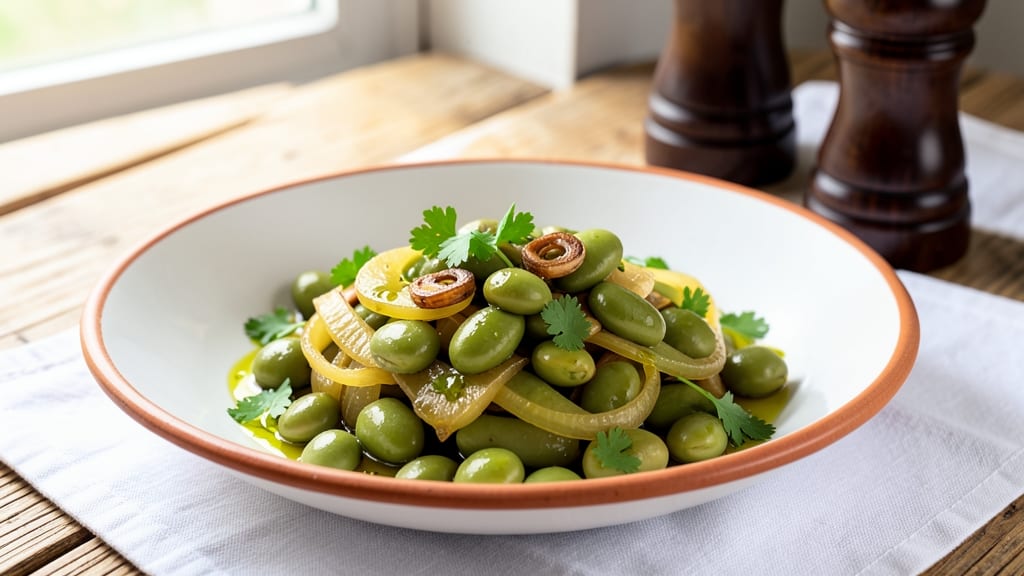
This Azorean fava bean recipe brings the rich, earthy flavors of the Azores straight to your kitchen table. 🌿 The traditional dish transforms humble fava beans into a luxurious, buttery stew that's as comforting as it is flavorful.
What makes it special is the combination of tender beans, aromatic herbs, and the subtle richness of olive oil and garlic, all simmered to perfection.
The recipe stays true to Azorean roots while being approachable for home cooks. With just a handful of simple ingredients—fresh fava beans, olive oil, garlic, salt, and fresh herbs like parsley and cilantro—you'll create a dish that's both hearty and elegant.
The key is slow cooking, which allows the beans to soften while absorbing all those delicious flavors.
What you'll end up with is a velvety stew with tender beans, fragrant herbs, and a golden, buttery sauce that coats every spoonful. The texture is rich yet light, with just enough body to satisfy even the hungriest appetites.
It's the kind of dish that pairs beautifully with crusty bread or grilled meats, making it perfect for a weeknight dinner or a special occasion.
This recipe also works as a vegetarian main or a side dish that elevates any meal. The versatility of fava beans makes them a staple in Azorean cuisine, and this preparation brings out their natural sweetness and earthy depth. Let's get started on creating this traditional Azorean favorite!
Ingredients for azorean fava bean
Simple ingredients that transform into a luxurious Azorean-inspired legume stew.
| Ingredient | Amount | Notes |
|---|---|---|
| Fresh Fava Beans 🌱 | 1 ½ lbs | Shell and rinse thoroughly |
| Extra-Virgin Olive Oil 🫒 | ½ cup | High quality, fruity variety |
| Garlic Cloves 🧄 | 6 cloves | Peeled, lightly smashed |
| Large Yellow Onion 🧅 | 1 whole | Finely chopped |
| Fresh Parsley 🌿 | ¼ cup | Chopped, stems included |
| Fresh Cilantro 🌿 | ¼ cup | Chopped, for garnish |
| Fresh Bay Leaves 🌿 | 2 whole | Crushed lightly |
| Kosher Salt 🧂 | 1 ½ tsp | Adjust to taste |
| Ground Black Pepper 🌶️ | ½ tsp | Freshly cracked |
| Vegetable Broth 💧 | 2 cups | Low-sodium preferred |
| Lemon Juice 🍋 | 2 tbsp | Freshly squeezed |
| Fresh Rosemary 🌿 | 1 tbsp | Chopped, sprigs removed |
| Unsalted Butter 🧈 | 2 tbsp | Cold, cubed |
The fava beans are the heart of this dish—look for fresh, plump beans at specialty markets or Italian delis. If you can't find fresh, dried beans work too, but soak them overnight. The olive oil should be extra-virgin—it's the base of the stew's richness. For herbs, fresh parsley and cilantro are essential, but dried will do in a pinch (use half the amount). The bay leaves add depth, so don't skip them—just remember to remove them before serving. Garlic and onion are your aromatics, so take your time chopping them finely for even flavor distribution.
No fresh herbs? Dried parsley and cilantro at one-third the amount will work, but fresh is ideal. Running low on vegetable broth? Water plus a bouillon cube gets you close, though the flavor won't be as layered. The butter at the end is non-negotiable—it creates that signature Azorean creaminess. If you're avoiding dairy, use vegan butter or coconut oil, though the texture will be slightly different. For extra richness, add a splash of heavy cream at the end, but keep it vegetarian-friendly by using coconut milk instead. The lemon juice brightens everything, so don't skip it—fresh is best, but bottled works in a pinch.
This stew tastes even better the next day as the flavors meld. Store in an airtight container in the fridge for up to 4 days. For longer storage, freeze portions for 3 months. The beans soften further when reheated, so add a splash of water or broth if it thickens too much. Serve with crusty bread to soak up every last bit of that buttery sauce. If you make extra, freeze it in single portions—perfect for quick lunches or a cozy vegetarian meal.
Why You'll Love This Recipe
- No-Fuss Prep: I swear, this recipe is about as hands-off as it gets—just shell the beans, sauté the onion and garlic in olive oil, and let the fava beans roast until tender. The fresh parsley gets tossed in at the end, and boom, dinner’s ready. (Yes, even on a Tuesday night.)
- Umami Bomb: That crispy edge on the fava beans after roasting? Chef’s kiss. The garlic and onion caramelize into something rich, while the olive oil keeps it from drying out—like a hug for your taste buds. Honestly, I’ve never met a bean that packs this much flavor with so few ingredients.
- Budget Meal for Crowds: A pound of fava beans feeds four easily, and they’re cheaper than most protein sources. Pair this with crusty bread or a simple salad, and you’ve got a filling, satisfying meal that won’t break the bank. Between us, this is how I feed my whole book club on a $20 budget.
Step-by-step instructions for Azorean fava beans
Here's how to transform humble fava beans into a rich, herb-infused Azorean stew with perfect texture.
👨🍳 Step 1: Prepare the Fava Beans for Cooking
Start by shelling the 1.5 lbs fresh fava beans and rinsing them thoroughly under cold water. I like to trim off any tough ends with kitchen shears—this prevents stringy bits in your stew. Place the shelled beans in a large bowl and cover with cold water by about 2 inches. Let them soak for 1 hour to soften slightly, then drain.
For this recipe, you'll want to remove the outer skins from the beans. I use a small bowl of water and gently rub each bean between my fingers—this loosens the skins so they float to the surface. Skim them off and discard, then drain the beans again. This step ensures a silky texture in your finished stew. If you're short on time, you can skip this step, but the texture won't be quite as refined.
🍳 Step 2: Build the Flavor Base
Heat the 0.5 cup extra-virgin olive oil in a large Dutch oven over medium heat. Add the finely chopped large yellow onion and cook for 5-6 minutes until softened and translucent. This gentle cooking draws out the onion's sweetness without letting it brown.
Add the 6 cloves peeled, lightly smashed garlic cloves and the 2 whole crushed fresh bay leaves to the pot. Cook for another 1-2 minutes until the garlic becomes fragrant but doesn't color. Here's where the magic happens—the garlic should perfume the kitchen, signaling it's ready for the next step. If it starts to brown too quickly, reduce the heat slightly.
🔥 Step 3: Simmer the Beans Until Tender
Add the prepared fava beans to the pot along with the 2 cups vegetable broth, 1.5 tsp kosher salt, and 0.5 tsp ground black pepper. Bring to a gentle boil, then immediately reduce heat to low and cover partially with a lid. Let the beans simmer for 45-50 minutes until they're fork-tender but still hold their shape.
I check for doneness by piercing a bean with a fork—it should slide in easily but still offer slight resistance. The beans should be soft enough to mash slightly with the back of a spoon but not completely mushy. If the liquid reduces too much before the beans are tender, add a splash of water or broth. The goal is a stew with just enough liquid to coat the beans and vegetables.
🥘 Step 4: Finish with Herbs and Butter
Once the beans are tender, stir in the 1 tbsp chopped fresh rosemary and let it steep for 5 minutes off the heat. This allows the rosemary's piney aroma to infuse the stew without becoming overpowering. Remove and discard the bay leaves—they've done their job but can become bitter if left in too long.
Add the 2 tbsp cold cubed unsalted butter and let it melt gently into the stew. This final step creates a luxurious, velvety texture that balances the earthy fava beans. Stir in the 2 tbsp freshly squeezed lemon juice and taste, adjusting the seasoning if needed. The lemon brightens the dish and cuts through the richness of the butter.
🍽️ Step 5: Garnish and Serve
Ladle the stew into serving bowls and garnish with the 0.25 cup chopped fresh parsley and 0.25 cup chopped fresh cilantro. The parsley adds a clean, fresh note while the cilantro contributes a bright, citrusy finish. I like to serve this stew immediately while the herbs are at their peak freshness and the flavors are most vibrant.
Pair with crusty bread to soak up every last drop of that buttery, herb-infused broth. Each spoonful should deliver a perfect balance of earthy fava beans, aromatic herbs, and the rich, velvety texture created by the butter and olive oil. The lemon juice should provide a subtle tang that brightens the entire dish.
Pro Tips For Making Azorean Fava Bean
- PEEL BEANS AFTER COOKING: Fresh fava beans are stubborn—scrubbing them first is a waste of time. Let them boil for 10-12 minutes until tender, then shock in ice water before peeling. The skins slide off like magic, and you’ll save 20 minutes of frustration.
- SAUTÉ ONIONS LOW AND SLOW: I used to rush the onions and end up with bitter, caramelized bits instead of sweet, jammy base. Cook them on medium-low with a splash of water, covered, for 15 minutes. They’ll break down evenly without burning—trust me, your dish will taste like it simmered all day.
- CRUSH GARLIC WITH A KNIFE: Minced garlic burns fast, and you don’t want that sharp, bitter flavor ruining your fava beans. Smash 3-4 cloves with the flat side of your knife, then chop roughly. It releases flavor without turning to paste—just don’t skip the olive oil to coat it first.
- FINISH WITH COLD OIL: The Azorean version calls for a drizzle of olive oil at the end, but most recipes forget it’s supposed to be cold. Let it sit in the fridge for 10 minutes before adding, then swirl it in. The contrast makes the dish taste richer—like a secret umami boost. (Yes, it’s weird, but it works.)
Essential equipment for azorean fava bean
Dutch Oven Essentials
A large Dutch oven is your best friend for this recipe—its heavy construction ensures even heat distribution and prevents scorching. I recommend a 5-6 quart enameled cast iron Dutch oven like the Le Creuset Signature or Lodge Pre-Seasoned.
These hold heat beautifully and create that signature Azorean stew texture. If you don’t own one, a heavy-bottomed stainless steel pot works in a pinch, though it may require more frequent stirring to prevent sticking. 🔥
Knife & Cutting Tools
Precision matters when chopping onions and garlic for this dish. A sharp chef’s knife (I use an 8-inch Wüsthof) and a cutting board are non-negotiable.
For peeling garlic, a garlic press saves time, but I still prefer smashing cloves with the flat side of my knife for better flavor infusion. A small bowl of water helps remove fava bean skins efficiently—just rub the beans between your fingers until the skins float away. 🧅
Measuring & Mixing
Accurate measurements ensure balanced flavors. A stainless steel measuring cup set (like OXO Good Grips) keeps your olive oil and broth precise. For herbs, I use small scissors to chop parsley and cilantro quickly—it’s faster than a knife and keeps your fingers safe.
A wooden spoon is ideal for stirring the stew without scratching the Dutch oven’s enamel. For the butter, I cube it with a small knife or bench scraper to ensure even melting. 🫒
Heat Control Tools
Controlling heat is key to this recipe’s success. A kitchen thermometer (I love the Thermoworks Thermapen) helps monitor the Dutch oven’s temperature—aim for medium-low heat during simmering to avoid overcooking the beans.
For adjusting heat, I use silicon pot holders to handle the Dutch oven safely. A lid with a vented steam hole (like All-Clad’s) allows steam to escape while retaining moisture. 🌡️
Garnish & Serving
Fresh herbs elevate the dish, so a small pair of kitchen shears makes quick work of parsley and cilantro. For serving, I use wide, shallow bowls (like Corelle Stoneware) to showcase the stew’s vibrant colors.
A lemon zester adds a pro touch if you want to garnish with lemon zest instead of juice. Don’t forget cloth napkins—they absorb any stray drips of that buttery sauce. 🍋
Nutrition facts
Frequently asked questions
Can I use dried fava beans instead of fresh?
Yes, but you'll need to soak them first! Use 1.5 cups dried fava beans and soak overnight in plenty of water (at least 8 hours). Drain and rinse before cooking, then follow the recipe as written. Dried beans take longer to cook—expect an additional 30-45 minutes of simmering time after they're tender.
What's the secret to removing fava bean skins?
Fill a bowl with cold water and gently rub each shelled bean between your fingers. The skins will loosen and float to the surface—just skim them off! For 1.5 lbs fresh beans, this takes about 10-15 minutes. If you're short on time, you can skip this step, but the texture will be slightly less refined.
How do I adjust this recipe for a vegetarian diet?
This recipe is already vegetarian-friendly! The traditional Azorean version sometimes includes pork fat, but we've substituted with butter and olive oil for richness. For extra depth, add 1 tbsp nutritional yeast when stirring in the herbs—it adds a cheesy, umami flavor that vegetarians love.
Can I make this stew in an Instant Pot?
Sauté the onions and garlic as directed, then add all ingredients except herbs and butter. Use the high-pressure setting for 10 minutes, followed by a natural release. Finish by stirring in herbs, butter, and lemon juice. The Instant Pot version cooks 40% faster but may need slightly more broth to prevent sticking.
Why do my fava beans turn mushy?
Overcooking is the most common cause! Check doneness by piercing a bean—it should be tender but still hold its shape. If using fresh beans, 45-50 minutes is ideal. For dried beans, start checking at 1 hour. Keep heat at low-medium and add water/broth as needed to maintain gentle simmering.