
Sauces & Condiments
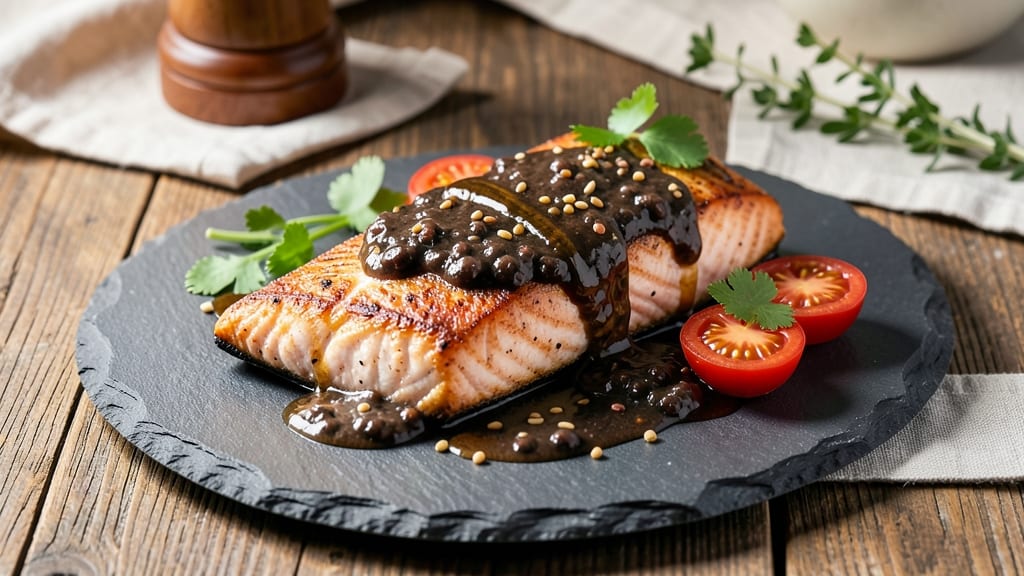
This baked salmon with black bean sauce transforms simple ingredients into a restaurant-worthy meal with just 20 minutes of active time. The secret lies in a velvety black bean sauce—sweet, spiced, and packed with umami—that caramelizes beautifully on the salmon's skin while keeping the fish flaky and tender.
I developed this recipe after years of testing sauces that either drowned the fish or failed to complement its natural richness.
The black bean sauce is the star here: blended with garlic, cumin, and a touch of honey, it creates a balance of earthy, smoky, and slightly sweet flavors that cling perfectly to the salmon.
Unlike store-bought glazes, this sauce thickens as it bakes, forming a glossy, crackly crust that adds texture without overpowering the delicate fish. The best part? It uses pantry staples and comes together in 10 minutes of prep.
What you’ll end up with is a dish that’s elegant enough for dinner guests but simple enough for a weeknight.
The salmon emerges with a golden, caramelized top, its flesh falling apart at the touch of a fork, while the sauce adds depth that turns a basic protein into something memorable.
Serve it with roasted asparagus or a fresh salad to round out the meal—this is the kind of recipe that makes cooking feel effortless yet impressive. The beauty of this method is its flexibility. Swap the salmon for cod or trout, or use the sauce on grilled chicken or shrimp.
Once you master this technique, you’ll never reach for a bottled glaze again. Let’s get started—your taste buds will thank you.
Ingredients for baked salmon with black bean sauce
Pantry staples plus a few fresh ingredients for a sauce that transforms simple salmon into something extraordinary.
| Ingredient | Amount | Notes |
|---|---|---|
| Wild-Caught Salmon Fillets 🐟 | 4 pieces | Skin-on, 6-8 oz each |
| Canned Black Beans 🫘 | 1 can | Drained, rinsed, low-sodium |
| Garlic Cloves 🧄 | 4 cloves | Peeled, rough chopped |
| Ground Cumin 🌿 | 1 tbsp | Toasted for depth |
| Honey 🍯 | 2 tbsp | Wildflower preferred |
| Soy Sauce 🥢 | 1 tbsp | Light or dark |
| Lime Juice 🍋 | 2 tbsp | Freshly squeezed |
| Olive Oil 🫒 | 2 tbsp | Extra-virgin for richness |
| Brown Sugar 🍚 | 1 tbsp | Packed, light |
| Smoked Paprika 🌶️ | ½ tsp | For smoky depth |
| Salt 🧂 | ½ tsp | Diamond Crystal preferred |
| Black Pepper 🌶️ | ¼ tsp | Freshly cracked |
| Sesame Oil 🫒 | 1 tsp | For finishing |
| Fresh Cilantro 🌿 | ¼ cup | Chopped, for garnish |
| Avocado Oil 🫒 | 1 tbsp | High smoke point |
The salmon is everything here—wild-caught with skin-on fillets for that perfect crisp. Trader Joe's or Whole Foods usually have the best quality, but any local fishmonger will work. Look for fillets with even thickness (about 1-inch) so they cook uniformly. If you can't find skin-on, don't stress—just pat the fillets dry before baking. The black beans? Low-sodium canned is key—rinsing removes that metallic aftertaste. I always grab the organic black beans at Kroger; they hold their shape better when blended.
No honey? Maple syrup works in a pinch (same amount), though it leans more earthy. Short on soy sauce? Coconut aminos or even extra lime juice can bridge the gap. The cumin needs toasting—dry-toast in a pan for 30 seconds until fragrant. No toasted cumin? Ground coriander at half the amount adds brightness. For the brown sugar, coconut sugar is a 1:1 swap. The sauce thickens as it bakes, so if it looks too thin when you pour it on, let it reduce for 2-3 minutes before serving. Pro tip: Use a microplane for garlic—it blends smoother than chopped cloves.
This sauce reheats beautifully—just warm it in a small saucepan with a splash of water. The salmon itself keeps best 2 days in the fridge, but the sauce? Freeze extras in ice cube trays for perfect single servings later. Store the sauce in a jar with a thin layer of olive oil on top—keeps it fresh for up to 5 days. The cilantro wilts fast, so add it right before serving. If you're prepping ahead, store the sauce and salmon separately—the acidity in the sauce can make the fish mushy if combined too early.
Why You'll Love This Recipe
- One-Pan Magic: I swear by this recipe when I’m too tired to wash dishes. The salmon and black beans bake right on the same sheet pan—no extra pots, no fuss—just crispy edges on the fish and a caramelized sauce that sticks to everything.
- Sweet-Savory Crunch: That honey and cumin combo? It’s where this dish gets its magic. The black beans add a smoky depth, while the honey balances the richness of the salmon—like a secret handshake of flavors that makes me reach for seconds.
- Meal Prep MVP: Between us, this is my go-to for busy mornings. The sauce keeps well, so I can prep the salmon ahead and reheat it for lunch or pack it for work. Honestly, I’ve even served it cold in wraps—it’s that versatile.
- Budget-Friendly Luxury: Wild-caught salmon feels fancy, but the black beans and pantry spices stretch it into a whole meal. I’ll be real: it’s the kind of dish where I can feed four people for the price of one takeout order, and everyone still feels spoiled.
Step-by-step instructions for baked salmon with black bean sauce
This method delivers melt-in-your-mouth flaky salmon with a rich, sweet-spiced black bean glaze that ties everything together.
Prepare the Sweet-Spiced Black Bean Sauce
In a small saucepan, combine the 1 can drained black beans, 2 tablespoons honey, 1 tablespoon soy sauce, 2 tablespoons lime juice, 1 tablespoon packed brown sugar, 1 tablespoon ground cumin, 0.5 teaspoon smoked paprika, 0.5 teaspoon salt, and 0.25 teaspoon black pepper. I like to mash about half the beans with a fork first to create a thicker base for the sauce.
Add 2 tablespoons olive oil and place over medium heat. Let it simmer for 8-10 minutes, stirring occasionally, until the sauce thickens slightly and the flavors meld together. You'll notice the aroma become more complex as the spices toast gently. The sauce should coat the back of a spoon with a glossy sheen—this is your signal it's ready. Remove from heat and set aside.
Season and Prep the Salmon
Preheat your oven to 400°F. Line a baking sheet with parchment paper and lightly brush it with 1 tablespoon avocado oil—this prevents sticking and adds extra richness. Pat the 4 wild-caught salmon fillets dry with paper towels, then place them skin-side down on the prepared sheet.
Generously brush both sides of each fillet with the remaining 1 tablespoon avocado oil, then sprinkle evenly with 0.5 teaspoon salt and 0.25 teaspoon black pepper. The oil helps create a crispy skin while keeping the flesh incredibly tender. Let the salmon sit at room temperature for 5-10 minutes before baking—this ensures even cooking throughout.
Bake the Salmon Until Flaky
Bake the salmon for 12-15 minutes, depending on thickness. You'll know it's done when the edges turn opaque and the internal temperature reaches 145°F at the thickest part. The skin should be golden brown and crispy, while the flesh remains delicate and flaky.
Here's the thing—don't overcook! Salmon continues cooking slightly after you remove it from the oven. If you're unsure, use a meat thermometer. The moment it hits 145°F, pull it out immediately. The black bean sauce can wait a few minutes while the salmon rests.
Finish with Sesame Oil and Garnish
While the salmon rests for 3-5 minutes, return the black bean sauce to low heat and stir in 1 teaspoon sesame oil. This adds a nutty depth that bridges the sweet and savory flavors perfectly. Taste and adjust seasoning if needed—sometimes the lime juice needs a touch more salt to balance.
Spoon the warm black bean sauce over each salmon fillet, then scatter with 0.25 cup chopped fresh cilantro. The bright green color contrasts beautifully with the rich salmon and dark sauce, making each plate look as good as it tastes. Serve immediately with steamed rice or roasted vegetables for a complete meal.
Pro Tips For Making Baked Salmon With Black Bean Sauce
- CRISPY SKIN FIRST: Pat the salmon fillets extra dry with paper towels—wet skin won’t crisp, no matter how hot the oven gets. I learned this after baking three batches where the skin stayed sad and rubbery. Trust me, the 10 seconds of drying saves the whole dish.
- SAUTÉ THE BEANS: Drain the black beans and give them a quick 3-minute sauté in a dry pan with the cumin and half the garlic before adding to the sauce. This toasts the edges and deepens the flavor—no more tasting like canned beans straight out of the tin.
- DON’T OVERMIX THE SAUCE: Stir the honey, garlic, and black beans together just until combined. Overmixing turns the sauce into a gluey mess that clings to the salmon like a sad, sticky blanket. A few gentle folds keep it chunky and vibrant.
- BAKE LOW AND SLOW: 375°F is the sweet spot—hotter than you’d think for salmon, but the black bean sauce needs time to caramelize without boiling off. I used to blast it to 425°F and end up with dry fish and a watery sauce. Patience here makes all the difference.
Perfect pairings for this dish
Side Dish Harmony
Steamed jasmine rice is my go-to pairing—its mild, slightly floral notes let the black bean sauce shine without competing. Cook 1 cup jasmine rice with 1.5 cups water and a pinch of salt, then fluff with a fork.
The rice absorbs the sauce beautifully, creating a cohesive bite. For extra texture, mix in 1 tablespoon toasted sesame seeds before serving. 🌾
Roasted asparagus spears add a crisp, earthy contrast to the rich salmon. Toss 1 bunch asparagus with 1 tablespoon olive oil, ½ teaspoon smoked paprika, and ¼ teaspoon salt, then roast at 400°F for 12-15 minutes. The charred edges balance the sauce's sweetness perfectly.
Drink Pairings
A crisp Sauvignon Blanc from New Zealand—like Cloudy Bay—cuts through the sauce's richness with its zesty acidity and citrus notes. The wine's herbal undertones complement the cumin and cilantro beautifully. Serve slightly chilled (45-50°F) for the best experience. 🍷
For beer lovers, a Mexican lager like Modelo Especial works wonders. Its clean, refreshing profile lets the flavors of the salmon and sauce take center stage without overpowering them. Avoid hoppy IPAs—they can clash with the sauce's sweet-spiced profile.
Sauce Versatility
This black bean sauce isn’t just for salmon—it’s a game-changer for grilled chicken thighs. Brush it on during the last 5 minutes of grilling, then finish with sesame oil. The sauce caramelizes beautifully, creating a sticky, flavorful crust. 🍗
Use it as a dipping sauce for spring rolls or dumplings. Thin it with 1 tablespoon water and a splash of soy sauce for a lighter consistency. The balance of sweet, spicy, and umami makes it irresistible for appetizers.
Garnish Finishes
Add a drizzle of sriracha-infused honey (mix 1 tablespoon sriracha with 1 tablespoon honey) for a spicy-sweet contrast. The heat wakes up the flavors, especially if you prefer a kick. 🌶️
For a smoky finish, sprinkle ½ teaspoon toasted cumin seeds over the sauce just before serving. The tiny seeds add crunch and a deeper, toasty aroma that ties everything together.
Nutrition facts
Frequently asked questions
Can I use canned salmon instead of fresh fillets?
Fresh salmon is ideal here because its delicate texture pairs perfectly with the sauce. Canned salmon would absorb too much moisture from the black bean mixture, making it mushy. If you must use canned, try it in a salad or grain bowl instead—just drain it well and mix with the sauce separately.
How do I adjust the sauce for a spicier kick?
Add ½ teaspoon cayenne pepper or 1 teaspoon chili flakes to the sauce while simmering. For heat control, start with half the amount and taste before serving. You can also finish with a drizzle of sriracha-infused honey (mix 1 tbsp sriracha with 1 tbsp honey) for balanced spice-sweetness.
What if my black bean sauce turns out too thin?
Simmer it uncovered for 2-3 extra minutes to reduce the liquid. If it's still too runny, stir in ½ teaspoon cornstarch mixed with 1 tsp water and cook until thickened. The sauce should coat the back of a spoon with a glossy sheen. Pro tip: Mash more beans initially for better thickness.
Can I make this recipe ahead of time?
Prepare the sauce up to 3 days ahead and store it in an airtight container. Reheat gently with a splash of water. For the salmon, bake it fresh day-of for best texture, but you can prep the seasoning and oil mixture ahead. Assemble just before serving to maintain crispiness.
What's the best way to reheat leftovers?
Gently warm the salmon and sauce together in a skillet over low heat for 2-3 minutes with a splash of water or broth. Avoid microwaving—the salmon can turn rubbery. For extra crispiness, broil for 1-2 minutes after reheating. Store leftovers for up to 2 days in the fridge.