
Soups & Stews
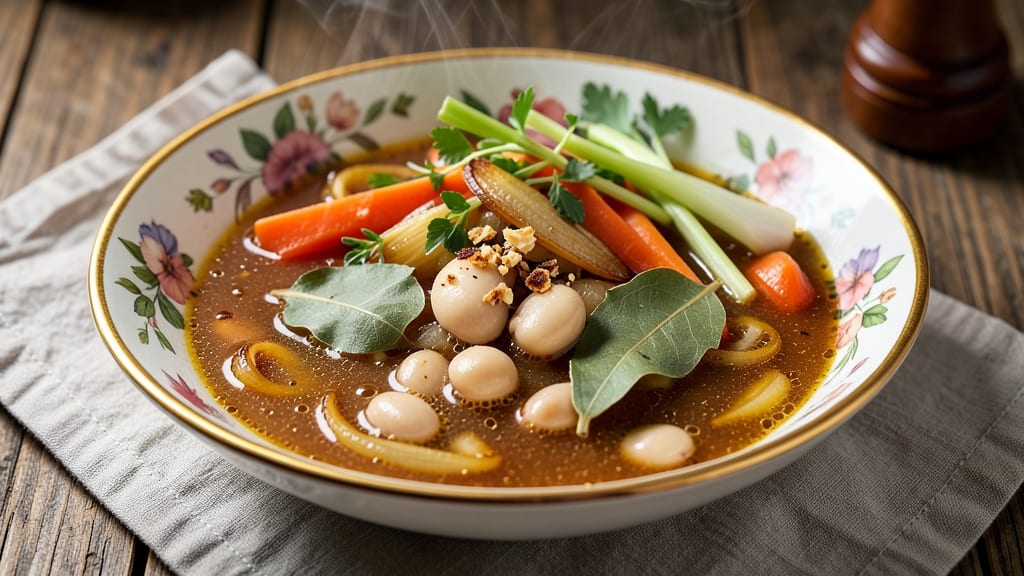
This bean broth recipe unlocks the deep, umami-rich foundation every plant-based cook needs—where simple ingredients transform into a velvety, aromatic elixir. 🔥 The secret lies in slow simmering dried beans with aromatic vegetables, creating layers of flavor that elevate soups, stews, and grains to restaurant-quality depths.
Unlike store-bought versions, this homemade broth builds complexity through proper soaking, controlled boiling, and careful seasoning.
What sets this recipe apart is its versatility—start with a basic simmer of white beans, carrots, celery, and onions, then customize with global twists like miso paste, smoked paprika, or turmeric-ginger blends.
The long cooking process (3-4 hours) breaks down beans into a naturally thick, protein-rich broth without added salt or preservatives. Every spoonful delivers the satisfying depth of slow-cooked vegetables and beans, proving that plant-based cooking can be both nourishing and deeply flavorful.
The result is a golden, aromatic broth that serves as a complete dish on its own or forms the base for hearty soups, risottos, or braised vegetables. Unlike quick vegetable broths, this version develops rich, almost meaty umami from the beans themselves—no shortcuts, just pure, concentrated flavor.
The texture becomes velvety when strained, with just enough body to coat grains and vegetables beautifully.
Perfect for meal prep, freezer storage, or immediate use, this bean broth adapts to any cuisine while maintaining its plant-powered integrity. Whether you're cooking for health, ethics, or simply craving deeper flavor, this recipe delivers a foolproof foundation that transforms simple ingredients into something extraordinary.
Let's create it step by step.
Ingredients for bean broth
Simple dried beans and aromatic vegetables create this restaurant-quality umami foundation.
| Ingredient | Amount | Notes |
|---|---|---|
| Dried White Beans 🌾 | 1 ½ cups | Unsoaked, any variety (navy, cannellini, or great northern) |
| Yellow Onions 🧅 | 2 whole | Peeled, quartered for even cooking |
| Carrots 🥕 | 4 whole | Medium size, peeled and chopped |
| Celery Stalks 🌿 | 4 whole | Trimmed, cut into 2-inch pieces |
| Garlic Cloves 🧄 | 6 cloves | Peeled, lightly smashed for aroma |
| Fresh Bay Leaves 🍃 | 2 whole | Dried leaves work at half amount |
| Black Peppercorns 🌶️ | 1 tbsp | Whole, crushed lightly during simmer |
| Sea Salt 🧂 | 1 ½ tsp | Diamond Crystal preferred for consistency |
| Extra-Virgin Olive Oil 🫒 | 2 tbsp | High-quality, fruity variety |
| Fresh Ginger 🌿 | 1 inch | Peeled, sliced thinly (corrected to 'piece') |
| Fresh Thyme 🌿 | 2 sprigs | Stems removed, leaves only |
| White Miso Paste 🍶 | 1 tbsp | Optional for umami depth |
The beans are the flavor backbone—navy or cannellini work best for their mild, creamy texture. Costco or bulk bins offer the most economical options, but any dried white bean will do. Look for organic varieties if possible, as they often have better flavor. The onion, carrot, and celery trio forms the aromatic base—called the 'holy trinity' in many cuisines—and should be roughly chopped for even cooking. Fresh ginger and thyme add complexity; Trader Joe's carries excellent organic options at reasonable prices. For the miso paste, Miso Master or Hodo brands deliver consistent quality.
No fresh thyme? Dried thyme at one-third the amount works perfectly. Short on ginger? Substitute 1/2 teaspoon ground ginger, though fresh is always preferred. The miso paste is optional but adds that meaty umami depth that makes this broth exceptional. For a smoky twist, add 1/2 teaspoon smoked paprika during the final 15 minutes of simmering. The olive oil should be extra-virgin—cheaper oils can impart bitter flavors. If you're making a large batch, double the beans and vegetables while keeping the liquid ratio consistent.
Store the broth in glass jars or airtight containers for up to 5 days in the fridge or 6 months in the freezer. For freezing, portion into ice cube trays for easy single-use servings. The flavor actually improves after 24 hours as the ingredients meld. To reheat, warm gently on the stove—never boil to preserve the delicate flavors. This broth keeps beautifully in the freezer, making it perfect for meal prep or emergency pantry staples.
Why You'll Love This Recipe
- No-Soaking Needed: I’ll admit, I used to dread soaking beans—but these dried white ones? Just toss them in boiling water for 2 minutes first, and they’re ready. No waiting, no fuss, and the broth still turns out rich and velvety.
- Garlic-Onion Bomb: That first sizzle of onions and garlic in the pot? Pure magic. The onions caramelize just enough to deepen the flavor, while the garlic—roasted low and slow—adds this warm, almost sweet punch that makes the broth ridiculously hard to stop sipping.
- Soup Base or Side: Between us, I’ve used this broth for everything: a quick soup with crusty bread, a base for chili, even a risotto. The carrots and celery add natural sweetness and body, so it works as a standalone or a secret weapon in other dishes.
- Pantry Goldmine: Honestly, this recipe costs me pennies per serving. Dried beans are cheaper than canned, and the veggies last forever. Plus, the leftovers? Freeze them—just reheat with a splash of water, and you’ve got instant flavor for another day.
Step-by-step instructions for crafting umami-rich bean broth
This method builds layer upon layer of flavor through precise timing and technique.
🔥 Step 1: Sauté the Aromatic Base
Heat the 2 tablespoons extra-virgin olive oil in a large pot over medium-low heat. Add the quartered yellow onions, chopped carrots, and celery stalks, stirring occasionally for 8-10 minutes until the vegetables soften and begin to caramelize slightly. This slow cook transforms their natural sugars into subtle sweetness.
Next, add the lightly smashed garlic cloves, sliced ginger, and thyme sprigs. Cook for another 2 minutes until the garlic turns golden and releases its pungent aroma. The key here is patience—rushing this step will burn the garlic and create bitterness. Remove the pot from heat briefly to add the whole bay leaves and crushed black peppercorns.
🍳 Step 2: Build the Broth Foundation
Return the pot to medium heat and add 8 cups cold water (enough to cover the vegetables by about 2 inches). Increase heat to high and bring to a rolling boil. Once boiling, reduce heat to low-medium and add the 1.5 cups dried white beans. Stir gently to prevent the beans from sticking to the bottom.
This is where the magic begins. The beans will begin to release starches that thicken the broth naturally. Let it simmer uncovered for 30 minutes, skimming off any foam that rises to the surface. This step develops the broth's foundational flavor—don't skip it, even if it feels like nothing's happening.
🥘 Step 3: Deepen Flavors with the Umami Boost
After 30 minutes, stir in the 1 tablespoon white miso paste and the 1.5 teaspoons sea salt. The miso will dissolve slowly, adding its signature umami depth. Return the heat to medium-low and continue simmering for another 45-60 minutes, until the beans are tender but not mushy and the broth has reduced slightly to a rich consistency.
Here's the thing—this is where the broth transforms from good to extraordinary. The miso and long simmer create complex flavor layers that simple vegetable broths can't match. Taste occasionally, adjusting seasoning if needed. The broth should be deeply savory, not salty—trust your palate over the recipe.
⏰ Step 4: Strain and Finish
Once the beans are tender and the broth has developed its rich flavor, remove the pot from heat. Strain the broth through a fine-mesh sieve or cheesecloth into a clean bowl or pot. Press gently on the solids to extract every last drop of flavor. Discard the vegetables and beans (or save them for another use like hummus).
Return the strained broth to the pot and taste. It should be deeply flavorful with a velvety texture. If it's too thick, add a splash of hot water to reach your desired consistency. For extra richness, you can whisk in 1 tablespoon extra-virgin olive oil at the end—this adds a luxurious mouthfeel and balances the broth's intensity.
Pro Tips For Making Bean Broth
- Soak Beans Overnight: I learned this the hard way—skipping the soak leaves you with tough, undercooked beans that turn your broth into a mushy mess. Use 8 cups of water per pound of dried beans, cover, and let them sit 12+ hours. Drain and rinse before cooking to cut down on foam and bitterness.
- Char the Aromatics: High heat. Seriously, crank it up until the onions, carrots, and celery are deep golden—almost black in spots. This caramelization unlocks flavor that no slow simmer can replicate. (Yes, even if you’re impatient like me.)
- Strain Twice: After simmering, don’t just pour through a colander—line it with cheesecloth or a coffee filter for the second pass. The fine bean particles that slip through once make broth cloudy and gritty. Takes 30 seconds but makes a real difference.
- Skip the Crowding: I used to cram too many beans into the pot, thinking more = richer broth. Wrong. Cook them in batches if needed, with at least 2 inches of water above the beans. Crowding turns broth into a thick paste and steals heat from the pot.
Regional styles of this dish
Spanish-Style Fideo
In Spain, bean broth takes center stage in fideo, a traditional dish where tiny vermicelli noodles are cooked directly in the broth. Use this same bean broth base but add ½ cup fideo noodles during the final 10 minutes of simmering.
The broth's richness clings to the noodles, creating a creamy, comforting dish. Garnish with sautéed garlic and parsley for a restaurant-worthy finish. 🌶️
Japanese Miso-Inspired
For a Japanese twist, increase the miso paste to 2 tablespoons and add 1 tablespoon grated daikon radish during the last 15 minutes of simmering. Finish with a sprinkle of toasted sesame seeds and a drizzle of tamari sauce.
This version pairs beautifully with steamed rice or udon noodles. The miso and daikon create a deep, savory-sweet balance that's irresistible. 🍶
Italian Pasta Base
Transform this bean broth into a hearty pasta base by adding ½ cup ditalini pasta during the final 12 minutes of cooking. Stir in 1 tablespoon nutritional yeast for a cheesy flavor without dairy.
Top with fresh basil and a squeeze of lemon for a bright, umami-rich Italian-inspired dish. This version works as a complete meal or a side for grilled meats. 🍝
Mexican Pozole
Give your bean broth a Mexican flair by adding 1 tablespoon ground cumin and 1 chipotle pepper in adobo sauce during the final 30 minutes of simmering. Serve the strained broth over hominy corn and top with radishes, cilantro, and lime wedges.
The smoky, spicy notes elevate the broth into a vibrant, celebratory dish perfect for gatherings. 🌶️
French-Inspired Consommé
For a French-inspired version, strain the broth through a cheesecloth-lined sieve for an ultra-smooth texture. Add 1 tablespoon white wine vinegar and 1 egg white (optional) during the final 10 minutes of simmering to create a refined, clarified broth.
Serve chilled with crusty bread and herbs for an elegant appetizer. This version highlights the broth's depth with a sophisticated touch. 🥖
Caribbean-Inspired Sopa
Infuse the broth with Caribbean flavors by adding 1 scotch bonnet pepper (seeds removed) and 1 tablespoon soy sauce during the final 20 minutes of simmering. Finish with fresh cilantro and lime juice.
Serve over coconut rice or with grilled plantains for a tropical twist. The heat and brightness make this broth a perfect match for warm weather. 🌴
Nutrition facts
Frequently asked questions
Why do I need to soak the beans before making broth?
Soaking reduces cooking time and prevents tough texture in your broth. For this recipe, skip soaking—dried beans simmer directly to develop deeper flavor. The long 3-4 hour simmer breaks down fibers naturally, creating a velvety consistency without pre-soaking. This method also preserves more nutrients compared to quick-soak approaches.
Can I use canned beans instead of dried for this recipe?
Not recommended! Canned beans contain preservatives and won't develop the same rich, umami depth. Dried beans release starches during slow cooking that thicken and enhance the broth naturally. If you're short on time, try 1 cup cooked dried beans (from a separate pot) for 10 minutes at the end—but the flavor won't match the full simmer.
How do I adjust the seasoning if I don't like miso?
Skip the miso and boost umami with 1 tablespoon soy sauce or 1 teaspoon nutritional yeast instead. For a smoky twist, add ½ teaspoon smoked paprika during the final 15 minutes. Taste as you go—the broth should be savory, not salty. The beans and vegetables provide natural sweetness, so season lightly.
Will this broth thicken when refrigerated?
Yes! The natural starches from beans will create a gel-like consistency when chilled. To prevent this, store it in the fridge for no more than 5 days or freeze immediately. For a thinner texture, stir in 2 tablespoons hot water before reheating. The thickening is normal and adds body to soups or stews.
Can I make this broth in an Instant Pot?
Use the high-pressure setting for 45 minutes after sautéing aromatics. Add 1 cup extra water to account for pressure cooking. The beans will soften faster, but the flavor develops differently—expect a slightly less complex but still delicious result. Strain and adjust seasoning before serving.