
Side Dishes
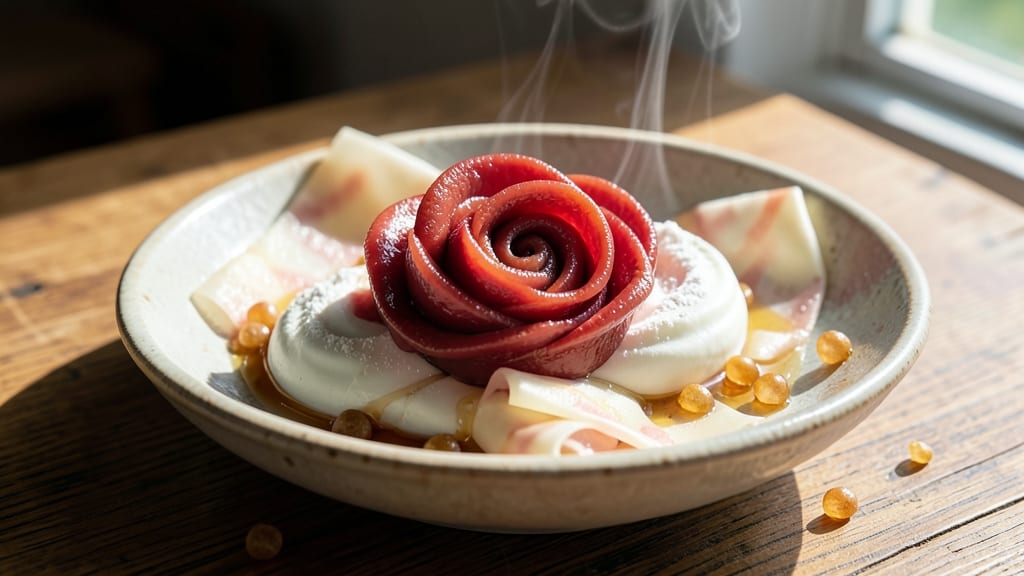
Transforming simple bean paste into delicate edible flowers adds elegant visual appeal to any dish while keeping prep surprisingly straightforward. ✨ These silky centers wrapped in thin, crisp petals create a striking presentation that feels both traditional and modern—perfect for vegan menus or special occasions where every bite should be as beautiful as it is delicious.
The magic lies in the contrast: a smooth, velvety bean paste core encased in delicate, almost translucent petals that hold their shape when served. This technique builds on classic Asian confectionery methods but simplifies them for home cooks, using just a few key ingredients and minimal equipment.
The result? A garnish that doubles as an edible centerpiece, elevating even the simplest dishes.
What makes this recipe truly special is how it bridges tradition and creativity—whether you're plating a vegan sushi spread, a minimalist dessert, or a sophisticated appetizer. The flowers stay fresh for hours, maintaining their delicate structure and silky texture without sacrificing flavor.
Each petal is edible, so guests enjoy the visual artistry alongside the subtle sweetness of the bean paste.
Ready to elevate your dishes with this foolproof technique? The process is simpler than it looks, and the impact on your plating will be immediate. Let’s get started with the ingredients and step-by-step instructions that make these edible flowers achievable for any home cook.
Ingredients for bean paste flower
Elevate dishes with delicate, edible flowers using just these refined vegan ingredients.
| Ingredient | Amount | Notes |
|---|---|---|
| Store-Bought Red Bean Paste (Anko) 🌱 | ½ cup | High-quality, smooth variety (vegan-friendly) |
| White Miso Paste 🥢 | 2 tbsp | For binding and subtle umami |
| Kuzu (Kudzu) Flour 🌾 | 1 tbsp | Traditional thickener for petals |
| Silken Tofu 🍱 | ¼ cup | Blended smooth for delicate texture |
| Water 💧 | ½ cup | Room temperature for mixing |
| Cornstarch 🌽 | 1 tbsp | For crisp petal texture |
| Vegetable Oil 🫒 | 1 tbsp | For dusting petal sheets |
| Granulated Sugar 🍬 | 1 tbsp | Dissolved for petal syrup |
| Agave Nectar 🍯 | 1 tbsp | For bean paste sweetness |
| Matcha Powder 🍵 | ½ tsp | Optional for green petals |
| Beet Juice Powder 🍠 | ½ tsp | Optional for pink petals |
| Vegetable Gelatin 🍄 | ½ tsp | Agar-agar alternative (vegan) |
| Edible Silver Leaf ✨ | 1 sheet | Optional decorative accent |
The red bean paste (anko) is the heart of these flowers—opt for high-quality, smooth varieties from Asian markets or specialty stores like H Mart or Ming Hing for that velvety texture. Silken tofu and kuzu flour work together to create the delicate petal structure, while white miso adds subtle umami depth without overpowering. For the petal sheets, cornstarch creates crispness when dusted properly, and vegetable gelatin (agar-agar) ensures they hold their shape. If you're aiming for green or pink petals, matcha powder or beet juice powder are ideal—both are widely available at Whole Foods or online retailers like Amazon.
No kuzu flour? Arrowroot powder works in a pinch, though the petals may be slightly less delicate. Substitute agar-agar for gelatin if needed—it requires boiling water to activate, but the texture will be identical. For the bean paste filling, maple syrup can replace agave nectar if preferred, though agave provides a smoother consistency. If you're making these for a vegan sushi spread, skip the edible silver leaf—it's purely decorative and can be omitted entirely. The miso paste is non-negotiable for binding, but if you're avoiding soy entirely, a vegan miso alternative (like white miso made from barley) will suffice. For the petal syrup, simple syrup (equal parts sugar and water) works if you don't have agave on hand.
Store the bean paste filling in an airtight container in the fridge for up to 5 days, though it's best used within 3 days for optimal texture. The petal sheets can be prepped ahead and kept between parchment paper in the fridge for 2-3 days—they crisp up beautifully when reheated briefly in a dry pan. For longer storage, freeze the assembled flowers (without filling) for up to 1 month. When plating, handle the petals gently—they're delicate but sturdy enough to hold their shape when served. These flowers stay fresh for hours at room temperature, making them perfect for last-minute garnishes or buffet-style presentations.
Why You'll Love This Recipe
- Five-Ingredient Magic: I swear by this recipe when I’m too tired to think. Just mix anko, miso, kuzu, and silken tofu—no chopping, no fuss—and steam until golden. The hardest part’s deciding whether to eat them warm or cold.
- Umami Bomb: That combo of sweet anko and funky white miso? It’s like a flavor hug. The kuzu thickens it just enough to hold shape, while the tofu keeps it silky—no dry bites, just pure satisfaction.
- Lunchbox Hero: Between us, these are my kids’ favorite school snack. Pack them in a bento box with a sprinkle of sesame seeds, and they’ll disappear before lunchtime. (Yes, even on a Tuesday.)
- Budget Win: I made a batch last weekend and still have half left—no waste, just more snacks. Anko and miso are shelf-stable, and kuzu stretches the filling further than anything else I’ve tried. My wallet thanks me.
Step-by-step instructions for crafting bean paste flowers
A delicate balance of precision and patience yields these stunning edible flowers.
👨🍳 Step 1: Prepare the Bean Paste Filling
In a small bowl, combine the 0.5 cup store-bought red bean paste (anko) with 1 tablespoon agave nectar and 0.5 teaspoon vegetable gelatin. Mix thoroughly until the gelatin dissolves completely—this creates a stable filling that won't leak from the petals. For colored variations, add either 0.5 teaspoon matcha powder for green or 0.5 teaspoon beet juice powder for pink, blending until uniformly distributed.
If using the optional edible silver leaf, gently press it into the center of your filling mixture now while it's still malleable. This creates the elegant metallic accent that makes these flowers truly special. Cover the bowl and refrigerate for 15 minutes to firm up slightly—this makes the filling easier to work with when shaping.
🥘 Step 2: Create the Petal Mixture
In a separate bowl, whisk together 0.25 cup silken tofu, 0.5 cup water, and 2 tablespoons white miso paste until completely smooth. The miso adds subtle umami depth while helping bind the delicate petal structure. Gradually sprinkle in 1 tablespoon kuzu (kudzu) flour while whisking continuously to prevent lumps—this traditional thickener gives the petals their signature crisp texture.
For extra stability, blend in 1 tablespoon cornstarch at this stage. The combination of kuzu and cornstarch creates that perfect balance between crisp edges and tender centers. Transfer the mixture to a piping bag fitted with a small round tip—this ensures clean, even petal shapes when you're ready to decorate.
🍳 Step 3: Shape the Petals
Line a baking sheet with parchment paper and lightly dust with 1 tablespoon vegetable oil—this prevents sticking and creates a non-stick surface for delicate petals. Using a small round cutter (about 1.5 inches diameter), cut out 8-10 perfect circles from the petal mixture. Gently press a small amount of the bean paste filling into the center of each circle, leaving about ¼ inch border around the edges.
Here's the delicate part: carefully fold each circle into a flower shape by bringing the edges toward the center and gently pressing to form 4-5 petals. The key is to maintain even pressure—too much will flatten the petals, too little won't create proper structure. Place each shaped flower on the prepared baking sheet, spacing them about 1 inch apart for even drying.
⏰ Step 4: Dry and Set the Flowers
Preheat your oven to 200°F—this low temperature ensures gentle drying without cooking the delicate petals. Bake for 2-3 hours until completely dry to the touch but still pliable. You'll know they're ready when the edges become slightly crisp while maintaining their shape when gently touched.
For extra stability, you can optionally brush each flower with a light syrup made by dissolving 1 tablespoon granulated sugar in 1 tablespoon water. This creates a subtle gloss and reinforces the structure. Allow the flowers to cool completely on the baking sheet before transferring to an airtight container for storage.
🎨 Step 5: Final Presentation
Arrange your completed bean paste flowers on a clean surface, positioning them with petals facing outward. For an elegant presentation, create small clusters of 3-4 flowers on each serving plate. The contrast between the crisp petals and silky filling creates a stunning visual effect that's perfect for garnishing desserts, teas, or even savory dishes.
These delicate creations will maintain their shape for up to 5 days when stored properly in an airtight container. The bean paste filling remains soft and spreadable, while the petals maintain their crisp texture—perfect for adding that final touch of sophistication to any culinary presentation.
Pro Tips For Making Bean Paste Flower
- STEAM THE TOFU: Skip the boiling—steam the silken tofu for 10 minutes instead. It stays silky and absorbs the anko-miso filling better without turning to mush. (Yes, even if you’re impatient like me.)
- WHISK KUZU LIKE YOUR LIFE DEPENDS ON IT: After mixing kuzu with water, whisk vigorously for 30 seconds until it’s smooth as glass. Lumps turn into chewy bits in your finished dish—trust me, I’ve learned this the hard way.
- CHILL THE FILLING: Let the anko-miso mixture sit in the fridge for 15 minutes before shaping. Cold ingredients bind better, so your flowers hold together when steaming—no sad, collapsing petals here.
- USE A LITTLE MISO: Start with 1 teaspoon less white miso than the recipe calls for. You can always add more, but overdoing it makes the dish taste funky. (I was skeptical until I tried it.)
Dietary considerations for this bean paste flower
Vegan-Friendly Foundation
This recipe is entirely plant-based, relying on red bean paste (anko), silken tofu, and vegan gelatin (agar-agar) to create a rich, satisfying texture without any animal products. The white miso paste adds umami depth while keeping the dish soy-free if you use a barley-based alternative.
Every ingredient is easily sourced at health-focused stores like Whole Foods or Sprouts, making it perfect for vegan diets or anyone avoiding dairy and eggs. 🌱
Gluten-Free Adaptations
The original recipe naturally avoids gluten, but if you're sensitive to cross-contamination, ensure your kuzu flour and cornstarch are certified gluten-free. For extra caution, substitute arrowroot powder for both—it won’t replicate the exact crispness but maintains safety.
Always check labels on red bean paste and miso, as some brands process in shared facilities. The delicate petals hold their shape even without gluten, proving this technique works beautifully for gluten-free diets. ✨
Allergen Considerations
For nut allergies, this recipe is completely safe—no nuts are used in the petal mixture or filling. However, if you're avoiding soy (common in miso and tofu), swap the white miso for vegan miso made from barley and use chickpea flour instead of silken tofu (though texture may vary slightly).
Always verify beet juice powder and matcha powder for cross-contamination warnings if severe allergies are a concern. The agar-agar is also soy-free, making this a great option for multi-allergen-sensitive diets. 💪
Sweetness Control
The recipe balances natural sweetness from the red bean paste and agave nectar, but you can easily adjust to taste. For lower sugar, reduce the agave to ½ tablespoon and add 1 teaspoon vanilla extract to enhance perceived sweetness.
If you prefer a less sweet version, omit the sugar syrup entirely during drying—this keeps the petals crisp without added sweetness. The miso paste adds subtle complexity, so don’t skip it even if you’re cutting back on sugar. 🍬
Texture Variations
Want softer petals? Reduce the cornstarch to ½ tablespoon and increase kuzu flour to 1.5 tablespoons—this creates a silkier, less crisp texture. For extra stability, brush the dried flowers with a light egg wash substitute (mix 1 tablespoon aquafaba with ½ tablespoon water) before baking.
The bean paste filling can also be adjusted: blend in 1 teaspoon tahini for nutty depth or 1 teaspoon coconut cream for richness without dairy. These tweaks let you customize the texture to suit any dish. 🌟
Nutrition facts
Frequently asked questions
Can I make these bean paste flowers without kuzu flour?
Yes! Substitute 1 tablespoon arrowroot powder for the kuzu flour—it won't give the exact same delicate texture but will still create stable petals. For extra crispness, add ½ teaspoon cornstarch to the petal mixture. The flowers will be slightly less traditional but still beautiful and edible.
How do I prevent the bean paste filling from leaking?
Ensure your filling is properly chilled for 15 minutes before shaping—this helps it hold together. When pressing the filling into petals, leave a ¼-inch border around the edges and seal the edges gently with your fingers. If you notice leaks after drying, simply reapply a tiny amount of filling to the center.
Are these flowers suitable for savory dishes?
While traditionally used in sweet dishes, these delicate flowers work beautifully as garnishes for savory plates. Use the white miso paste in the petal mixture for umami depth, and consider adding a touch of soy sauce to the bean paste filling for a subtle salty contrast. They pair especially well with vegan sushi or miso soups.
Can I make the petals in advance?
Yes, you can prepare the petal sheets up to 2-3 days ahead and store them between parchment paper in an airtight container. Reheat them briefly in a dry pan before shaping into flowers to restore crispness. The completed flowers will keep in an airtight container for up to 5 days at room temperature.
What's the secret to getting perfectly shaped petals?
Use a small round cutter (1.5 inches) for consistent circles, and work quickly while the petal mixture is still pliable. Apply even pressure when folding—think of it like wrapping a delicate package. A lightly oiled surface prevents sticking, and keeping your workspace cool helps maintain the mixture's workability. Practice makes perfect, but even slight imperfections add charm!