
Appetizers
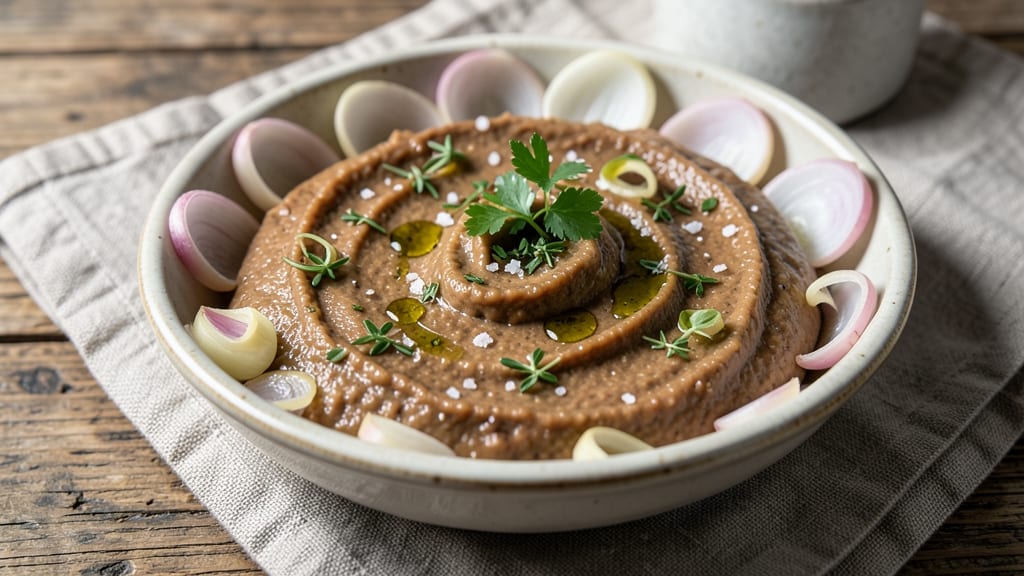
This bean pâté recipe transforms humble white beans into a luxurious, velvety spread with herbal depth that rivals traditional meat-based pâtés. 🌿 The secret lies in slow cooking the beans until they break down into an ultra-smooth consistency, then blending them with aromatic herbs, garlic, and just the right amount of fat—whether olive oil or butter—for that signature richness.
I developed this version after years of experimenting with French techniques, but with a modern twist that makes it approachable for home cooks.
The result is a pâté that’s silky smooth yet packed with flavor, where every spoonful delivers layers of savory, earthy, and fresh herbal notes. Unlike store-bought versions, this recipe builds complexity through slow simmering and fresh herbs like thyme and parsley, which infuse the beans as they cook.
The texture is so refined it’ll fool even the most discerning guests into thinking it’s the real deal.
Perfect for serving with crusty bread, crackers, or as a dip for vegetables, this pâté is versatile enough for casual gatherings or elegant appetizer spreads. The recipe balances simplicity with professional results—no fancy equipment needed, just patience and attention to the cooking process.
Once you taste the difference between this and jarred versions, you’ll never go back.
For those who love customization, variations like smoked paprika or chili flakes can add warmth, while a splash of lemon zest brightens the herbal flavors. The beauty of this recipe is how it adapts to your taste while delivering that restaurant-quality texture and depth every time.
Ingredients for bean pate
Transform simple white beans into a restaurant-worthy pâté with these aromatic, fresh ingredients.
| Ingredient | Amount | Notes |
|---|---|---|
| Great Northern White Beans 🌱 | 1 ½ cups | Dried, soaked overnight |
| Fresh Thyme Leaves 🌿 | ¼ cup | Packed, stems removed |
| Fresh Parsley Leaves 🌿 | ¼ cup | Packed, stems removed |
| Garlic Cloves 🧄 | 4 cloves | Peeled, lightly smashed |
| Shallots 🧅 | 2 whole | Peeled, finely chopped |
| Extra-Virgin Olive Oil 🫒 | ½ cup | High-quality, fruity |
| Unsalted Butter 🧈 | 4 tbsp | Cold, cubed |
| Vegetable Stock 💧 | 1 cup | Homemade or low-sodium |
| Lemon Zest 🍋 | 1 tsp | Finely grated |
| Diamond Crystal Kosher Salt 🧂 | 1 tsp | Adjust to taste |
| Freshly Ground Black Pepper 🌶️ | ½ tsp | Freshly cracked |
| White Wine Vinegar 🍶 | 1 tbsp | For brightness |
The beans are the foundation, so Great Northern or Cannellini work best—their mild flavor lets the herbs shine. Soak them overnight (or quick-soak with boiling water) for perfect texture. Fresh herbs matter here: thyme and parsley from the grocery store’s produce section are fine, but farmers' market bunches have more depth. Shallots add subtle sweetness—Trader Joe’s or Whole Foods carry them pre-peeled for convenience. The olive oil should be extra-virgin with noticeable fruity notes; California Olive Ranch is my go-to for consistency.
No fresh thyme? Dried works at one-third the amount, but it won’t infuse as beautifully. Swap shallots for yellow onion if needed, but taste as you go—they’re more pungent. Butter can be replaced with vegan butter or extra olive oil for richness. The white wine vinegar adds brightness; if you’re avoiding alcohol, apple cider vinegar works just as well. For extra depth, toast the beans in the pot before adding liquid—worth the extra minute for nuttier flavor. And if you’re short on time, canned beans (drained and rinsed) can work, but texture won’t be as refined.
This pâté tastes even better the next day as flavors meld. Store in an airtight container in the fridge for up to 5 days, or freeze for 3 months in small portions. I like to portion it into ramekins for elegant serving—just pop one in the microwave for 20 seconds to reheat. The texture is so smooth it’s perfect for spreading on toasted baguette slices or pairing with pickled vegetables for contrast. Leftovers? Use them in crostini or as a dip for roasted veggies.
Why You'll Love This Recipe
- No-Fuss Pantry Hero: I swear by this when I forget to meal prep—just toss canned beans, shallots, and garlic into a food processor. No soaking, no fancy prep, just smooth in minutes.
- Herb-Packed Punch: That bright parsley and thyme cut through the richness of the beans like a cool breeze. Honestly, the garlic-shallot base alone makes it taste like you slaved over it.
- Party Spread Star: Slather it on crusty bread for a charcuterie board or dollop it into pasta—it’s my go-to for game day or lazy Sundays. (Yes, even on a Tuesday night.)
- Budget-Friendly Magic: A single can of beans stretches into three meals, and fresh herbs make it feel fancy without breaking the bank. Leftovers? Freeze them—no waste, all flavor.
Step-by-step instructions for bean pâté with herbal depth
Here's how to transform simple beans into a velvety pâté with layers of flavor.
🍳 Step 1: Sauté Shallots and Garlic Until Translucent
Heat the 0.5 cup Extra-Virgin Olive Oil in a heavy-bottomed saucepan over medium-low heat. Add the 2 whole Shallots and 4 cloves Garlic Cloves, stirring occasionally for 5-6 minutes until the shallots become soft and translucent. You're aiming for a sweet, caramelized aroma—not browned.
This slow cook ensures the shallots release their natural sugars without burning, which forms the flavor base. If you smell burning, reduce the heat immediately. Keep the pan uncovered so any excess moisture evaporates, preventing a steamed texture.
👨🍳 Step 2: Toast Herbs and Add Butter
Add the 0.25 cup Fresh Thyme Leaves and 0.25 cup Fresh Parsley Leaves to the pan, stirring for 1 minute until the herbs release their essential oils and become fragrant. Remove from heat and let cool for 2 minutes—this prevents burning when you add the butter.
Return the pan to medium-low heat and whisk in the 4 tbsp Unsalted Butter, stirring constantly for 1 minute until melted and incorporated. The butter should foam slightly but not brown. This step builds richness while preserving the herbs' delicate flavors.
🍳 Step 3: Simmer Beans with Stock and Vinegar
Add the drained 1.5 cups Great Northern White Beans, 1 cup Vegetable Stock, and 1 tbsp White Wine Vinegar to the pan. Increase heat to medium-high and bring to a boil. Once boiling, reduce heat to low and simmer uncovered for 10-12 minutes, stirring occasionally, until the liquid reduces by half and the beans begin to break down.
Watch for the beans to soften and the mixture to thicken slightly. You want a consistency between a thick sauce and a paste—this ensures silky texture without being gluey. If it reduces too quickly, add 1-2 tablespoons of water to maintain balance.
🥘 Step 4: Blend to Silky Perfection
Transfer the bean mixture to a high-powered blender or food processor. Add the 1 tsp Lemon Zest, 1 tsp Diamond Crystal Kosher Salt, and 0.5 tsp Freshly Ground Black Pepper. Blend on high for 1-2 minutes until completely smooth, scraping down the sides as needed.
The key here is patience—don't rush the blending. You're chasing that velvety texture where no lumps remain. If it's too thick, add 1-2 tablespoons of water to reach a spreadable consistency. Taste and adjust seasoning if needed.
⏰ Step 5: Rest and Serve with Confidence
Transfer the pâté to a serving bowl and let it rest at room temperature for 10 minutes before serving. This allows the flavors to meld and the texture to set slightly. The pâté should be cool enough to spread but still warm to the touch.
Serve with crusty bread, crackers, or as a sandwich spread. The herbs should be bright, the lemon zest should add a zesty lift, and the texture should be smooth enough to glide off the spoon. Store leftovers in an airtight container in the fridge for up to 5 days—it only gets better with time!
Pro Tips For Making Bean Pate
- Crush Beans Halfway: Don’t wait until the very end to mash them—after 20 minutes of simmering, give those Great Northerns a good smash with a potato masher or fork. This breaks them down just enough so they blend smoothly later without turning into glue. (Yes, even if they still look stubborn.)
- Toast Shallots Low: Sauté those shallots in butter until they’re golden, not brown—about 8-10 minutes on medium-low. Too hot and they’ll burn; too cool and they’ll steam. The goal is caramelized sweetness, not bitter bits. (I learned this after one very bitter batch.)
- Salt the Beans Early: Add salt to the beans with the aromatics, not at the end. It draws out moisture and helps them soften faster—critical for a creamy pate. Skip this, and you’re left with tough, waterlogged beans that refuse to blend right.
- Blend in Stages: Pulse the beans in the food processor first, then drizzle in broth or olive oil while blending. This prevents a greasy, clumpy mess. (Trust me, I’ve seen it happen—and cleaned it off the walls.) Start rough, then refine to your desired texture.
Regional styles of this dish
French Country Style
In France, bean pâté often incorporates dried porcini mushrooms for an earthy depth—simmer 1 tbsp dried porcini in the stock before adding beans. I use Maitake mushrooms from Trader Joe’s for a meatier texture.
The French also traditionally finish with a touch of cognac (1 tsp) for warmth, but a splash of apple cider vinegar works just as well. Serve with baguette slices lightly toasted in the oven for the ultimate French bistro experience. 🥖
Italian Rustic Twist
Southern Italy elevates bean pâté with sun-dried tomatoes and basil. Pulse 2 tbsp sun-dried tomatoes (oil-packed) into the blend after cooking, then stir in 1 tbsp fresh basil at the end.
Add 1 tsp red pepper flakes for heat and a pinch of fennel seeds for an anise note. Pair with grissini (Italian breadsticks) or provolone cheese slices for a Tuscan-inspired spread. 🍅
Spanish Smoky Version
For a smoky twist, Spanish cooks often use smoked paprika and chorizo (optional). Add 1 tsp smoked paprika to the sautéed shallots and 1 tbsp finely diced chorizo (if using) during the simmer.
Finish with a drizzle of olive oil and a sprinkle of sea salt. Serve with crusty pan con tomate (toasted bread with tomato) for a tapas-style bite. 🌶️
Middle Eastern Herb Blend
Inspired by Levantine flavors, swap thyme for sumac and parsley for mint. Add 1 tsp sumac and 2 tbsp chopped fresh mint to the blend, along with 1 tsp ground cumin.
A splash of pomegranate molasses (1 tsp) brightens the flavors. Serve with warm pita bread or za’atar-coated crackers for a vibrant, tangy contrast. 🍇
Modern Fusion Adaptation
For a contemporary take, blend in roasted red peppers (½ cup, jarred) and goat cheese (2 oz) for creaminess. Add 1 tsp harissa paste for heat and a pinch of smoked salt.
This version works beautifully on toasted sourdough or as a dip for crudités. The goat cheese adds a luxurious texture that rivals traditional meat pâtés. 🧀
Nutrition facts
Frequently asked questions
Can I make this bean spread with canned beans instead of dried?
Yes, but expect a slightly less refined texture. Use 1 (15 oz) can of white beans, drained and rinsed, and add 2 extra tablespoons of water or vegetable stock during blending to compensate for the firmer beans. For best results, simmer the canned beans with the stock for 5 minutes before blending to help break them down.
How do I fix grainy texture in my bean pâté?
Graininess usually means the beans weren't cooked long enough. First, try blending again with 1-2 tablespoons of hot water or stock**, adding it gradually while blending. If that doesn't work, strain the pâté through a fine-mesh sieve to remove any remaining lumps, then blend the strained liquid back with a bit of the smooth portion for consistency.
What's the best way to store and reheat leftovers?
Store in an airtight container in the fridge for up to 5 days. For reheating, transfer to a microwave-safe bowl and warm for 30-45 seconds on medium power, stirring halfway. If it thickens too much, add 1 teaspoon of water or stock and stir. Never reheat directly in the container—it traps steam and can make the texture gluey.
Can I make this pâté spicy or smoky?
For a smoky version, add 1 teaspoon smoked paprika with the shallots or stir in 1 tablespoon liquid smoke at the end. For heat, blend in ½ teaspoon cayenne pepper or 1 teaspoon harissa paste. Adjust to taste—start small, as flavors intensify during blending.
What are the best breads to serve with this?
Crusty breads work best to contrast the pâté's smooth texture. Try baguette slices toasted in olive oil, sourdough for tangy balance, or water crackers for a delicate pairing. For extra flair, spread on grilled cheese bread or use as a filling for mini quiches. Warm the bread slightly before serving to enhance aroma.