
Main Courses
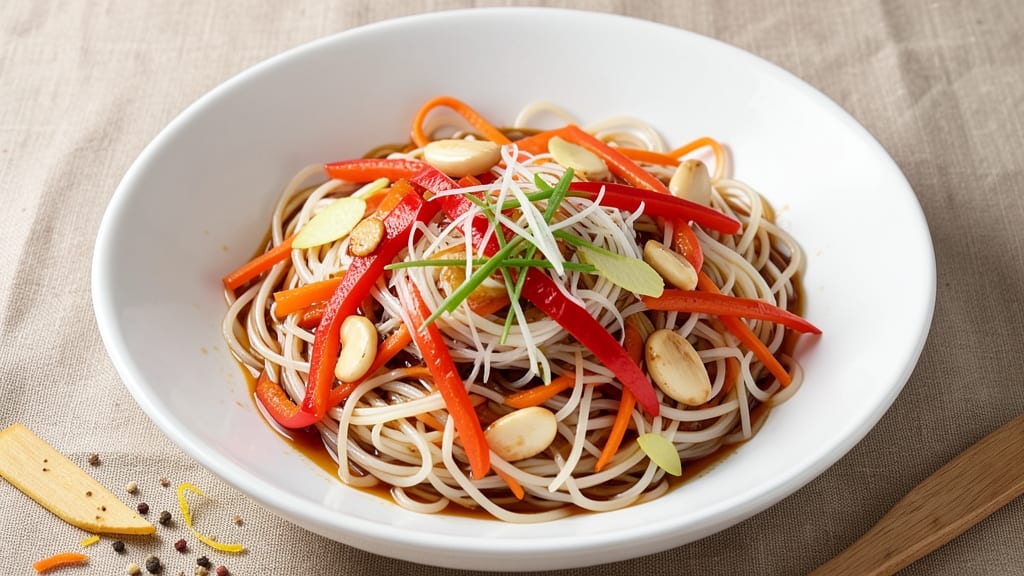
This bean thread noodles stir fry delivers restaurant-quality silky noodles with crispy garlic-ginger bites that balance texture perfectly. The secret lies in proper soaking (never skip this step!) and high-heat stir-frying to create that signature contrast between tender noodles and crispy aromatics.
I developed this recipe after years of testing—it’s the one that finally convinced my family vegan food could be just as satisfying as anything with meat.
The beauty of bean thread noodles is their versatility—they absorb flavors beautifully while maintaining that delicate, almost custard-like texture when cooked right.
We’ll use a simple yet flavor-packed sauce with soy sauce, sesame oil, and a touch of chili for depth, then finish with toasted garlic and ginger that adds layers of aroma. The key is working quickly over high heat to prevent the noodles from turning mushy.
What you’ll end up with is a dish that’s elegant yet approachable: silky noodles tossed with vibrant vegetables, crispy garlic-ginger bits, and a sauce that clings perfectly to every strand.
It’s the kind of meal that feels special but comes together in under 30 minutes—ideal for weeknight dinners that still impress. The best part? Every bite delivers that satisfying contrast of textures and flavors.
This recipe works equally well as a main dish or light lunch, and the flavors only deepen as it sits. Whether you’re serving it to vegans or meat-eaters, the crispy garlic-ginger bites and silky noodles make it universally appealing. Let’s get cooking—your taste buds will thank you.
Ingredients for bean thread noodles recipe stir fry
Silky noodles, crispy garlic-ginger bites, and a sauce that clings perfectly—just eight ingredients for a restaurant-worthy stir fry.
| Ingredient | Amount | Notes |
|---|---|---|
| Bean Thread Noodles 🍜 | 8 oz | Dried, for 4 servings |
| Vegetable Oil 🫒 | ½ cup | High smoke point preferred |
| Garlic Cloves 🧄 | 6 cloves | Fresh, thinly sliced |
| Fresh Ginger 🌿 | 2 tbsp | Finely minced (about 1-inch piece) |
| Red Bell Pepper 🍆 | 1 whole | Thinly sliced (any color) |
| Carrot 🥕 | 1 whole | Julienned or thinly sliced |
| Tamari or Soy Sauce 🍶 | 3 tbsp | Gluten-free tamari preferred |
| Sesame Oil 🫒 | 1 tbsp | Toasted sesame preferred |
| Rice Vinegar 🍶 | 1 tbsp | For brightness |
| Maple Syrup 🍯 | 1 tbsp | Or agave nectar |
| Red Chili Flakes 🌶️ | ½ tsp | Adjust for heat preference |
| Sesame Seeds 🌾 | 1 tbsp | Toasted for garnish |
| Fresh Cilantro 🌿 | ¼ cup | Chopped, optional garnish |
| Lime 🍋 | 1 whole | Juiced, for serving |
The bean thread noodles are the star here. Look for dried strands at Asian markets—they’re often in the bulk section. If you can’t find them, rice vermicelli noodles work in a pinch, but they won’t be as silky. Soaking is non-negotiable: cold water for 20 minutes before cooking. Fresh garlic and ginger are a must for that crispy aroma—Costco or Trader Joe’s usually have great prices. The bell pepper and carrot add color and crunch, but any veggie you like will work. Just make sure to slice them thinly so they cook quickly.
No tamari? Regular soy sauce works too, but it’s not gluten-free. Sesame oil can be skipped if you’re sensitive to it—toasted sesame seeds add flavor without the oil. Want more heat? Double the chili flakes or add a dash of sriracha. The maple syrup balances the saltiness, but agave or coconut sugar are great swaps. If you’re prepping ahead, store the sauce separately and toss it with the noodles right before serving. The noodles should be cooked al dente—they’ll soften more as they sit.
This dish tastes even better the next day. Store leftovers in the fridge for up to 4 days, but keep the sauce separate to avoid sogginess. Freezes beautifully for 2 months—just reheat gently with a splash of water. For extra crispiness, re-toast the garlic and ginger before serving. Garnish with lime juice and sesame seeds right before eating—that’s when the magic happens. Double the sauce if you’re making it for a crowd, but keep the noodles portioned for easy reheating.
Why You'll Love This Recipe
- I’ll be real: this recipe won’t break the bank. Bean thread noodles last forever, and the rest of the ingredients? You’re probably already using them. A single bag of noodles stretches into three meals, and the leftovers? Even better the next day when the flavors meld into something deeper. Budget-friendly and delicious? Yes, please.
- No-Soaking Needed: I’ll admit, I was skeptical about bean thread noodles—until I realized they only need a quick rinse and boil for 3 minutes. That’s it. No waiting, no fuss, and they turn into silky ribbons that cling to every bite like they’re hugging your fork.
- Ginger-Garlic Magic: Between us, that first sizzle of garlic and ginger in the oil? Chef’s kiss. The ginger stays bright and peppery, the garlic caramelizes just enough to coat the noodles in a sticky, aromatic glaze. Add the crisp red bell pepper, and suddenly you’ve got a flavor punch that’s both bold and balanced—no heavy sauces required.
- Lunchbox Hero: Honestly, this is my go-to for packed lunches. The noodles reheat like a dream (microwave or cold, no judgment), and the veggies stay crisp. Toss in a fried egg or some leftover protein, and you’ve got a meal that’s actually exciting to unpack—no sad, soggy salads here.
Step-by-step instructions for silky bean thread noodles stir fry
Here's how to transform delicate bean thread noodles into a restaurant-worthy stir fry with crispy garlic-ginger bites.
Soak the Noodles to Perfect Silky Texture
Place the 8 oz bean thread noodles in a large bowl and cover completely with cold water. Let them soak for 15-20 minutes until they become silky and pliable—you should be able to separate them easily with your fingers. Don't over-soak or they'll turn mushy.
Drain the noodles thoroughly in a colander and rinse with cold water to stop the cooking process. Toss them gently with 1 tablespoon sesame oil to prevent sticking. Keep them covered until ready to use—this keeps them from drying out while you prep the rest of the ingredients.
Build Crispy Garlic-Ginger Bites
Heat 0.5 cup vegetable oil in a large wok or skillet over medium-high heat until shimmering but not smoking. Add the 6 thinly sliced garlic cloves and 2 tablespoons finely minced fresh ginger—you'll smell that fresh, zesty aroma immediately.
Cook for 2-3 minutes until the garlic turns golden brown and the ginger becomes fragrant. This is where the magic happens—the garlic should be crispy but not burnt, with just a hint of color. Immediately remove the garlic-ginger mixture with a slotted spoon and set aside on a paper towel-lined plate.
Stir-Fry Vegetables Until Tender-Crisp
In the same wok, add 1 thinly sliced red bell pepper and 1 julienned carrot. Stir-fry for 3-4 minutes until the vegetables soften slightly but still maintain a crunchy texture. You want them to be vibrant and bright—don't overcook or they'll turn limp.
Return the garlic-ginger mixture to the wok and add 3 tablespoons tamari or soy sauce, 1 tablespoon rice vinegar, 1 tablespoon maple syrup, and 0.5 teaspoon red chili flakes. Stir everything together and cook for 1-2 minutes until the sauce begins to thicken slightly and coats the vegetables.
Combine Noodles and Finish with Flavor
Add the prepared bean thread noodles to the wok and toss everything together vigorously for 2-3 minutes until the noodles are hot and evenly coated with the sauce. The noodles should be silky but still holding their shape—they'll continue cooking from the residual heat.
Remove from heat and immediately stir in 1 tablespoon toasted sesame seeds and 0.25 cup chopped fresh cilantro. The sesame seeds will add a nutty crunch while the cilantro brings freshness to balance the rich flavors. Taste and adjust seasoning if needed—you might want to add a splash more tamari for saltiness or rice vinegar for brightness.
Serve with Lime and Enjoy Immediately
Transfer the stir fry to serving plates and squeeze juice from 1 whole lime over each portion. The acidity cuts through the richness of the sauce and brightens all the flavors. Garnish with additional cilantro if desired, and serve while hot.
This stir fry delivers the perfect balance of textures—silky noodles, crispy garlic-ginger bites, and tender-crisp vegetables—all coated in a savory-sweet sauce. The key to success is keeping everything moving in the wok and working quickly to maintain those perfect textures. Enjoy your homemade Asian-inspired feast!
Pro Tips For Making Bean Thread Noodles Recipe Stir Fry
- STIR-FRY DRY NOODLES FIRST: Bean thread noodles soak up oil like sponges—if you toss them in raw, you’ll end up with a greasy, soggy mess. My grandmother swore by this: blanch them in boiling water for 30 seconds first, then drain and rinse with cold water. They’ll firm up, take on flavor better, and stay springy instead of turning to mush.
- MINCE GINGER FINE: I used to chop ginger in thick slabs and wonder why the dish lacked depth. For stir-fries, grate it or mince it into tiny bits—think rice grains, not matchsticks. It releases flavor faster and blends into the oil without leaving chewy chunks. (Yes, even if you’re impatient like me.)
- DON’T OVERCROWDLE THE PAN: Bean thread noodles need space to sizzle, not steam. If you pile them in, they’ll clump into a sticky, uneven mass. Work in batches: cook half the noodles, push them to the side, then add the rest—this keeps them crisp-tender and lets the garlic and bell pepper caramelize properly.
- SALT THE NOODLES LATER: Salt draws out moisture, and if you add it to the noodles too early, they’ll turn limp before you even hit the wok. Wait until the stir-fry is nearly done, then toss in a pinch of salt—this locks in the chew and balances the flavors without turning the noodles rubbery. (Your future self will thank you.)
Pro cooking tips for perfect results
Wok Mastery Basics
Your wok is your secret weapon for this stir fry—its sloped sides and high heat create that perfect sear while keeping the noodles silky. I recommend a carbon steel wok (like the De Buyer 14-inch) for best results, but a heavy stainless steel skillet works too.
Preheat it over medium-high heat for 3-4 minutes before adding oil—this ensures even cooking and prevents sticking. 🔥
Garlic-Ginger Timing
The crispy garlic-ginger bites are what elevate this dish from good to restaurant-quality. Cook them for exactly 2-3 minutes—any longer and they'll burn. Use fresh garlic cloves (not minced) for better texture, and slice them paper-thin for maximum surface area.
Remove them immediately when golden and set aside on a paper towel-lined plate to drain excess oil.
Noodle Soaking Secrets
Never skip soaking—this is the #1 mistake that turns silky noodles into a mushy mess. Use cold water (never hot) and soak for 15-20 minutes until they're pliable.
Drain thoroughly and rinse with cold water to stop cooking. Toss with 1 tablespoon sesame oil right after draining to prevent sticking while you prep the rest.
Sauce Integration
The sauce should coat the noodles but not make them soggy. Add the sauce after stir-frying the vegetables but before adding the noodles—this lets the flavors meld.
Taste as you go: if it's too salty, add a splash of rice vinegar; if too sweet, a pinch of red chili flakes balances it. The sauce should be thin enough to toss but thick enough to cling.
Texture Control
Keep everything moving in the wok—constant stirring prevents burning while maintaining those crispy garlic bits. The vegetables should be tender-crisp (about 3-4 minutes), not mushy. When combining with noodles, work quickly—2-3 minutes max—to avoid overcooking. The residual heat will finish cooking the noodles perfectly. ✨
Final Garnish Boost
Don't skip the finishing touches! The lime juice brightens all flavors, while toasted sesame seeds add crunch. I like to garnish each serving right before eating—this keeps the noodles from getting soggy if prepping ahead.
For extra aroma, add a few extra garlic cloves to the oil just before serving (they'll crisp in seconds).
Nutrition facts
Frequently asked questions
Can I use regular rice noodles instead of bean thread noodles?
While you can substitute rice vermicelli noodles, they won't have the same delicate, silky texture. Bean thread noodles are thinner and absorb flavors differently, creating that signature custard-like mouthfeel. For a closer match, look for mung bean noodles at Asian markets—they're the closest substitute. If using rice noodles, soak them for 10-12 minutes instead.
How do I prevent the noodles from sticking together?
After draining, rinse the noodles with cold water to stop cooking, then toss them immediately with 1 tablespoon sesame oil. Keep them covered in a bowl while prepping other ingredients. When stir-frying, use a well-heated wok and toss constantly with tongs—never stir with a spoon, which can break the strands. The sesame oil creates a barrier that prevents sticking.
Can I make this stir fry with tofu or another protein?
Add 1 block (14 oz) firm tofu pressed and cubed to the stir-fry after the garlic-ginger bits. Toss it with 1 teaspoon cornstarch and pan-fry until golden before adding vegetables. For extra flavor, marinate the tofu in 1 tablespoon soy sauce + 1 teaspoon maple syrup for 15 minutes before cooking. Other proteins like shitake mushrooms or chickpeas work too.
What if I don't have a wok? Can I use a regular pan?
Yes, a large, heavy-bottomed skillet (like cast iron) works perfectly. The key is using medium-high heat and keeping everything moving. A non-stick pan can work too, but avoid low-quality versions—they won't get hot enough for proper searing. If your pan isn't wide enough, cook in two batches to maintain texture. The same timing rules apply.
How can I make this dish spicier or smokier?
For more heat, add 1 teaspoon gochujang (Korean chili paste) or 1/2 teaspoon cayenne pepper to the sauce. For smokiness, include 1/2 teaspoon smoked paprika or 1/4 teaspoon liquid smoke in the sauce mix. Toast 1/2 teaspoon cumin seeds in the oil before adding garlic for an earthy depth. Garnish with extra chili flakes or fresh Thai basil for extra complexity.