
Sauces & Condiments
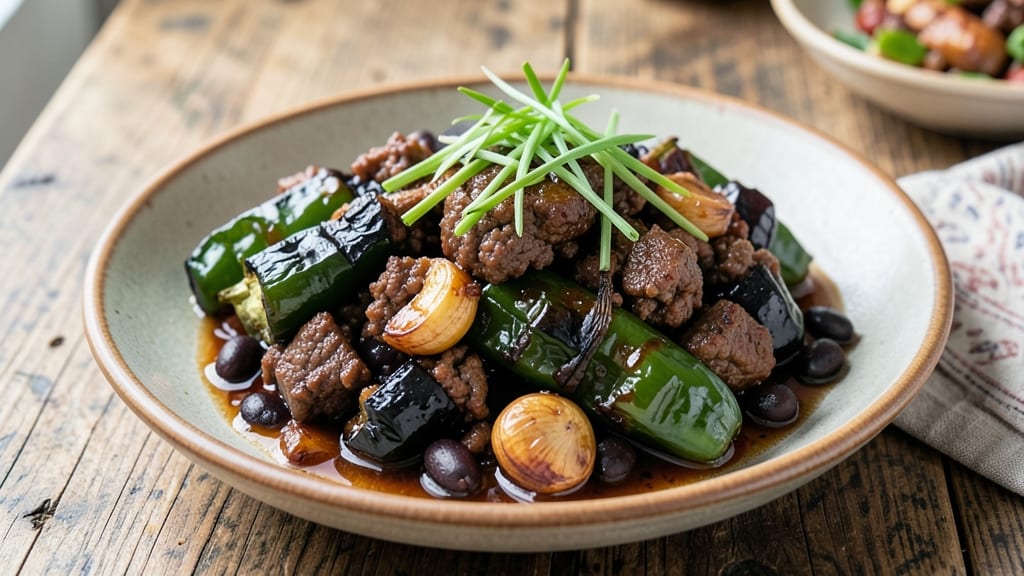
This beef green pepper black bean sauce transforms simple ingredients into a rich, umami-packed condiment that elevates every dish it touches. The charred peppers and black beans create deep, savory layers that balance perfectly with tender beef and aromatic spices.
What makes this sauce special is how it builds flavor through slow simmering, allowing the ingredients to meld into something far more complex than the sum of its parts.
The foundation of this recipe lies in a simple yet powerful technique: charring the peppers and garlic before simmering them with beef, black beans, and a blend of soy, oyster, and hoisin sauces.
This process unlocks a deep, caramelized sweetness that forms the heart of the sauce, while fresh ginger and garlic add brightness. The result is a versatile sauce that works as a stir-fry glaze, dipping sauce, or even a bold topping for tacos and bowls.
By the time you're done, you'll have a thick, glossy sauce with a perfect balance of smoky, sweet, and savory notes. The black beans add texture and body, while the beef keeps it hearty and satisfying.
What's even better? This sauce keeps well in the fridge for up to a week or freezes beautifully for later use, making it a pantry staple for quick meals.
Whether you're tossing it with noodles, drizzling it over grilled meats, or serving it as a dipping sauce, this recipe delivers restaurant-quality flavor with minimal effort. Let's get started on making a sauce that will become your new go-to for bold, umami-rich dishes.
Ingredients for beef green pepper black bean sauce
Twelve ingredients transform into a restaurant-quality sauce with charred peppers and deep umami richness.
| Ingredient | Amount | Notes |
|---|---|---|
| Green Bell Peppers 🧅 | 2 whole | Charred for smoky depth |
| Garlic Cloves 🧄 | 6 cloves | Charred with peppers |
| Ground Beef 🥩 | 1 lb | 80% lean for richness |
| Black Beans 🫘 | 1 can | Drained, rinsed (15 oz) |
| Soy Sauce 🍶 | ½ cup | High-quality preferred |
| Oyster Sauce 🍜 | ¼ cup | For umami depth |
| Hoisin Sauce 🍯 | ¼ cup | Sweet-savory balance |
| Fresh Ginger 🌿 | 1 tbsp | Grated, fresh preferred |
| Sesame Oil 🫒 | 1 tbsp | Toasted for aroma |
| Cornstarch 🌾 | 1 tbsp | For thickening |
| Water 💧 | ¼ cup | For slurry |
| Sugar 🍚 | 1 tsp | Balances flavors |
Start with the peppers and garlic—they're the flavor foundation. Buy fresh green bell peppers with vibrant color and firm texture, not those sad, wrinkly ones. For the beef, 80% lean ground chuck gives you the best balance of flavor and texture. I grab mine in the meat department, not the pre-ground stuff from the chiller bins—it's fresher. The black beans? Canned low-sodium is perfect here, but if you're using dried, soak them overnight. For the sauces, Lee Kum Kee oyster sauce and hoisin are my go-tos, but any quality brand works. The ginger needs to be fresh—dried just won't cut it for this recipe.
No soy sauce? Coconut aminos at 1.5x the amount works in a pinch. Skip the oyster sauce? Extra soy sauce plus a dash of fish sauce gets you close. Running low on sesame oil? Toasted sesame seeds at half the amount add aroma, though they won't give that same nutty depth. The sugar can be swapped for honey or maple syrup, but the cornstarch is non-negotiable—it's what gives this sauce that perfect glossy finish. For the peppers and garlic, char them in a dry skillet until blackened in spots, then scrape off the skins. That smoky flavor is what makes this sauce special.
This sauce keeps beautifully—1 week in the fridge or 3 months frozen. I always make a double batch because it disappears fast. Store it in a sealed jar with a thin layer of oil on top to preserve the color. If it thickens too much, just stir in a splash of water. The flavors actually improve after a day or two as everything melds together. Perfect for meal prep—just reheat gently on the stove and stir until smooth.
Why You'll Love This Recipe
- One-Pan Magic: I swear by this recipe when I’m too tired to scrub pots—just brown the beef, toss in the peppers and garlic, let it simmer with beans and soy sauce, and boom. Done. The peppers soften right in the pan, no extra dishes needed.
- Umami Bomb: That combo of soy sauce, black beans, and caramelized beef? It’s like a flavor explosion in your mouth. The garlic hits first, then the deep, savory richness of the beef, and the peppers add just enough brightness to keep it from feeling heavy.
- Lunchbox Hero: Between us, this sauce is my go-to for meal prep. Pack it in tortillas for wraps, serve it over rice, or even slather it on toast with a fried egg—it’s always a hit. My kids grab it for school lunches, and my husband sneaks seconds at work.
- Budget Win: Ground beef, canned beans, and bell peppers? This recipe stretches a dollar without sacrificing taste. I make a big batch on Sundays, and it lasts me all week—leftovers taste just as good reheated as they do fresh.
Step-by-step instructions for beef green pepper black bean sauce
Here's how to build this umami-rich sauce with perfect texture and balanced flavors.
Char the Peppers and Garlic for Smoky Depth
Heat a clean skillet over medium-high heat until hot. Add the 2 whole green bell peppers and 6 cloves garlic (peeled), cut-side down. Let them char undisturbed for 8-10 minutes until the peppers develop deep blackened patches and the garlic turns golden brown. You'll smell that irresistible smoky aroma—this is essential for authentic flavor.
Flip the peppers and garlic occasionally to ensure even charring. Once fully charred, remove them from the skillet and transfer to a cutting board. Let them cool for 5 minutes before handling—this prevents burns and makes them easier to peel. The charred skin will peel away easily, revealing tender flesh underneath. Chop the peppers and garlic finely for even distribution in the sauce.
Brown the Ground Beef for Richness
In the same skillet (no need to clean it—the fond adds flavor), increase heat to medium-high and add the 1 lb ground beef. Break it up with a wooden spoon, letting the meat brown in batches if needed to avoid overcrowding. Cook for 5-6 minutes until the beef loses its raw color and develops a deep brown crust.
Once fully browned, drain excess fat from the skillet, leaving about 1 tablespoon behind for flavor. Add the chopped charred peppers and garlic, stirring to combine. Cook for another 2 minutes to meld these flavors with the beef. This step builds the sauce's foundation—don't skip it. The beef should be fully cooked with no pink remaining.
Build the Sauce Base with Aromatics
Reduce heat to medium-low and add the 1 tablespoon grated fresh ginger, 1 tablespoon sesame oil, 1 teaspoon sugar, 0.5 cup soy sauce, 0.25 cup oyster sauce, and 0.25 cup hoisin sauce. Stir well to combine, letting the mixture simmer for 3-4 minutes until the raw aroma of ginger disappears and the sauces meld together.
Add the 1 can drained black beans (reserve ¼ cup of the liquid for later) and stir to incorporate. The beans will soften slightly and absorb the sauce's flavors. Taste the mixture now—you should detect layers of umami from the oyster sauce, sweetness from the hoisin, and a touch of heat from the charred peppers. If it's too thick, add 1-2 tablespoons of the reserved bean liquid to loosen it.
Thicken and Finish the Sauce
In a small bowl, whisk together the 1 tablespoon cornstarch and 0.25 cup water until smooth. Slowly pour this slurry into the simmering sauce while stirring constantly. The sauce will begin to thicken immediately—keep stirring for 2-3 minutes until it reaches a glossy, coatable consistency. You want it thick enough to cling to noodles or meat but still pourable.
Return the sauce to a gentle simmer and cook for another 2 minutes to ensure the cornstarch is fully cooked and the flavors are perfectly balanced. Taste and adjust seasoning if needed—add a splash more soy sauce for saltiness or a pinch of sugar to enhance sweetness. The final sauce should be rich, slightly glossy, and packed with layers of umami, sweetness, and smoky depth.
Serve Immediately with Perfect Pairings
Remove the sauce from heat and let it rest for 5 minutes to allow the flavors to fully meld. Serve over steamed rice, noodles, or with crusty bread to soak up every last bit of the flavorful sauce. The charred peppers and black beans add hearty texture, while the beef and sauces create a complex, satisfying umami bomb.
For best results, serve this sauce while still warm. The flavors continue to develop as it cools, but the texture is best enjoyed immediately. Store any leftovers in an airtight container in the refrigerator for up to 3 days, or freeze for up to 3 months. Reheat gently on the stovetop, adding a splash of water if needed to restore the desired consistency.
Pro Tips For Making Beef Green Pepper Black Bean Sauce
- Char the Peppers First: I learned this the hard way—roasting or charring the green bell peppers before dicing makes the whole dish taste deeper. Just hold them over a gas flame (or under a broiler) until blackened in spots; those smoky bits dissolve into the sauce and add complexity. Skip this, and you’re missing a flavor layer that’s non-negotiable for that restaurant-style richness.
- Cook the Beef in Batches: Crowding the pan with ground beef means it steams instead of browns, and that’s when things get greasy and dull. Split your beef into two portions—cook half, push it to the side, then brown the second batch in the same pan. The residual fat will crisp the edges properly, and your sauce won’t turn into a sad, oily sludge.
- Mash the Black Beans: Draining and rinsing black beans is a must, but don’t stop there—give them a quick mash with a fork or potato masher before adding them to the pan. This breaks down their skins slightly, so they blend into the sauce instead of sitting as separate, mushy chunks. (Yes, even if you’re impatient like me.)
- Bloom the Garlic Low and Slow: After adding minced garlic to the pan, turn the heat down to medium-low the second it hits—garlic burns faster than you’d think. Let it sizzle gently for 30 seconds until fragrant but not golden; that’s when it releases its sweetness without turning bitter. High heat here means burnt flavor, and burnt garlic ruins everything.
Storing and reheating this dish
Fridge Storage Tips
Store your sauce in an airtight glass container—I use Pyrex with a snap-on lid—and refrigerate for up to 5 days. The flavors actually deepen overnight as the charred peppers and black beans meld with the umami-rich sauces.
For extra freshness, add a thin layer of neutral oil (like canola) on top before sealing to preserve the vibrant green color. 🥫
If the sauce thickens in the fridge, simply stir in 1-2 tablespoons of water or beef broth when reheating. Avoid microwaving—it can make the sauce grainy. Instead, heat it gently on the stovetop over low-medium heat for 3-4 minutes, stirring constantly until smooth. This maintains that perfect glossy texture.
Freezer-Friendly Methods
For long-term storage, freeze the sauce in silicone ice cube trays or small glass jars—this makes it easy to thaw just what you need. Label containers with the date and freeze for up to 3 months.
When ready to use, thaw overnight in the fridge, then reheat on the stovetop with a splash of water to restore consistency. 🧊
Pro tip: If you're freezing a large batch, portion it into 1-cup servings before freezing. This way, you can grab exactly what you need for a quick stir-fry or dipping sauce without defrosting the whole container.
The sauce may separate slightly after freezing, but a quick stir on the stove brings it back together beautifully.
Reheating Like a Pro
Always reheat the sauce gently—never boil it. Bring it to a simmer over low heat for 5-7 minutes, stirring occasionally, until it reaches 165°F internal temperature.
If it's too thick after reheating, thin it with 1 tablespoon of water or broth at a time until it reaches your desired consistency. The key is patience—rushing will break down the sauce's texture. 🔥
For extra richness, add a dash of sesame oil or a pinch of sugar while reheating to brighten the flavors. If you're using it as a stir-fry sauce, heat it until steaming hot before tossing with your ingredients.
The residual heat will help cook the vegetables and meat perfectly. Trust me, this makes all the difference!
Reviving Texture
If your sauce separates after reheating, don't panic. Simply transfer it to a blender and pulse for 10-15 seconds until smooth. For a quick fix without blending, stir vigorously with a whisk or fork—this helps redistribute the oils and thicken the sauce naturally.
The cornstarch in the recipe ensures it comes back together beautifully, even after freezing. ✨
For the best results, always let the sauce cool to room temperature before refrigerating or freezing. Rapid temperature changes can cause condensation, which may dilute the flavors or lead to mold growth. A quick 10-minute rest after cooking ensures even cooling and better storage life.
Nutrition facts
Frequently asked questions
Can I substitute ground beef with another protein?
Yes! For a leaner option, use ground turkey or chicken thighs (they add moisture). For extra richness, try ground pork or liverwurst (½ cup). If using shrimp or tofu, reduce cooking time by 2-3 minutes—they cook faster than beef. The sauce works best with proteins that can handle the 3-4 minute simmering time.
Why does my sauce taste too salty?
This usually happens from overusing soy or oyster sauce. Start by tasting before adding all the sauce—1 tablespoon at a time. If needed, balance with 1-2 teaspoons of sugar or ½ cup water to dilute. For a quick fix, stir in 1-2 tablespoons of beef broth while reheating. The black beans also add natural saltiness, so reduce their amount slightly if needed.
How can I make this sauce spicier?
Add ½ teaspoon of red pepper flakes or 1 chopped jalapeño (seeds removed for mild heat) during the final simmer. For deeper heat, include 1 teaspoon of gochujang (Korean chili paste) with the hoisin sauce. Char the peppers longer (up to 12 minutes) for extra smokiness. Always taste as you go—you can adjust after simmering!
Can I make this sauce without charring the peppers?
Yes, but the flavor will be less complex. Sauté the peppers and garlic in 1 tablespoon oil for 5-6 minutes until soft. For smokiness, add ½ teaspoon smoked paprika or 1 teaspoon liquid smoke (use sparingly!). The sauce will still be delicious but miss the deep, charred notes that make this recipe special.
What’s the best way to use up leftover sauce?
Drizzle over grilled steak or chicken, toss with rice or noodles, or use as a dipping sauce for spring rolls. Freeze extras in 1-cup portions for quick stir-fry bases. The sauce also works as a glaze for roasted vegetables—brush on carrots or Brussels sprouts before roasting. For a meal in 5 minutes, mix with scrambled eggs or fried rice.