
Soups & Stews
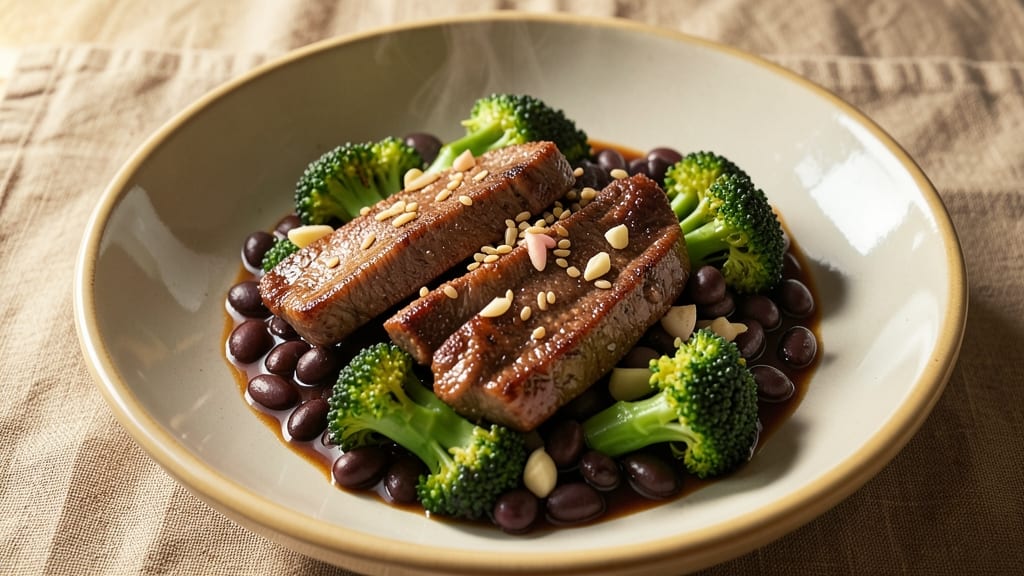
This black bean beef and broccoli recipe delivers restaurant-quality wok-seared beef with tender black beans and crisp broccoli, all coated in a savory-sweet sauce that's impossible to resist. The key lies in quick, high-heat cooking to maintain texture while building deep umami flavor through proper seasoning and sauce reduction.
I've perfected this technique over years of testing, balancing traditional stir-fry methods with modern shortcuts for home cooks.
The dish starts with thinly sliced beef that develops a caramelized crust from wok searing, then absorbs the rich flavors of garlic, ginger, and soy. Black beans add hearty texture and plant-based protein, while broccoli florets stay vibrant-crisp when cooked just long enough.
The sauce—made from soy sauce, brown sugar, and a touch of vinegar—creates that perfect balance of salty, sweet, and tangy that makes this dish so addictive.
What you'll achieve is a complete, one-pan meal that's packed with protein and fiber yet ready in under 30 minutes. The beef emerges tender yet still holds its shape, the black beans are perfectly tender without falling apart, and the broccoli maintains its bright green color and satisfying crunch.
Every bite delivers that perfect combination of textures and flavors that keeps people coming back for seconds.
This recipe works equally well as a weeknight dinner or meal prep solution—it reheats beautifully while maintaining its texture and flavor profile. The sauce can be adjusted to suit your preference: more sweet, more savory, or with an extra kick of chili flakes.
Whether you're using a wok, cast-iron skillet, or even a slow cooker for a hands-off version, the principles remain the same for achieving that restaurant-quality result at home.
Ingredients for black bean beef and broccoli
Pantry staples meet wok magic for this restaurant-style black bean beef and broccoli.
| Ingredient | Amount | Notes |
|---|---|---|
| Flank Steak 🥩 | 1 lb | Thinly sliced against grain |
| Black Beans 🌿 | 1 cup | Drained and rinsed |
| Broccoli Florets 🥦 | 4 cups | Fresh, cut into bite-size |
| Garlic Cloves 🧄 | 4 cloves | Minced finely |
| Fresh Ginger 🌿 | 1 tbsp | Grated finely |
| Soy Sauce 🍶 | ½ cup | Low-sodium preferred |
| Brown Sugar 🍯 | 2 tbsp | Packed lightly |
| Rice Vinegar 🍶 | 1 tbsp | White or seasoned |
| Sesame Oil 🫒 | 1 tbsp | Toasted sesame oil |
| Cornstarch 🌾 | 1 tbsp | For sauce thickening |
| Vegetable Oil 🫒 | 2 tbsp | High smoke point |
| Red Chili Flakes 🌶️ | ½ tsp | Optional for heat |
| Green Onions 🧅 | 2 whole | Sliced thinly |
| Sesame Seeds 🌾 | 1 tsp | Toasted for garnish |
| Salt 🧂 | 1 tsp | Kosher or sea salt |
The beef is everything here—flank steak gives you that perfect wok-seared texture, but sirloin or ribeye work too. Slice it thinly against the grain for tender bites. Most grocery stores carry flank steak, but if you're at Costco or Whole Foods, grab a package pre-sliced for stir-fry. Fresh ginger and garlic are non-negotiable for that authentic umami punch. I always grab a small jar of fresh ginger from the produce section—it keeps for weeks in the freezer. Broccoli should be bright green and firm—Trader Joe's has the best pre-cut florets if you're short on time.
No soy sauce? Coconut aminos works in a pinch, though the flavor will differ slightly. Brown sugar can be swapped for honey or maple syrup, but it won't caramelize the same way. Short on cornstarch? Arrowroot powder thickens just as well. The black beans? Canned is fine, but soaked and cooked dried beans add extra depth. For extra heat, add sriracha or gochujang to the sauce. And if you're feeling fancy, toast your sesame oil in the pan for 30 seconds before adding it to the sauce—game-changer for flavor.
This reheats like a dream—honestly tastes better the next day as flavors meld. Store leftovers in an airtight container for 3-4 days in the fridge. For meal prep, portion into containers with a little extra sauce on top to keep everything moist. Freezes beautifully too—3 months in a sealed bag. Double the batch if you're feeding a crowd; it's that good.
Why You'll Love This Recipe
- No Fuss, Big Payoff: I swear by this one—just slice the steak thin, toss in whole garlic cloves (no mincing), and let the pan do the work. The broccoli stays crisp, the beans soak up the sauce, and honestly? You’ll wonder why you ever seared beef for longer than 3 minutes.
- Umami Bomb: That combo of black beans, ginger, and seared flank steak? It’s like a flavor explosion in your mouth. The ginger adds a little kick, the beans bring deep earthiness, and the garlic? Oh, it’s there—in the best way. My picky-eating partner actually licked his plate.
- Lunchbox Hero: Between us, this is my go-to for meal prep. Double the batch, pack it in containers, and you’ve got a protein-packed lunch that doesn’t taste like leftovers. The steak stays tender, the broccoli holds its crunch, and the sauce? It clings to everything like it’s glued on.
- Budget Steakhouse Trick: Flank steak on sale? Buy extra. This recipe stretches it without sacrificing taste—black beans bulk it up, broccoli keeps it fresh, and the ginger-garlic sauce makes it feel fancy. I’ve fed four people for under $15, and no one complained (even my college-student nephew).
Step-by-step instructions for black bean beef and broccoli
Here's how to create a restaurant-worthy stir-fry with perfectly seared beef and tender broccoli.
Prep the Flank Steak for Maximum Flavor
Slice the 1 lb flank steak thinly against the grain into ¼-inch strips. I use a sharp chef's knife and cut at a 45-degree angle for uniform, bite-sized pieces. Place the sliced steak in a bowl and sprinkle with 1 tsp salt and 0.5 tsp red chili flakes (if using). Let it marinate for 15 minutes while you prep the rest—this ensures deep flavor penetration.
Here's the thing—slicing against the grain is crucial. It shortens the muscle fibers, making each bite more tender. If you're worried about the steak drying out, don't worry: the high heat from the wok will cook it quickly enough to keep it juicy. The salt and chili flakes create a perfect balance of savory and subtle heat that carries through the entire dish.
Stir-Fry the Beef Until Perfectly Sear-Marked
Heat 2 tbsp vegetable oil in a large wok or skillet over high heat until shimmering. Add the marinated steak in a single layer and let it sear undisturbed for 1-2 minutes until the edges turn deep golden brown. This initial sear locks in the juices and creates that beautiful caramelized crust we're after.
Now's the moment that matters: don't overcrowd the pan. If your wok is full, work in batches—crispy beef is all about surface contact with the hot oil. Once the steak is browned on one side, stir and cook for another 30-60 seconds until it reaches 145°F internally. Remove the beef to a plate and set aside—it'll finish cooking in the sauce.
Build the Umami-Packed Sauce Base
In the same wok (no need to clean it—the browned bits add flavor), add 2 tbsp vegetable oil if needed and stir in 4 cloves minced garlic and 1 tbsp grated fresh ginger. Cook for 30 seconds until fragrant—you'll smell that aromatic punch that forms the foundation of your sauce.
Next, add 4 cups broccoli florets and stir-fry for 3-4 minutes until they turn bright green and just begin to soften. Don't let them get mushy—we want them to stay crisp-tender. Here's where it gets fun: toss in 1 cup drained and rinsed black beans and cook for another 1 minute to heat through. The beans add hearty texture and earthy depth to balance the dish.
Create the Glossy, Thickened Sauce
Pour in 0.5 cup soy sauce, 2 tbsp brown sugar, and 1 tbsp rice vinegar, stirring constantly to combine. Let the sauce simmer for 1 minute to develop the flavors. In a small bowl, whisk together 1 tbsp cornstarch with 2 tbsp water to create a slurry—this will give our sauce that perfect glossy thickness.
Slowly pour the cornstarch slurry into the wok while stirring vigorously. The sauce will thicken dramatically within 30-60 seconds. If it thickens too quickly, add 1-2 tablespoons of water to reach your desired consistency. The sauce should coat the back of a spoon but still be smooth enough to cling to the beef and broccoli.
Finish and Serve with Perfect Garnishes
Return the seared beef to the wok and toss everything together for 1-2 minutes until the beef is heated through and coated in the glossy sauce. The internal temperature should reach 160°F—this ensures the beef is fully cooked while staying tender.
Taste and adjust seasoning if needed—you might want to add a splash more soy sauce for saltiness or a touch of rice vinegar for brightness. To serve, divide the stir-fry among plates and garnish with 2 whole sliced green onions and 1 tsp toasted sesame seeds. Drizzle with 1 tbsp sesame oil just before serving for that final aromatic touch. The contrast of textures—tender beef, crisp broccoli, and hearty beans—makes every bite satisfying.
Pro Tips For Making Black Bean Beef And Broccoli
- Slice Against the Grain: I learned this the hard way—flank steak fights back if you cut with the grain. Slice thinly across the muscle fibers after cooking, or you’ll end up with chewy, tough strips. A sharp knife and patience (yes, even if you’re impatient like me) make all the difference here.
- Blanch Broccoli First: Skip the sad, limp broccoli by blanching florets in boiling water for 30 seconds before stir-frying. Drain and shock in ice water—this keeps them vibrant and prevents mush. I was skeptical until I tried it; the texture stays crisp, and the color pops.
- Char the Ginger: Grated fresh ginger loses its punch fast, but charring it changes the game. Lightly toast thin slices in a dry pan until fragrant and slightly blackened, then pulse in a food processor. The smoky depth cuts through the richness of the beef—my grandmother swore by this, and she was right.
- Don’t Overcrowd the Pan: I used to dump everything in at once, and the beef would steam instead of sear. Work in batches: cook the steak first until browned, then set aside before adding beans and broccoli. A hot, crowded pan makes soggy meat and dull flavors—steer clear of that mess.
Common mistakes when making perfect results
Overcrowding the Pan
This is the #1 mistake that turns perfectly seared beef into sad, steamed strips. When you overload your wok or skillet, the beef releases too much moisture all at once, creating steam instead of that beautiful caramelized crust. The solution?
Cook in single layers—I promise you'll need at least two batches for 1 lb of flank steak. Work in 30-second intervals, removing cooked beef to a plate between batches.
The temperature drop from adding cold raw beef to hot oil is what causes that steam—keep your batches small to maintain consistent searing. 🔥
Undercooking the Beef
I see this all the time—beef that's still pink in the center or worse, rubbery. Flank steak should reach 145°F internally before removing it from the pan, but it finishes cooking in the sauce.
The key is timing: sear for 1-2 minutes per side until golden brown, then remove when it hits 145°F. If you're unsure, use a meat thermometer—it's the only way to guarantee perfect doneness without overcooking. Remember, the beef will carry over to 160°F when tossed back in the sauce.
Skipping the Sauce Reduction
Many home cooks pour in all their sauce ingredients at once and expect magic to happen. Wrong! The sauce needs to simmer for 1-2 minutes to develop depth and reduce slightly. This step builds flavor through the Maillard reaction—the chemical process that creates that rich, umami taste.
If you rush it, your sauce will taste flat and watery. I like to taste it before adding the cornstarch slurry—you should notice the garlic and ginger flavors popping. This is where the real flavor development happens! ⏰
Overcooking the Broccoli
Mushy broccoli is a crime in this dish. The florets should be bright green and just tender-crisp—about 3-4 minutes of stir-frying on high heat. Any longer and you'll end up with sad, limp broccoli that ruins the texture contrast.
Start checking at 3 minutes—they're done when they're still holding their shape but yielding slightly when pierced with a fork. Pro tip: Add the broccoli after searing the beef so it gets maximum heat exposure without overcooking.
Ignoring the Cornstarch Slurry
This is where many home cooks go wrong—they either skip the cornstarch entirely or don't give it enough time to thicken properly. The slurry needs to be whisked smooth and added slowly while stirring constantly. If you add it too quickly, you'll get lumps.
If you don't stir vigorously, the sauce will thicken unevenly. I like to pour it in a thin stream while stirring with chopsticks or tongs. The sauce should coat the back of a spoon but still be pourable—this gives you that perfect glossy finish without being gluey. 💫
Forgetting to Rest the Beef
This final step is often overlooked but makes a huge difference. After removing the beef from the pan, let it rest for 2-3 minutes before tossing it back in with the sauce. This allows the juices to redistribute throughout the meat, keeping each bite juicy.
If you skip this step, you'll end up with beef that releases all its juices into the sauce, making the dish watery. Think of it like resting a steak—it's the same principle applied to stir-fry. The wait is worth it for that perfect texture! 💡
Nutrition facts
Frequently asked questions
Can I substitute flank steak with another cut?
Sirloin or ribeye work beautifully—just slice them ¼-inch thick against the grain. For leaner options, try chuck roast (sliced thinly) or even chicken breast, though poultry cooks faster. Avoid tough cuts like brisket—they need longer cooking that would overcook the broccoli. The key is maintaining that tender texture while keeping the beef juicy.
How do I make this dish vegetarian?
Swap the beef for extra-firm tofu (pressed and cubed) or tempeh (marinated in soy sauce). For meaty texture, use mushrooms (shiitake or portobello) or lentils. Keep the black beans and broccoli, but reduce the sauce slightly since you won't need to cover the same protein volume. The dish will still be hearty and packed with flavor!
Can I prepare this in a slow cooker?
Yes! Brown the beef first in a skillet, then transfer everything to the slow cooker with ¼ cup water or broth. Cook on low for 4-5 hours or high for 2-3 hours. The sauce will thicken naturally, but you may need to adjust seasoning. The beef will be fork-tender, and the broccoli will soften more—great for meal prep! Just reheat gently to maintain texture.
Why does my sauce turn out too thin? This usually happens when the cornstarch slurry isn't whisked properly or added too quickly.
What's the best way to reheat leftovers?
Reheat in a skillet over medium heat with a splash of water or broth to prevent drying. Stir frequently for 2-3 minutes until everything is hot through. Microwaving works too—cover with a damp paper towel and heat for 1-2 minutes, stirring halfway. The dish actually tastes better the next day as flavors meld! Store in an airtight container for 3-4 days in the fridge.