
Sauces & Condiments
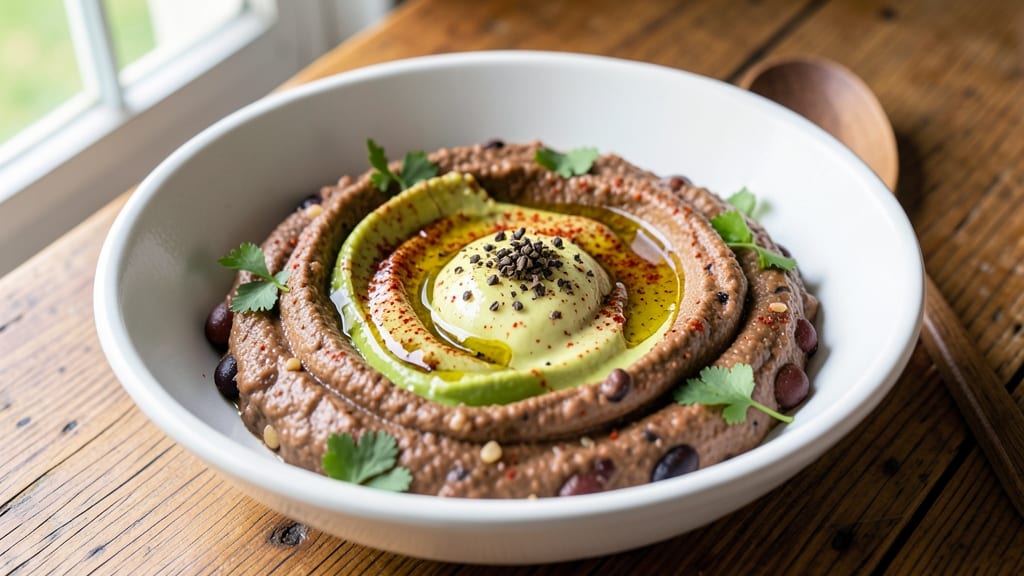
This black bean hummus recipe delivers all the creamy, velvety texture you love—without tahini. The secret lies in blending black beans with avocado and olive oil, creating a rich, protein-packed dip that’s just as smooth and satisfying.
I developed this version after realizing tahini-free hummus could still be luxurious, especially when balanced with bright lemon and aromatic garlic.
The beauty of this recipe is its versatility—it’s perfect for dipping, spreading, or even as a sandwich base. Black beans provide natural creaminess and depth, while avocado adds a luscious richness that replaces tahini’s nuttiness.
A touch of smoked paprika and cumin elevates the flavor, making it bold enough to stand on its own without relying on tahini’s intensity.
What you’ll end up with is a hummus that’s naturally thick, velvety, and packed with flavor—no grittiness, no aftertaste, just pure satisfaction. The blend of fats from avocado and olive oil ensures a silky texture, while the black beans bring a hearty, earthy backbone.
It’s the kind of hummus that disappears faster than you can say “dip me in.”
Best of all, this recipe keeps beautifully in the fridge for up to 5 days, making it ideal for meal prep. Whether you’re vegan, nut-free, or simply looking for a tahini-free option, this hummus delivers restaurant-quality results with pantry staples. Let’s make it—your taste buds will thank you.
Ingredients for black bean hummus recipe no tahini
Nine simple ingredients transform into velvety hummus—no tahini needed.
| Ingredient | Amount | Notes |
|---|---|---|
| Canned Black Beans 🫘 | 1 ½ cups | Drained, rinsed, no salt added |
| Ripe Avocado 🥑 | 1 whole | Pitted, peeled, flesh scooped |
| Extra-Virgin Olive Oil 🫒 | ½ cup | High quality, fruity flavor |
| Fresh Lemon Juice 🍋 | 2 tbsp | Freshly squeezed, strained |
| Garlic Cloves 🧄 | 3 cloves | Peeled, roughly chopped |
| Smoked Paprika 🌶️ | 1 tsp | For depth of flavor |
| Ground Cumin 🌿 | ½ tsp | Toasted for warmth |
| Sea Salt 🧂 | ½ tsp | Fine grain preferred |
| Tahini-Free Hummus Base 💧 | 2 tbsp | Water or lemon juice for thinning |
The black beans are the backbone here, so grab canned no-salt-added for best flavor. Trader Joe's or Whole Foods have great organic options, but any canned black beans work if drained and rinsed well. Avocados should be ripe but not mushy—press gently, they should yield slightly. The olive oil matters too: California extra-virgin has the best fruity notes. For garlic, fresh is non-negotiable—jarred loses its punch. Smoked paprika adds that restaurant-quality depth without overpowering.
No avocado? Extra mashed chickpeas (about 0.5 cup) keeps the creaminess. Short on lemon juice? Apple cider vinegar at half the amount works in a pinch. The hummus base can be adjusted with water or even unsweetened almond milk if you want extra richness. For extra protein, add 1 tbsp nutritional yeast—it gives a cheesy tang. If you want it smoother, blend with 2 tbsp more olive oil after the initial mix. The cumin can be swapped for coriander if you prefer a sweeter note.
This hummus thickens as it sits, so blend it up again before serving if it separates. Keeps 5 days in the fridge, covered with a thin layer of olive oil to preserve freshness. Freezes beautifully for 3 months—just thaw and blend again. I always make a double batch because it disappears faster than I can say 'dip me in.' Serve with warm pita or fresh veggies for the full experience.
Why You'll Love This Recipe
- No-Fuss Blender Magic: I swear by the five-minute blend—just beans, avocado, and olive oil. No tahini, no fuss, and no waiting for anything to soak or soften.
- Creamy but Bright: The avocado gives it that velvety texture, while the lemon juice cuts through the richness. Honestly, the first bite is like a hug for your taste buds—smooth but with a zing.
- Game for Any Spread: Slather it on toast, mix it into tacos, or just eat it with chips. I’ve even used it as a dip for roasted veggies—it’s that adaptable.
- Budget Meets Luxury: Canned beans and avocados keep it affordable, but the olive oil and fresh garlic make it feel like a special treat. Plus, it keeps for days, so you’re not scrambling for ideas.
Step-by-step instructions for black bean hummus no tahini
Here's how to make a rich, velvety black bean hummus that's smooth, flavorful, and completely tahini-free.
Prepare the Black Beans and Avocado
Start by draining and rinsing the 1.5 cups canned black beans thoroughly under cold water to remove any excess starch. This step is crucial for preventing a gummy texture in your hummus. Transfer the beans to a food processor and add the pitted, peeled flesh from the 1 whole ripe avocado. The avocado adds natural creaminess that replaces tahini's role.
Pulse the mixture a few times until the avocado breaks down completely. At this stage, you're just creating a smooth base—don't worry if the texture looks uneven yet. The avocado's healthy fats help emulsify the final mixture, giving it that signature velvety consistency without tahini.
Add the Tahini-Free Hummus Base and Liquids
Add the 2 tablespoons tahini-free hummus base to the food processor. This specialized base contains the emulsifiers needed to bind the ingredients together without tahini. Pour in the 0.5 cup extra-virgin olive oil in a slow, steady stream while the processor is running. This gradual addition prevents the oil from separating and creates a smooth, creamy texture.
Next, add the 2 tablespoons fresh lemon juice, 3 peeled garlic cloves, and the 0.5 teaspoon ground cumin. The lemon juice brightens the flavors while the cumin adds warm, earthy depth. Pulse everything together until the mixture becomes completely smooth and creamy, scraping down the sides of the food processor as needed to ensure all ingredients are incorporated evenly.
Season and Blend to Perfection
With the processor running, add the 1 teaspoon smoked paprika and 0.5 teaspoon sea salt. The smoked paprika contributes a subtle, smoky flavor that pairs beautifully with the black beans, while the salt enhances all the flavors. Continue blending until the mixture is completely smooth and creamy, with no visible chunks remaining.
Taste the hummus and adjust the seasoning if needed. If it needs more brightness, add a splash of lemon juice. If it needs more salt or smokiness, add a pinch of each. The hummus should be rich, flavorful, and perfectly balanced—not too sweet, not too bitter, with a nice balance of smoky and earthy notes.
Achieve the Perfect Texture
If the hummus is too thick, add 1 to 2 tablespoons of water or lemon juice, 1 tablespoon at a time, until it reaches your desired consistency. You want it smooth and spreadable, but not too thin. For a smoother texture, you can strain the hummus through a fine-mesh sieve to remove any remaining skin or fiber.
Transfer the hummus to a serving bowl and smooth the top with a spatula. Drizzle with a little extra olive oil and sprinkle with additional smoked paprika if desired. Serve immediately with your favorite dippers like pita bread, veggie sticks, or crackers. The hummus will keep well in the refrigerator for up to 5 days, but it's best enjoyed fresh!
Pro Tips For Making Black Bean Hummus Recipe No Tahini
- Drain and Rinse Beans: Don’t skip this—dump those canned black beans into a colander and give them a quick cold-water rinse. The starchy water from the can makes hummus gummy, and nobody wants a gluey dip. (Yes, even if you’re in a hurry.)
- Roast the Garlic: Toss 2-3 peeled garlic cloves in olive oil, roast at 400°F (200°C) for 10-12 minutes until golden and caramelized, then blend right in. Raw garlic tastes harsh here, but roasted? It adds a sweet, jammy depth that changes the game.
- Add Lemon Last: Squeeze the lemon juice after blending the rest—this keeps the avocado from turning gray too fast. If you blend it in early, you’ll end up with a sad, oxidized mess before you even serve it.
- Blend in Stages: Start with just beans, avocado, and olive oil—blend until smooth, then add garlic, lemon, and salt. Dumping everything in at once can overload the motor (or your blender) and leave you with uneven texture. Patience here means creamier results.
Dietary considerations for black bean hummus recipe no tahini
Vegan-Friendly Foundation
This hummus is naturally vegan, relying on black beans, avocado, and olive oil for creaminess instead of tahini. The black beans provide 15 grams of plant-based protein per serving, making it a satisfying option for vegans or anyone looking to boost their protein intake.
I always double-check labels on canned beans to ensure they’re no-salt-added—this prevents the hummus from becoming overly salty. 💪
Nut-Free Alternative
Traditional hummus often includes tahini, which is made from sesame seeds—a common allergen. This recipe eliminates that concern entirely by using avocado and olive oil as fat sources.
For extra richness, I sometimes add 1 tablespoon of sunflower seed butter (nut-free and allergy-friendly). Always verify ingredient labels if using substitutes to avoid cross-contamination risks.
Gluten-Free Guarantee
With just pantry staples, this hummus is naturally gluten-free. The black beans, avocado, and spices contain no gluten, and the olive oil is inherently safe. If serving with bread, opt for gluten-free pita or crackers to maintain dietary compliance.
I keep a stash of Schar gluten-free pita on hand for quick meals—it toasts beautifully and pairs perfectly with this hummus.
High-Protein Boost
Black beans are a protein powerhouse, delivering about 15 grams per serving in this recipe. To further enhance the protein content, I often stir in 1 tablespoon of nutritional yeast—it adds a cheesy flavor without any animal products.
This makes the hummus especially great for post-workout meals or as a snack to keep you full longer. 💪
Low-Fat Option
For a lighter version, reduce the olive oil to 3 tablespoons and increase the lemon juice to 3 tablespoons for brightness. The avocado still provides healthy fats, but this adjustment cuts overall fat content by nearly half while keeping the hummus creamy.
It’s perfect for those watching their fat intake but still craving a rich, satisfying dip.
Allergy Considerations
If you’re avoiding sesame (common in tahini), this recipe is a game-changer. The avocado and olive oil combination delivers the same creamy texture without any risk of sesame exposure.
For extra caution, I recommend using a clean food processor if you’ve recently handled sesame-containing ingredients. Always store hummus in an airtight container to preserve freshness and prevent cross-contamination.
Nutrition facts
Frequently asked questions
Can I use canned black beans directly from the can?
Always drain and rinse the beans thoroughly under cold water first. This removes excess starch that can make your hummus gummy. The rinsing step is especially important for canned beans since they're packed in saltwater or brine. For best flavor, opt for no-salt-added beans to avoid an overly salty hummus.
What if my hummus turns out too thick?
Add 1 tablespoon of water or lemon juice at a time while blending until you reach your desired consistency. For extra smoothness, strain through a fine-mesh sieve. The avocado helps create creaminess, but black beans can absorb more liquid than chickpeas. If it's still too thick after adding liquid, blend in 1 extra tablespoon of olive oil.
How do I prevent the hummus from separating?
Blend the olive oil in slowly while the processor is running to emulsify properly. The tahini-free base helps bind ingredients, but adding 1 teaspoon of Dijon mustard (optional) can improve stability. Store it in an airtight container with a thin layer of olive oil on top to preserve freshness and prevent separation.
Can I make this hummus ahead of time?
Yes! This hummus tastes even better after resting for 1-2 hours as flavors meld. Store in an airtight container in the fridge for up to 5 days. Before serving, give it a quick blend to restore creaminess. For longer storage, freeze for 3 months—thaw and blend again before eating.
What's the best way to serve this black bean hummus?
Try it as a dip with warm pita, veggie sticks, or crispy falafel. Spread it on gluten-free toast for breakfast, or use it as a sandwich base instead of mayo. For extra flair, top with toasted pumpkin seeds or a drizzle of chili oil. The smoky paprika makes it versatile for both Mediterranean and Mexican-inspired dishes.