
Sauces & Condiments
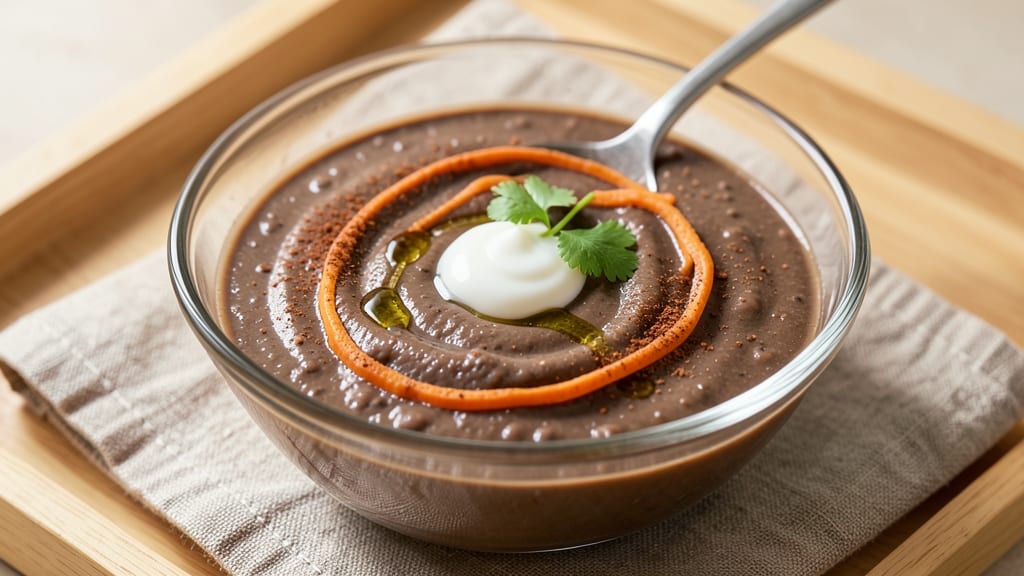
This black bean puree baby food recipe transforms simple ingredients into the perfect first food for little ones, packed with iron and fiber for healthy growth. The silky texture is gentle on tiny tummies while providing essential nutrients parents trust.
I developed this recipe after researching infant nutrition guidelines and testing textures that babies love.
What makes this puree special is its versatility—you can adjust the consistency by adding water, breastmilk, or formula to create the perfect spoonful for your baby's stage. The recipe also includes optional sweet potato for natural sweetness and extra vitamins.
Safety is built in with no added salt or sugar, making it a wholesome choice for first foods.
The blending process creates a velvety smooth texture that's easy for babies to swallow and digest, while still providing the protein and fiber black beans are known for. Each batch makes enough for multiple feedings, with storage tips to keep it fresh in the fridge or freezer.
This is the kind of first food that gives parents peace of mind while introducing new flavors to their little ones.
Perfect for introducing solids around 6 months, this puree can be served as a standalone meal or mixed with other baby-friendly ingredients. The recipe scales easily to make larger batches for meal prep, ensuring you always have healthy food ready. Let's create this nutritious first food together.
Ingredients for black bean puree baby
Simple, nutrient-packed ingredients for your baby's first delicious puree adventure!
| Ingredient | Amount | Notes |
|---|---|---|
| Black Beans 🫘 | 1 ½ cups | Cooked or canned, no salt added |
| Sweet Potato 🍠 | 1 medium | Peeled, cubed, steamed until tender |
| Water 💧 | ½ cup | For blending consistency |
| Breastmilk or Formula 🍼 | ¼ cup | Optional for extra nutrition |
| Extra-Virgin Olive Oil 🫒 | 1 tbsp | For healthy fats |
| Cinnamon 🌿 | ¼ tsp | Ground, optional for sweetness |
| Vanilla Extract 🌸 | ½ tsp | Pure, optional for flavor |
| Lemon Juice 🍋 | 1 tsp | Fresh, for brightness |
| Avocado 🥑 | ¼ medium | Optional for creaminess |
Black beans are the star here—no salt added is critical for baby's health. I always use canned beans for convenience, but if you're cooking from dry, soak overnight for best digestion. Sweet potatoes? Organic baby food varieties from Whole Foods or local markets are perfect—they're sweeter and easier to digest. The avocado, if using, should be ripe but firm—none of that mushy stuff. For extra nutrition, add a splash of breastmilk or formula—babies love the familiar taste.
No sweet potato? Butternut squash works beautifully—just roast it until tender. Skip the cinnamon if your baby is under 6 months, but it's a great way to introduce gentle flavors. The lemon juice can be swapped for orange juice at half the amount if you prefer. For extra creaminess without avocado, mashed banana or silken tofu are great alternatives. Always adjust the water or milk to reach that perfect velvety consistency—start with 1/4 cup and add more as needed.
Store any leftovers in glass jars with tight lids in the fridge for up to 3 days. For longer storage, freeze in ice cube trays—perfect for single servings. Thaw overnight in the fridge, then reheat gently. This puree keeps 3 months in the freezer, making it ideal for meal prep. Always check the temperature before serving—it should be lukewarm, not hot.
Why You'll Love This Recipe
- Four-Ingredient Magic: I swear, this recipe is the kind of simple that makes me feel like a genius. Just blend black beans, roasted sweet potato, a splash of breastmilk or formula, and olive oil—no fancy gadgets, no stress.
- Sweet & Earthy Harmony: That first spoonful? Creamy, naturally sweet from the sweet potato, with just enough bean depth to make it interesting—not too heavy, not too bland. The olive oil ties it all together like a warm hug.
- Freezer-Friendly Staple: Make a big batch and freeze portions—it’s my go-to when I’m too tired to cook. Thaw overnight in the fridge, and boom, breakfast or dinner is handled. (Yes, even on a Tuesday night.)
- Budget Meal Superpower: Black beans and sweet potatoes are cheap, nutritious, and pack a punch. This puree stretches further than store-bought options, and I’m always left with extra for smoothies or quick dips. Win-win.
Step-by-step instructions for silky black bean puree
Here's how to create a velvety, nutrient-packed puree that's perfect for baby's first tastes.
Steam the Sweet Potato Until Fork-Tender
Peel the 1 medium sweet potato and cut it into ½-inch cubes for even cooking. Place them in a steamer basket over 1 cup boiling water in a saucepan. Cover and steam for 12-15 minutes until the cubes are soft enough to pierce easily with a fork—this ensures they blend smoothly without graininess.
I like to check for doneness by pressing a cube between my fingers. When it collapses completely with just light pressure, it's ready. If you steam longer than 15 minutes, the texture can become too mushy and watery for a proper puree.
Blend the Black Beans and Sweet Potato
Drain any excess water from the steamed sweet potato cubes and transfer them to a blender or food processor. Add the 1.5 cups black beans (drained if canned) and 0.5 cup water. Blend on high speed until completely smooth, stopping to scrape down the sides if needed. You're aiming for a silky, lump-free texture—this is baby's first food, so no surprises!
If your blender struggles, add 1-2 tablespoons more water at a time until you reach the desired consistency. The puree should coat the back of a spoon without being too thin. Taste it yourself—it should be mildly sweet with a subtle earthy bean flavor, perfect for introducing new tastes.
Add Healthy Fats and Flavor Boosters
With the blender still running, slowly drizzle in the 1 tablespoon extra-virgin olive oil through the feed tube. This adds healthy fats that babies need for brain development. Then add the 0.25 cup breastmilk or formula (if using) for extra nutrition and creaminess. The mixture should thicken slightly but remain smooth.
Add the 0.25 teaspoon cinnamon, 0.5 teaspoon vanilla extract, and 1 teaspoon lemon juice. These optional ingredients add natural sweetness and prevent bitterness from the beans. Blend for another 10-15 seconds to fully incorporate. The puree should now have a pleasant, balanced flavor that's gentle on baby's palate.
Incorporate Avocado for Creaminess (Optional)
If using the 0.25 medium avocado, scoop out the flesh and add it to the blender. Blend again until completely smooth. The avocado adds healthy fats and a creamy texture that many babies love. The puree should now have a velvety, spreadable consistency—ideal for spoon-feeding or as a dip for soft-cooked veggies.
For best results, serve immediately or transfer to an airtight container and refrigerate for up to 2 days. When reheating, warm gently in a small saucepan over low heat or in the microwave, stirring frequently to prevent hot spots. Always test the temperature before serving—it should be lukewarm, not hot.
Pro Tips For Making Black Bean Puree Baby
- SOAK BEANS OVERNIGHT: I learned this the hard way—rushing the soak leaves your puree with that unpleasant, chalky texture. Toss dried black beans in cold water for at least 8 hours (or overnight), then rinse before cooking. The longer they soak, the smoother and sweeter your puree will be—no grittiness in sight.
- ROAST SWEET POTATO FIRST: Skip the boiling step and roast the sweet potato at 400°F (200°C) for 30 minutes before blending. This caramelizes the natural sugars, giving your puree a deeper flavor without extra sugar. Just scoop out the flesh after roasting—no peeling needed for babies (they handle the skin fine).
- STRAIN TWICE, BLEND ONCE: After cooking beans and sweet potato, strain them separately through a fine-mesh sieve to remove all skins and fibers—even the tiny ones. Then blend with breastmilk/formula and olive oil. Skipping this step means you’ll end up with a gritty mess that’s hard to swallow (literally).
- THIN WITH LIQUID GRADUALLY: Start with just 1-2 tablespoons of breastmilk or formula when blending, then add more as needed. Black beans and sweet potato thicken differently, so you’ll avoid a watery puree or one that’s too stiff. Stir in olive oil last—it helps bind everything together for a silky texture.
Common mistakes when making this recipe
Overblending Risks
I’ve seen parents accidentally turn their puree into a thick paste that’s impossible to spoon. Overblending releases too much starch from the beans and sweet potato, creating a gluey texture that can clog your blender and stick to baby’s mouth.
To avoid this, pulse the ingredients in short bursts or blend at medium speed first, then increase gradually. If it starts looking too thick, add 1 tablespoon water at a time until you reach that silky, spoonable consistency. 🥄
Skipping the Steam
Raw sweet potato cubes are rock-hard and will never blend smoothly, no matter how long you run the blender. Always steam or boil them until fork-tender—this breaks down the fibers so they dissolve completely. I’ve had to start over twice because I rushed this step.
If you’re short on time, microwave the cubed sweet potato for 5-7 minutes covered in a bowl, then finish steaming for 5 minutes to ensure tenderness.
Using Salted Beans
This is a critical mistake that can harm your baby. Canned black beans often contain added salt, which is unsafe for infants under 12 months. Always choose no-salt-added beans—I keep a can of Low Sodium Black Beans by Goya in my pantry for baby food.
If you’re cooking dried beans, rinse them thoroughly after soaking and cooking to remove any residual sodium. Even a small amount of salt can be dangerous for tiny kidneys.
Ignoring Texture for Age
Babies develop at different rates, but most pediatricians recommend starting with smooth purees around 6 months and gradually introducing thicker textures as they get older. If your baby is new to solids, stick to the silky consistency described here.
For older babies (8+ months), you can thicken the puree by blending less liquid or adding mashed banana or oatmeal. Always watch your baby’s chewing ability—if they’re pushing food out of their mouth, it’s too thick!
Not Testing Temperature
I can’t stress this enough: hot puree can burn baby’s delicate mouth and throat. Always test the temperature by dropping a tiny amount on your inner wrist—it should feel like body temperature (around 98°F).
If it’s too hot, let it cool for 5-10 minutes before serving. For extra safety, microwave the puree in 15-second bursts and stir well between each burst to prevent hot spots. 🌡️
Adding Honey or Sugar
Never sweeten baby food with added sugars or honey—it’s unsafe for infants under 1 year old due to the risk of botulism. Instead, rely on natural sweetness from ingredients like sweet potato, avocado, or a pinch of cinnamon.
If your baby seems to prefer sweeter flavors, try blending in steamed apple or pear instead. The goal is to introduce real food flavors without masking the natural taste of the beans and veggies.
Nutrition facts
Frequently asked questions
At what age can babies safely eat black bean puree?
This puree is perfect for babies starting solids around 6 months when they can sit upright and show interest in food. Always introduce one new ingredient at a time and watch for allergies. The silky texture makes it ideal for first tastes, while the iron and fiber support healthy development.
Can I use canned black beans instead of cooked ones?
Yes! Use no-salt-added canned black beans for convenience. Drain and rinse them thoroughly to remove any residual sodium. For best texture, opt for low-sodium or unsalted varieties—regular canned beans often contain too much salt for baby's delicate system.
How do I adjust the texture for older babies?
For babies 8+ months, reduce the water slightly and blend less liquid. You can also add mashed banana or oatmeal for thickness. If your baby is teething, keep it smooth but add soft chunks like steamed carrot pieces for texture exploration.
What if my baby doesn't like the taste?
Start with small amounts and mix it with familiar foods like breastmilk or formula. Try adding sweet potato or avocado for natural sweetness. Some babies prefer it warmed slightly—heat gently to body temperature (98°F) before offering again.
Can I freeze this puree for later use?
Portion into ice cube trays or small containers and freeze for up to 3 months. Thaw overnight in the fridge and reheat gently. Never refreeze thawed puree. For variety, try freezing different flavor combinations like adding steamed zucchini or mango.