
Main Courses
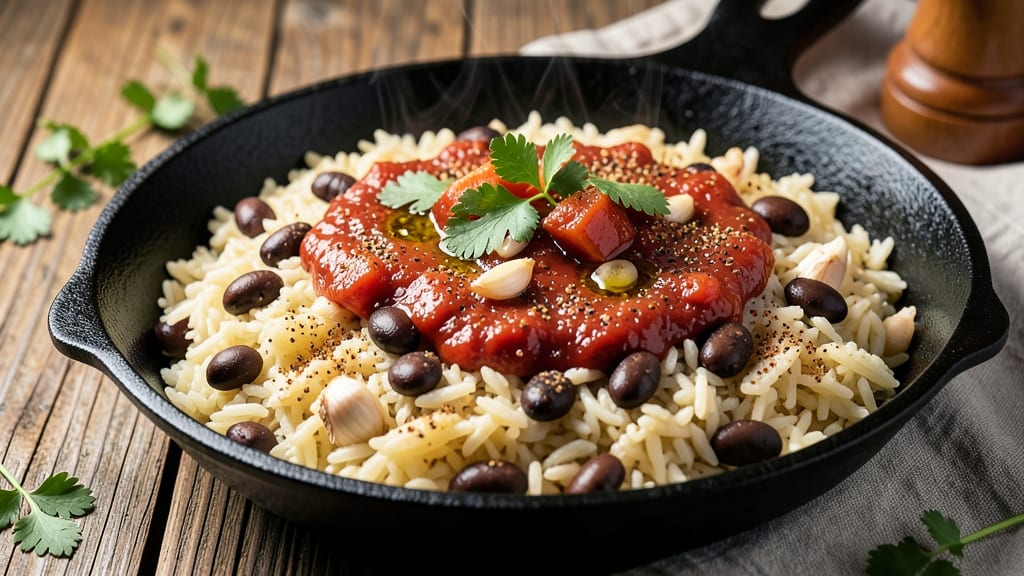
This black bean rice skillet recipe delivers a protein-packed, one-pan meal that’s ready in just 20 minutes—perfect for busy weeknights. The combination of tender rice, hearty black beans, and savory spices creates a satisfying dish that’s both vegan-friendly and packed with flavor.
No fancy techniques required, just a single skillet and simple ingredients.
What makes this recipe stand out is its versatility—use it as a standalone meal or pair it with avocado, salsa, or fresh cilantro for extra freshness.
The dish is hearty enough for a main course but quick enough for a weeknight dinner, making it a go-to for plant-based eaters looking for a balanced, protein-rich option. Let’s get cooking!
Ingredients for black bean rice skillet
Fifteen simple ingredients transform into a hearty, protein-rich skillet meal in minutes.
| Ingredient | Amount | Notes |
|---|---|---|
| Black Beans (Canned) 🫘 | 1 ½ cups | Drained and rinsed thoroughly |
| Long-Grain White Rice 🍚 | 1 cup | Uncooked, jasmine or basmati preferred |
| Vegetable Broth (Low-Sodium) 💧 | 1 ½ cups | Homemade or quality store-bought |
| Extra-Virgin Olive Oil 🫒 | 2 tbsp | High-quality for flavor |
| Garlic Cloves 🧄 | 4 cloves | Minced for aromatic depth |
| Diced Tomatoes (Canned) 🍅 | 1 cup | San Marzano preferred |
| Ground Cumin 🌿 | 1 tsp | Freshly toasted for intensity |
| Smoked Paprika 🌶️ | ½ tsp | For smoky depth |
| Turmeric Powder 🌿 | ¼ tsp | For vibrant color and earthiness |
| Onion Powder 🧅 | ½ tsp | Substitute for fresh onion |
| Salt 🧂 | ½ tsp | Diamond Crystal preferred |
| Black Pepper 🌶️ | ¼ tsp | Freshly cracked for heat |
| Fresh Cilantro 🌿 | ¼ cup | Chopped for garnish |
| Lime Juice 🍋 | 1 tbsp | Freshly squeezed |
| Avocado Oil (Optional) 🫒 | 1 tbsp | For finishing drizzle |
The black beans are the star here—low-sodium canned is essential to avoid over-salting the dish. Trader Joe's or Whole Foods carry excellent brands like Eden Organic or Dr. McDougall's. For rice, jasmine or basmati cooks faster and stays distinct, but any long-grain works. The vegetable broth should be rich and flavorful; Pacific Foods or Imagine brands are top-tier for umami depth. Garlic and onions form the aromatic base, so don’t skimp on freshness—smell them first before buying.
No fresh garlic? Garlic powder at half the amount works in a pinch, though texture suffers. Substituting coconut aminos for salt adds depth without sodium. The diced tomatoes can be fresh if in season, but San Marzano canned provides consistent sweetness. For extra heat, add red pepper flakes or a dash of hot sauce. The lime juice brightens everything—Mexican key limes are ideal, but regular limes work fine. Fresh cilantro elevates the dish; if unavailable, dried cilantro at one-third the amount is a decent substitute.
This skillet reheats beautifully—microwave for 2 minutes or warm in a pan with a splash of water. Store leftovers in an airtight container for up to 4 days in the fridge or 3 months frozen. For meal prep, double the batch and portion into containers. The rice-to-liquid ratio is critical—1:1.5 ensures perfect texture. Garnish with avocado slices or extra cilantro before serving for a restaurant-quality finish.
Why You'll Love This Recipe
- One-Pan Magic: I swear by this—just toss the rice, beans, and broth in a skillet with olive oil, let it simmer, and boom. No pots, no pans, no stress. The garlic sizzles into the rice as it cooks, so you’re left with that rich aroma filling your whole kitchen.
- Garlicky Goodness: The secret’s in the garlic—sautéed until golden, then simmered right into the rice. It’s not overpowering, just deep and savory, with the beans adding that creamy texture. Honestly, I’ve had worse meals with way more effort.
- Lunchbox Hero: This keeps like a dream. Pack it in containers for work lunches, and it reheats beautifully—no soggy rice here. My kids actually ask for leftovers, which is basically a parenting win.
- Budget-Friendly Staple: Canned beans, rice, broth—this recipe costs me pennies per serving. Between us, it’s the kind of meal that lets me splurge on avocados or cheese after the main dish is already perfect. (Yes, even on a Tuesday night.)
Step-by-step instructions for black bean rice skillet
Here's the method for a flavorful, protein-rich skillet that comes together in one pan with minimal effort.
Toast the Spices and Cook the Garlic
Heat the 2 tablespoons extra-virgin olive oil in a large skillet over medium heat. Add the 1 teaspoon ground cumin, ½ teaspoon smoked paprika, ¼ teaspoon turmeric powder, ½ teaspoon onion powder, ½ teaspoon salt, and ¼ teaspoon black pepper. Toast the spices for 30 seconds until fragrant—you'll smell their warm, earthy aromas fill the kitchen.
Immediately add the 4 minced garlic cloves and cook for 30-45 seconds until the garlic turns golden and releases its sweet, pungent scent. Be careful not to let it burn—garlic darkens quickly. This aromatic base forms the flavor foundation of your dish, so don't rush this step.
Sauté the Tomatoes and Add Rice
Pour in the 1 cup diced tomatoes and stir for 2 minutes until they begin to soften slightly. The acidity of the tomatoes will help break down the spices, creating a cohesive flavor profile. Add the 1 cup uncooked long-grain white rice and stir to coat the grains evenly with the tomato-spice mixture.
Cook for 1 minute to lightly toast the rice, which enhances its nutty flavor. The rice should look dry and slightly translucent at the edges. This brief toasting prevents the grains from becoming mushy later in the cooking process.
Add Beans and Broth for Simmering
Stir in the 1.5 cups drained black beans and pour in the 1.5 cups low-sodium vegetable broth. Bring the mixture to a gentle boil over medium-high heat, then immediately reduce the heat to low. The liquid should barely bubble at the edges—this ensures even cooking without scorching.
Cover the skillet with a tight-fitting lid and simmer for 15 minutes. Resist the urge to peek or stir—the undisturbed cooking allows the rice to absorb the liquid evenly. The beans will soften slightly, and the rice will begin to transform into fluffy grains.
Finish with Cilantro and Lime
After 15 minutes, remove the lid and stir the skillet gently. The rice should be tender with just a slight bite remaining, and the beans should be heated through. Add the ¼ cup chopped fresh cilantro and 1 tablespoon freshly squeezed lime juice, stirring well to distribute the bright, herbaceous notes.
For an optional finishing touch, drizzle with 1 tablespoon avocado oil and stir once more. The oil adds a silky texture and subtle richness that complements the earthy spices. Taste and adjust seasoning if needed—you may want to add a pinch more salt or a splash of lime juice for brightness.
Rest and Serve
Let the skillet rest, covered, for 5 minutes off the heat. This resting period allows the rice to finish absorbing any remaining liquid and the flavors to meld together. The dish should be steaming hot and fragrant when you serve it.
Divide the skillet among 4 plates, ensuring each portion contains an even distribution of rice, beans, and tomatoes. The dish should be vibrant in color—deep browns from the spices, bright green from the cilantro, and pops of red from the tomatoes. Serve immediately for the best texture and flavor experience.
Pro Tips For Making Black Bean Rice Skillet
- Sauté Garlic Low and Slow: I learned this the hard way—burnt garlic ruins everything. Cook the minced cloves in olive oil over medium-low heat until just fragrant (about 2 minutes), not golden. High heat turns garlic bitter fast, and you’ll taste it in every bite.
- Drain and Rinse Beans: Skip this, and your skillet turns into a mushy, waterlogged mess. Drain the canned black beans, then rinse them under cold water to remove excess starch. This keeps the rice separate and prevents a gluey texture—trust me, your future self will notice.
- Toast the Rice First: Don’t just dump the rice in—give it a quick 2-minute toast in the skillet with olive oil before adding broth. This step builds flavor and prevents the rice from turning out bland. (Yes, even if you’re impatient like me.)
- Use Broth, Not Water: Low-sodium vegetable broth adds depth that water can’t match. If you’re short on time, add a pinch of salt and a splash of soy sauce to plain water—it makes a real difference in the final taste. No one wants flavorless rice.
Common mistakes when making your black bean rice skillet
Skipping the Spice Toast
Skipping the 30-second spice toast is the #1 mistake I see—it robs your dish of depth. Those spices need to bloom to release their full aroma. Use medium heat and stir constantly to prevent burning.
If you're in a rush, toast them in a dry pan for 15 seconds before adding oil, but don't skip this step entirely. 🌶️
Overcrowding the Skillet
Packing too many ingredients into your pan causes steaming instead of browning. Use a 12-inch cast-iron skillet or similar size for this recipe—it gives everything room to develop flavor.
If your pan is too small, cook in batches or use a larger one. Overcrowding also leads to mushy rice, so keep the heat at medium-low during simmering.
Using High-Sodium Broth
Regular canned broth is often way too salty, which can make your skillet taste flat or overly briny. Always choose low-sodium vegetable broth (like Pacific Foods or Imagine brands) and taste it first—if it needs more salt, add a pinch of Diamond Crystal kosher salt.
Remember, you can always adjust seasoning later, but you can't remove excess salt.
Stirring Too Often
Peeking or stirring while the rice simmers disrupts the cooking process, leading to uneven texture. After adding the broth, cover the skillet immediately and only stir once at the 15-minute mark.
The rice needs undisturbed time to absorb liquid evenly. If you must check, lift the lid just enough to peek—don't remove it completely.
Undercooking the Rice
Rice should have a slight bite when done—if it's completely soft, it's likely overcooked and mushy. The 15-minute simmer is perfect for long-grain rice, but if your stove runs hot, reduce heat to low or cover with a damp towel to trap steam.
Test doneness by pressing a grain with a fork—it should hold its shape but be tender.
Ignoring the Resting Time
Skipping the 5-minute rest after cooking means serving rice that's still releasing steam and absorbing liquid unevenly. This step lets flavors meld and prevents a soggy texture.
Cover the skillet and let it sit off the heat—you'll notice the difference in texture and taste. It's an easy habit that makes a big impact! 💫
Nutrition facts
Frequently asked questions about black bean rice skillet
Can I use brown rice instead of white rice?
Yes, but you'll need to adjust the cooking time. Brown rice takes about 25-30 minutes to cook thoroughly in this skillet method. Use 1.25 cups of brown rice and add an extra ½ cup of broth to account for its longer cooking time. The texture will be nuttier and heartier, perfect for a protein-rich meal.
How do I make this skillet spicier?
Add ½ teaspoon cayenne pepper or 1 teaspoon chili powder when toasting the spices, or stir in 1-2 tablespoons hot sauce at the end. For smoky heat, swap ½ teaspoon smoked paprika for regular paprika. Fresh jalapeños or diced chipotle peppers also work well—just remove seeds for less heat.
Can I prep this ahead of time for meal prep?
Cook the skillet as directed, then let it cool completely. Store in an airtight container in the fridge for 4-5 days or freeze for 3 months. Reheat in a skillet with a splash of water or microwave for 2 minutes, stirring halfway. The flavors actually improve overnight as they meld together.
What are the best toppings or sides?
Fresh toppings like avocado slices, crumbled cotija cheese, or sliced radishes add brightness. For sides, try warm corn tortillas, crispy jicama slaw, or a simple mango avocado salad. A dollop of Greek yogurt or sour cream (for non-vegan versions) adds creaminess. Don't forget lime wedges for extra zing!
Why did my rice turn out mushy?
Mushy rice usually means one of two things: either you stirred too often during cooking or your heat was too high. Keep the lid on and only stir once at the 15-minute mark. Also, ensure you're using the correct 1:1.5 rice-to-broth ratio—too much liquid can make rice gummy. If it happens, try using less broth next time and simmer uncovered for the last 2 minutes to evaporate excess moisture.