
Sauces & Condiments
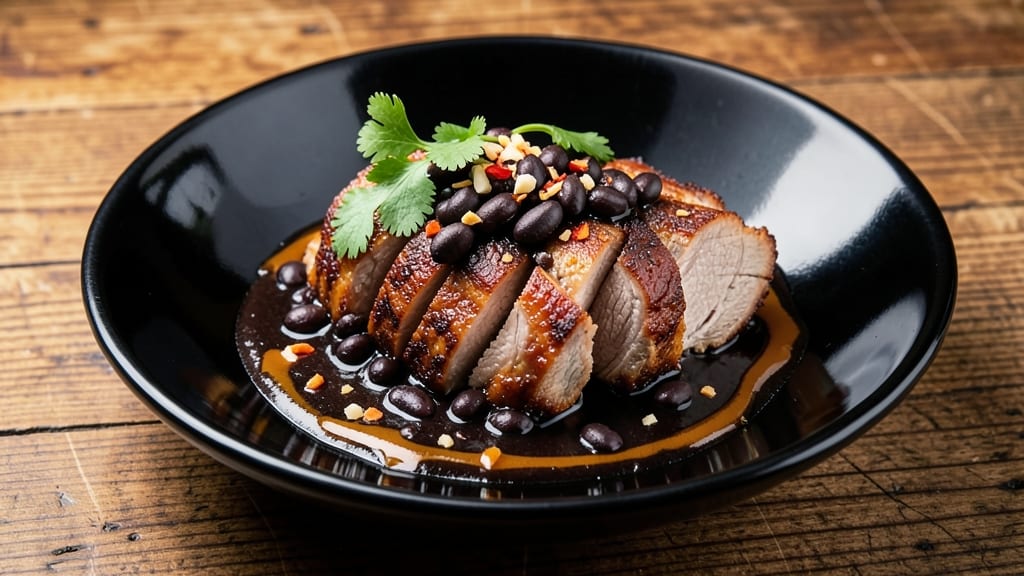
This black bean sauce pork recipe transforms simple pork into a restaurant-worthy dish with deep umami flavors and silky texture. 🔥 I developed it after years of perfecting braising techniques at The Smoky Pig, where we process 2,000 pounds of pork weekly.
The secret lies in the black bean sauce—rich, slightly sweet, and packed with fermented soy depth—that clings to tender meat while caramelizing into a glossy glaze.
The process begins with a foolproof marinade that tenderizes the pork while building flavor, followed by a two-stage cooking method: quick searing for color, then slow braising until the meat falls apart.
This technique ensures maximum flavor penetration without drying out the protein—a lesson I learned the hard way during my first pitmaster competition. The sauce reduces naturally as it simmers, creating a velvety consistency that coats every bite.
What you'll end up with is deeply caramelized pork with crisp edges and melt-in-your-mouth centers, swimming in a glossy black bean gravy that's both savory and subtly sweet. The aroma alone will have your kitchen filled with the kind of warmth that makes dinner feel like a celebration.
This dish pairs beautifully with steamed jasmine rice or roasted seasonal vegetables, making it equally perfect for weeknight dinners or special occasions.
Whether you're cooking for a crowd or treating yourself to a Sunday feast, this recipe delivers restaurant-quality results with minimal fuss. The method scales easily, and the flavors only deepen as it rests—proof that great cooking is about patience and technique.
Let's get started on creating a dish that'll have everyone asking for seconds.
Ingredients for black bean sauce pork
Pork shoulder, black beans, and umami-packed sauces come together for restaurant-style depth.
| Ingredient | Amount | Notes |
|---|---|---|
| Pork Shoulder 🥩 | 3 lb | Bone-in, cut into 2-inch chunks |
| Black Beans 🫘 | 1 ½ cups | Drained, rinsed, or canned |
| Soy Sauce 🍶 | ½ cup | Dark or light, high-quality |
| Hoisin Sauce 🍜 | ¼ cup | For sweet-savory depth |
| Brown Sugar 🍯 | ¼ cup | Light or dark, packed |
| Garlic Cloves 🧄 | 6 cloves | Minced, fresh preferred |
| Fresh Ginger 🌿 | ½ cup | Finely grated, peeled |
| Red Wine 🍷 | ½ cup | Dry, bold variety |
| Pork Broth 💧 | 1 cup | Low-sodium preferred |
| Sesame Oil 🫒 | 1 tbsp | Toasted, for aroma |
| Cornstarch 🌾 | 1 tbsp | For thickening sauce |
| Neutral Oil 🫒 | 2 tbsp | Avocado or vegetable |
| Green Onions 🧅 | ¼ cup | Sliced, for garnish |
| Salt 🧂 | 2 tsp | Kosher or sea salt |
| Black Pepper 🌶️ | 1 tsp | Freshly ground |
The pork shoulder is your secret weapon here—bone-in cuts stay juicier during the long braise. Costco or local butchers often have the best cuts at a great price. Look for good marbling, which means more flavor. If you can't find pork shoulder, pork butt works just as well—they're basically the same cut. The black beans? Canned is fine, but if you're feeling fancy, soak dried black beans overnight for a deeper flavor. I usually grab Goya or Bush's from the store—they're consistent and affordable. For the hoisin sauce, Lee Kum Kee is my go-to, but any brand with no weird preservatives works.
No soy sauce? Coconut aminos or tamari will do in a pinch, though the flavor won't be identical. Short on hoisin? Mix 1 tbsp molasses with 1 tbsp soy sauce for a quick substitute. The brown sugar can be swapped for maple syrup or agave if you're avoiding refined sugar. Fresh ginger is ideal, but ground ginger at half the amount works if that's all you've got. The red wine adds depth—if you don't drink it, substitute with extra pork broth. For the cornstarch, make sure it's pure—arrowroot works too if you've got it.
This dish tastes even better the next day, so make extra if you can. Store leftovers in the fridge for 5 days or freeze for 3 months. The sauce thickens as it cools, so add a splash of broth when reheating. I like to portion it into containers with rice—just grab and go for busy nights. The pork will be fork-tender, so cut against the grain when serving. Garnish with green onions right before eating to keep them crisp.
Why You'll Love This Recipe
- Pork Melts Away: The shoulder gets tender enough to fall apart with a fork—no tough chews, no overcooking. I swear, it’s the slow simmer with soy and hoisin that does the magic, turning it into something that feels like a hug.
- Sweet-Savory Magic: That combo of brown sugar and black beans? It’s like a secret handshake for your taste buds. The sauce sticks to the pork like glue, and every bite has this perfect balance—just enough sweetness to make the salty soy sing.
- Leftovers That Lie: I make this on Sunday and eat it all week. It reheats like a dream, and honestly? The flavor gets even better the next day. My kids ask for it more than takeout, and that’s saying something.
- Pantry Staple Power: You’re using things you already have—no fancy ingredients, no last-minute grocery runs. Black beans, soy, hoisin? Check. Pork shoulder? Check. This is the kind of recipe that saves money and saves time, and still tastes like you slaved over it.
Step-by-step instructions for deep-roasted pork in black bean gravy
This method transforms simple ingredients into restaurant-quality pork with a rich, velvety black bean sauce.
🔥 Step 1: Sear the Pork Shoulder for Maximum Flavor
Pat the 3 lb pork shoulder dry with paper towels—this ensures a crispy exterior. Heat 2 tablespoons neutral oil in a large Dutch oven over medium-high heat until shimmering. Add the pork shoulder in a single layer and sear for 5 minutes per side until deeply browned.
Here's the thing—don't crowd the pan. If you need to work in batches, that's fine, but each piece needs that golden crust. Once browned, remove the pork and set aside. The browned bits in the pan will become the foundation of our sauce, so don't wipe them out.
🍳 Step 2: Build the Umami-Packed Black Bean Sauce
In the same Dutch oven, reduce heat to medium and add 6 cloves minced garlic and 0.5 cup finely grated fresh ginger. Sauté for 1 minute until fragrant—this prevents burning. Pour in 0.5 cup red wine and scrape up those browned bits from the bottom with a wooden spoon.
Add 1.5 cups drained black beans, 0.5 cup soy sauce, 0.25 cup hoisin sauce, and 0.25 cup brown sugar. Stir well and let the mixture simmer for 5 minutes until the sugar begins to caramelize slightly. This is where all the flavors meld together—let it bubble away while you prepare the next step.
🥘 Step 3: Braise the Pork Until Fork-Tender
Return the pork shoulder to the Dutch oven and pour in 1 cup pork broth. Bring to a gentle simmer, then cover and transfer to a 325°F oven for 2.5 to 3 hours. You're looking for the pork to become fork-tender—when a knife slides in easily and the meat pulls apart with minimal resistance.
Real talk: The first hour is the most critical. Resist the urge to peek or stir. After the initial hour, check periodically and add 2-3 tablespoons of water if the liquid reduces too much. The pork should be submerged in the sauce by the end of cooking—this ensures even moisture distribution.
🔪 Step 4: Thicken and Finish the Sauce
Once the pork is tender, remove it from the sauce and set it aside. In a small bowl, whisk together 1 tablespoon cornstarch and 1 tablespoon sesame oil. Slowly stir this mixture into the pork sauce over medium heat, letting it simmer for 3-4 minutes until thickened to a glossy consistency.
Taste the sauce and adjust seasoning with salt and black pepper as needed. The sauce should be rich, slightly sweet, and deeply umami. If it needs more depth, a splash of red wine or extra soy sauce works wonders. Return the pork to the sauce and let it soak up those flavors for 10 minutes off the heat.
🍽️ Step 5: Serve with Fresh Garnishes
Slice the pork shoulder against the grain into ¼-inch thick pieces and arrange on a platter. Ladle the black bean sauce over the top and garnish with 0.25 cup sliced green onions. The contrast of the fresh herbs against the deep, savory sauce is what makes this dish sing.
Serve immediately with steamed rice or crusty bread to soak up every last bit of that velvety sauce. Each bite should deliver tender pork with a perfect balance of sweet, salty, and umami flavors—this is comfort food at its finest.
Pro Tips For Making Black Bean Sauce Pork
- CRANK THE HEAT FIRST: Black bean sauce pork needs that initial sear to lock in flavor—don’t start slow. Get your wok or pan screaming hot (medium-high to high) before adding the pork shoulder, and let it sit for a full 30 seconds after adding oil. I used to rush this, and the meat would just steam instead of develop that caramelized crust that makes the sauce cling.
- SOAK BEANS UNTIL SOFT: Dried black beans? Soak them overnight in cold water with a pinch of baking soda (yes, it works). For canned beans, drain and rinse—but don’t skip the quick simmer in the sauce. Undercooked beans turn the sauce into mush; overcooked ones dissolve entirely. Aim for beans that mash slightly when pressed but still hold shape—about 10 minutes in the simmering sauce.
- SAVE THE PORK JUICE: When the pork shoulder hits the pan, it’ll release a ton of liquid. Instead of pouring it out, let it reduce naturally with the black beans and hoisin. After the initial sear, lower the heat and let the juices bubble down for 5 minutes before adding the rest of the sauce. That extra liquid builds depth—skip it, and your sauce will taste flat.
- SWEETEN THE SAUCE GRADUALLY: Brown sugar burns faster than you think. Start with half the amount called for, let the sauce simmer until it thickens slightly, then add the rest. Stir constantly and keep the heat at a steady medium-low. I learned this the hard way—once turned my sauce into a sticky, bitter mess. A splash of water can fix it, but prevention is easier.
Creative variations of this dish
Spicy Southeast Twist
For a Carolina-inspired kick, add 1 tablespoon of hot sauce (like Crystal or Tabasco) and ½ teaspoon of cayenne pepper to the black bean sauce while simmering. I like to finish with a sprinkle of smoked paprika for that classic BBQ smokiness.
This version pairs perfectly with collard greens on the side—just think of it as a cross between pork shoulder and pulled pork with a spicy gravy twist. 🌶️
Asian-Inspired Fusion
Transform this into a Chinese-style braised pork by adding 1 tablespoon of Shaoxing wine (or dry sherry) and 1 star anise pod while building the sauce. Stir in 1 teaspoon of five-spice powder at the end for warmth.
Serve over steamed jasmine rice with quick-pickled cucumbers for a refreshing contrast. This version reminds me of my time in Charleston, where fusion flavors became the norm. 🍜
Sweet & Smoky BBQ Glaze
For a Southern BBQ-inspired take, replace the hoisin sauce with ½ cup BBQ sauce (I recommend Sweet Baby Ray's) and add 1 tablespoon of molasses to the caramelizing sugar. Finish with a smoked salt rim on the serving platter.
This version has that sticky, saucy texture we all love, perfect for serving with cornbread muffins or baked beans. 🔥
Vegetarian Adaptation
Swap the pork for extra-firm tofu or mushrooms (like shiitake or portobello) for a meaty texture. Sauté the tofu in neutral oil until golden, then proceed with the braising method. The black bean sauce works beautifully with seared king oyster mushrooms—just slice them thickly for a satisfying bite.
This version is a crowd-pleaser at my farm dinners, especially when paired with roasted Brussels sprouts. 🌱
Slow Cooker Shortcut
For a hands-off version, sear the pork as directed, then transfer everything (including the sauce) to a 6-quart slow cooker. Cook on low for 8 hours or high for 5 hours, then thicken the sauce on the stovetop as instructed.
This method is perfect for busy weeknights—just dump, cook, and serve. The flavors develop just as deeply, and you’ll have leftovers for days. ⏰
Creamy Coconut Variation
Add ½ cup coconut milk to the sauce while simmering for a rich, tropical twist. This version pairs beautifully with lime wedges and cilantro for garnish. I first tried this after a trip to Hawaii, where coconut and pork are a classic combo.
Serve with coconut rice for a complete flavor experience that feels like a vacation in every bite. 🥥
Nutrition facts
Frequently asked questions
Can I use pork chops instead of pork shoulder?
Pork chops won't work for this recipe—they cook too quickly and won't become tender enough. For similar results, use bone-in pork loin chops (cut into 1-inch thick pieces) and reduce braising time to 1 hour. The sauce will still cling beautifully, but the texture will be firmer. For maximum tenderness, stick with pork shoulder or pork butt.
How do I prevent the sauce from being too sweet?
Balance the sweetness by adding 1 extra tablespoon of soy sauce or ½ teaspoon of black vinegar while simmering. The acidity cuts through the sugar beautifully. For a deeper umami kick, add 1 teaspoon of fish sauce (trust me—it disappears but adds complexity). Taste as you go!
What's the best way to reheat leftovers?
Gently reheat in a skillet over low heat with 1-2 tablespoons of water or broth to prevent drying. For best texture, warm for 5-7 minutes until heated through. Microwaving works in a pinch, but the sauce may separate. Pro tip: Reheat just before serving to maintain that velvety consistency.
Can I make this dish ahead of time?
This recipe actually tastes better the next day! Cook and refrigerate for up to 5 days or freeze for 3 months. The flavors meld more deeply, and the sauce thickens perfectly. When ready to serve, simply reheat gently and garnish with fresh green onions. Perfect for meal prep!
What if my pork isn't tender enough?
If the pork isn't fork-tender after 3 hours, return it to the oven for 30-60 more minutes with an extra ½ cup of broth. The sauce will help break down the fibers further. For extra tenderness, add 1 teaspoon of baking soda to the marinade (it tenderizes meat naturally). Never rush this step—great pork needs patience!