
Sauces & Condiments
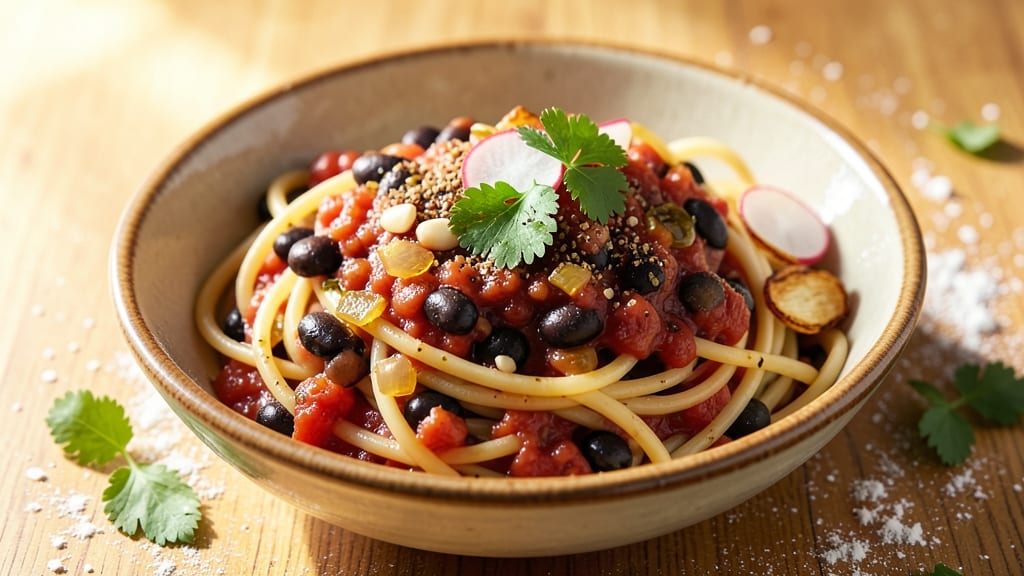
This vegan black bean spaghetti sauce transforms humble ingredients into a rich, umami-packed sauce that rivals traditional meat-based versions. The secret lies in deep-roasting spices and blending black beans directly into the sauce, creating a velvety texture with layers of flavor that cling to every strand of pasta.
I developed this recipe after craving a hearty, plant-based sauce that could stand up to bold Italian flavors without relying on heavy cream or dairy substitutes.
The process is straightforward but yields restaurant-quality results: dry-toast spices until fragrant, simmer with crushed tomatoes and black beans until the flavors meld, then blend until smooth for a silky consistency.
What makes this sauce special is its versatility—use it as a pasta sauce, a dip for crusty bread, or a base for grain bowls. The black beans add protein and thickness, while the roasted spices provide depth that elevates simple ingredients into something extraordinary.
By the time you taste the first spoonful, you’ll notice the caramelized edges from the roasted spices and the smooth, velvety texture that coats the back of your throat.
The sauce thickens as it cools, making it perfect for meal prep—just reheat with a splash of water or broth to restore its ideal consistency. It’s the kind of sauce that turns a weeknight dinner into a flavorful experience without requiring hours in the kitchen.
Whether you’re serving it over al dente spaghetti or using it as a dip for roasted vegetables, this sauce delivers bold, umami-rich flavor with every bite. The best part?
It keeps well in the fridge for up to a week, so you can make a big batch and enjoy it all week long. Let’s get cooking!
Ingredients for black bean spaghetti sauce
These 13 ingredients create a velvety, umami-rich sauce that rivals meat-based versions.
| Ingredient | Amount | Notes |
|---|---|---|
| Dried Black Beans 🌱 | 1 ½ cups | Unsoaked, rinsed thoroughly |
| Crushed Tomatoes 🍅 | 28 oz | San Marzano preferred, no sugar added |
| Yellow Onion 🧅 | 1 whole | Medium size, finely chopped |
| Garlic Cloves 🧄 | 4 cloves | Peeled, smashed for depth |
| Extra-Virgin Olive Oil 🫒 | ½ cup | High-quality, fruity |
| Ground Cumin 🌿 | 2 tsp | Toasted for maximum aroma |
| Smoked Paprika 🌶️ | 1 ½ tsp | For rich, smoky depth |
| Ground Coriander 🌿 | 1 tsp | Freshly ground preferred |
| Dried Oregano 🍃 | 1 tsp | Mexican oregano if available |
| Vegetable Broth 💧 | 1 cup | Low-sodium preferred |
| Lemon Juice 🍋 | 1 tbsp | Freshly squeezed |
| Salt 🧂 | 1 ½ tsp | Diamond Crystal kosher |
| Black Pepper 🌶️ | ½ tsp | Freshly cracked |
The black beans are the heart of this sauce—dried, not canned, because their natural starches create that silky texture when blended. Trader Joe's has the best-priced dried beans in bulk, or grab a bag from the international aisle at Whole Foods. For the tomatoes, San Marzano cans are worth the splurge—they're sweeter and less acidic, which balances the spices beautifully. The onion and garlic? Yellow onions add sweetness, but red onions work too if you prefer. Just make sure they're fresh—no rubbery ends or sprouting. Toast your spices in the dry pan until fragrant; that caramelization is what gives this sauce its depth.
No San Marzano tomatoes? Crushed tomatoes in a heavy-duty can work in a pinch, but you might want to add an extra pinch of sugar to balance the acidity. Running low on smoked paprika? Regular paprika plus a pinch of liquid smoke gets you close. The vegetable broth can be swapped for white wine or red wine if you've got it—just reduce the amount by half since alcohol evaporates. For a quicker version, pre-cooked canned beans save time, but they won't blend as smoothly. The lemon juice is non-negotiable though—it brightens everything and keeps the sauce from getting too heavy. If you're short on time, lemon zest plus a splash of vinegar works too.
This sauce thickens as it cools, so add broth a tablespoon at a time when reheating. It keeps for 5-7 days in the fridge, or 3 months frozen—portion into ice cube trays for easy single-use servings. The flavor actually improves overnight as the spices meld. For extra richness, stir in 1 tablespoon of nutritional yeast before serving. And if you're making it ahead for a party, cover the surface with a thin layer of olive oil to prevent a skin from forming.
Why You'll Love This Recipe
- I’ll be real: I used to dread soaking beans. Not here. Just toss those dried black beans in a pot with the onions and garlic, cover with water, and let them simmer—no pre-soak, no fuss. By the time the tomatoes and olive oil meld together, the beans soften right into the sauce, turning it thick and rich without extra effort.
- No-Soaking Needed: I’ll be real: I used to dread soaking beans. Not here. Just toss those dried black beans in a pot with the onions and garlic, cover with water, and let them simmer—no pre-soak, no fuss. By the time the tomatoes and olive oil meld together, the beans soften right into the sauce, turning it thick and rich without extra effort.
- Umami Bomb: That first spoonful? Chef’s kiss. The crushed tomatoes give it a bright, tangy base, but the black beans—oh, the black beans—add this deep, earthy richness that just sticks. A splash of olive oil at the end ties it all together with a velvety finish that makes you want to eat it straight from the pot.
- Double-Duty Sauce: This isn’t just for spaghetti. Slather it on toast with a fried egg, stir it into rice for a hearty bowl, or even dollop it over grilled chicken. Honestly, I’ve made it three times this week—once for dinner, once for lunch leftovers, and once because I forgot to thaw meat and needed something fast. It’s my go-to when I don’t want to think.
Step-by-step instructions for black bean spaghetti sauce
This sauce builds flavor through slow-roasting and layered spices—here's how to make it rich and complex.
Toast the Spices in Olive Oil
Heat the 0.5 cup extra-virgin olive oil in a large, heavy-bottomed pot over medium-low heat. Add the 2 teaspoons ground cumin and 1.5 teaspoons smoked paprika, stirring constantly for 1 minute until fragrant. The spices should smell deeply toasted—not burnt, just warm and aromatic.
Next, add the 1 teaspoon ground coriander and 1 teaspoon dried oregano, stirring for another 30 seconds. This step develops the spices' natural oils, which will carry through the entire sauce. If you hear popping, lower the heat slightly—you want to toast, not char. The oil should take on a golden hue and smell like a warm Mexican marketplace.
Sauté Onion and Garlic Until Caramelized
Add the finely chopped yellow onion to the pot and cook over medium heat for 8-10 minutes, stirring occasionally, until deeply golden and sweet. You're looking for a color shift from pale yellow to rich amber—this caramelization adds depth to the sauce. If the onions brown too quickly, reduce the heat slightly.
Push the onions to the sides of the pot and add the 4 smashed garlic cloves to the center. Cook for 1-2 minutes until the garlic is golden and fragrant, but not burnt. This step is critical—garlic burns fast, and burnt garlic tastes bitter. Stir occasionally to prevent browning too quickly. The garlic should perfume the entire kitchen with its warm, nutty aroma.
Build the Sauce with Tomatoes and Beans
Pour in the 28 ounces crushed tomatoes, scraping up any browned bits from the bottom of the pot. Add the 1.5 cups dried black beans (rinsed), 1 cup vegetable broth, 1.5 teaspoons salt, and 0.5 teaspoon black pepper. Stir well to combine, then bring to a gentle simmer over medium heat. The sauce should bubble softly—if it boils vigorously, reduce the heat.
Let the sauce simmer uncovered for 30 minutes, stirring occasionally. The beans will soften and begin to break down, releasing their earthy flavors into the sauce. You'll notice the sauce thicken slightly as the liquid reduces. This simmering time is where the magic happens—the flavors meld and deepen. If the sauce gets too thick, add a splash of water or broth to maintain a smooth consistency.
Finish with Acid and Balance Flavors
After 30 minutes, stir in the 1 tablespoon lemon juice. This brightens the sauce and cuts through the richness of the tomatoes and beans. Taste and adjust the seasoning—you might need a touch more salt or a pinch of black pepper to balance the flavors. The sauce should be rich, slightly smoky, and deeply umami with a touch of acidity.
Let the sauce simmer for another 10 minutes to allow the lemon juice to integrate fully. The final texture should be thick but still spoonable, with a glossy sheen. If you're serving it immediately, stir in a pat of butter or a drizzle of olive oil for extra richness. For best results, let it rest for 15 minutes before serving—this allows the flavors to settle and the sauce to thicken slightly.
Pro Tips For Making Black Bean Spaghetti Sauce
- SOAK BEANS OVERNIGHT: I learned this the hard way—skipping the soak leaves you with beans that stay stubbornly tough, no matter how long you simmer. Toss dried black beans in a bowl with plenty of cold water (about 3 cups per 1 cup beans) and let them sit 8+ hours. The longer they soak, the creamier the final sauce, and you’ll save 30 minutes of simmering time.
- SWEEP THE POT: After cooking the beans, don’t just drain them—use a wooden spoon to scrape up every last bit of starch from the bottom of the pot. That’s where the flavor hides, and skipping it means a sauce that’s thinner and less rich. Just 10 seconds of scraping makes a real difference.
- CRUSH TOMATOES BY HAND: Canned crushed tomatoes are fine, but if you’re using whole canned tomatoes, resist the urge to blend them smooth. Instead, crush them roughly with your fingers or a potato masher—you want texture, not a puree. This keeps the sauce from turning gluey and adds depth that store-bought crushed tomatoes can’t match.
- SALT THE BEANS HALFWAY: Add half the salt to the beans when you start cooking, then the rest later. The initial salt breaks down the beans faster, but adding it all at once can make the sauce taste flat by the end. Taste as you go—you’ll need less than you think, especially if you’re using salted tomatoes.
Flavor customization for this recipe
Spicy Heat Boost
For an extra kick, stir in ½ teaspoon cayenne pepper or 1 teaspoon chipotle powder during the spice toast. I love adding 1 diced jalapeño (seeds removed) with the onions for fresh heat.
If you prefer smoky heat, swap ½ teaspoon smoked paprika for ½ teaspoon regular paprika and add ¼ teaspoon liquid smoke at the end. For a balanced heat, finish with 1 tablespoon hot honey—it sweetens the sauce while keeping the spice front and center. 🌶️
Sweet and Tangy Twist
Brighten the sauce with 1 tablespoon maple syrup or 1 tablespoon agave when adding the lemon juice. This balances the earthy beans and smoky spices beautifully. For a tangy kick, stir in 1 tablespoon apple cider vinegar or 1 tablespoon balsamic vinegar instead of lemon juice.
If you love fruit notes, add ½ cup diced pineapple or ½ cup roasted red peppers—they caramelize during simmering and add natural sweetness. 🍯
Herbaceous Freshness
Fresh herbs elevate this sauce instantly. Stir in 2 tablespoons chopped cilantro or 2 tablespoons chopped parsley at the end for brightness. For a Mediterranean twist, add 1 tablespoon chopped basil or 1 tablespoon chopped oregano with the lemon juice.
If you’re using dried herbs, reduce to 1 teaspoon—they’re more concentrated than fresh. I also love adding 1 teaspoon fresh thyme leaves for an earthy depth. 🌿
Umami Depth
Boost the savory profile with 1 tablespoon soy sauce or 1 tablespoon coconut aminos when adding the broth. For a deeper umami, stir in 1 tablespoon miso paste or 1 tablespoon nutritional yeast at the end.
If you have sun-dried tomatoes, finely chop 2 tablespoons and add them with the crushed tomatoes—they’ll soften and release their concentrated flavor. A splash of 1 tablespoon fish sauce (if not vegan) or 1 tablespoon vegan Worcestershire sauce also adds complexity. 💫
Creamy Texture
For a velvety finish, blend in ¼ cup cashew cream (soaked cashews blended with water) or 2 tablespoons coconut milk at the end. If you’re not blending the sauce, stir in 1 tablespoon cornstarch mixed with 2 tablespoons water and simmer for 2 minutes to thicken.
For a dairy-free richness, add 2 tablespoons tahini—it adds a nutty depth that pairs perfectly with the smoky spices. 🥥
Regional Variations
For a Mexican-inspired version, add 1 teaspoon cinnamon and ½ teaspoon allspice with the spices, plus ½ cup diced bell peppers. A Caribbean twist calls for 1 teaspoon thyme and ½ teaspoon nutmeg, with 1 tablespoon lime juice instead of lemon.
For an Italian fusion, swap the smoked paprika for ½ teaspoon fennel seeds (toasted) and add ½ cup white wine with the broth. Each variation keeps the black bean base but shifts the flavor profile entirely. 🗺️
Nutrition facts
Frequently asked questions
Can I use canned black beans instead of dried?
Yes, but the texture will be slightly different. Canned beans blend less smoothly and may leave a grainier consistency. If using canned, rinse thoroughly and drain well to reduce excess liquid. For best results, reduce the vegetable broth to ½ cup to compensate for the extra moisture. The flavor will still be delicious, just less velvety!
How do I adjust the thickness of the sauce?
If the sauce is too thick, add 1-2 tablespoons of water or broth at a time while simmering. For a thicker sauce, simmer uncovered for an extra 10-15 minutes to reduce the liquid. The sauce naturally thickens as it cools, so reheat with a splash of liquid if needed. For instant thickening, blend 1 tablespoon cornstarch with 2 tablespoons water and stir in at the end.
Can I make this sauce in a slow cooker?
Follow the same steps for toasting spices and sautéing onions/garlic, then transfer everything to a slow cooker. Cook on low for 6-8 hours or high for 3-4 hours. The beans will soften completely, creating an even creamier texture. Stir in lemon juice at the end and adjust seasoning as needed. Perfect for hands-off cooking!
What's the best way to store leftovers?
Store in an airtight container in the fridge for up to 7 days. The sauce thickens further when refrigerated, so add a splash of water or broth when reheating. For freezing, portion into ice cube trays or small containers—this makes it easy to thaw just what you need. Frozen sauce keeps for 3 months and reheats beautifully. Cover the surface with a thin layer of olive oil before storing to prevent skin formation.
Why does my sauce taste bland?
Most likely, the spices weren't toasted enough or the sauce needs more acidity. Next time, toast spices until they're deeply fragrant (almost smoky). For immediate improvement, add 1 extra tablespoon lemon juice or ½ teaspoon smoked paprika. If you used low-quality tomatoes or beans, try San Marzano tomatoes and high-quality dried beans for better flavor depth. Taste as you go and adjust seasoning gradually!