
Soups & Stews
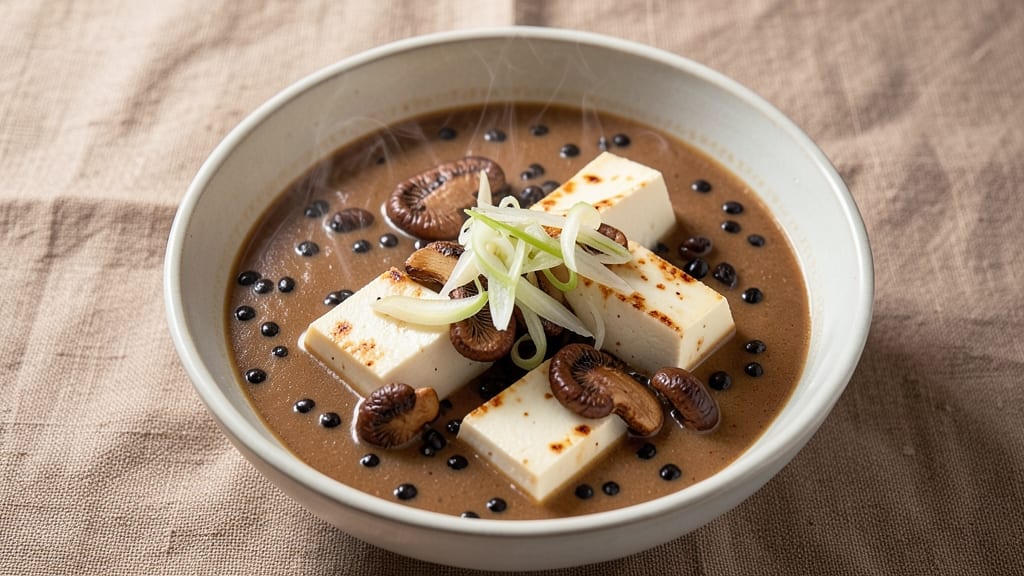
This black soybean soup recipe transforms humble fermented beans into a deeply flavorful, umami-rich dish that feels both ancient and modern. The secret lies in slow simmering—allowing the beans to release their earthy, nutty essence while absorbing aromatic vegetables and a touch of ginger.
I developed this version after discovering how fermented black soybeans elevate simple ingredients into something restaurant-worthy, with a texture that's both silky and satisfying.
The beauty of this soup is its versatility—it works as a light meal on its own or pairs perfectly with steamed rice for a complete vegan dish. Traditional recipes rely on long cooking times to develop the beans' complex flavors, but this method streamlines the process without sacrificing depth.
The result? A velvety broth with subtle sweetness and a hint of tang, where each spoonful delivers layers of umami that linger.
What makes this recipe stand out is the balance of textures: tender tofu cubes, crisp vegetables, and the fermented beans themselves, which add a subtle chewiness. The ginger and garlic infuse warmth, while a splash of sesame oil at the end adds a final aromatic punch.
It's the kind of soup that gets better with each reheating, as flavors meld and deepen over time.
Perfect for chilly evenings or as a comforting starter, this black soybean soup proves that plant-based meals can be deeply satisfying. Whether you're exploring vegan cuisine or simply craving something nourishing, this recipe delivers restaurant-quality results with minimal effort. Let's get cooking!
Ingredients for black soybean soup
Fermented black soybeans and aromatic vegetables create this deeply umami-rich, restaurant-worthy vegan soup.
| Ingredient | Amount | Notes |
|---|---|---|
| Fermented Black Soybeans 🌱 | 1 cup | Rinsed to remove excess salt |
| Silken Tofu 🧀 | 1 block | Firm, cubed for texture |
| Dashi Stock 💧 | 4 cups | Vegetable-based preferred |
| Fresh Shiitake Mushrooms 🍄 | 8 whole | Stems removed, sliced |
| Fresh Ginger 🧄 | 1 inch | Peeled, sliced thinly |
| Garlic Cloves 🧄 | 4 cloves | Minced for aromatic depth |
| Green Onions 🧅 | 3 whole | White and green parts separated |
| Carrots 🥕 | 2 medium | Julienned for texture |
| Sesame Oil 🫒 | 1 tbsp | Toasted sesame preferred |
| Soy Sauce 🍶 | 2 tbsp | Tamari for gluten-free option |
| Rice Vinegar 🍶 | 1 tbsp | For subtle tang |
| Sesame Seeds 🌾 | 1 tsp | Toasted for garnish |
| Sea Salt 🧂 | 1 tsp | Diamond Crystal preferred |
| White Miso Paste 🍶 | 1 tbsp | Dissolved in warm stock |
The fermented black soybeans are the heart of this dish—look for them in Asian markets or well-stocked grocery stores like Whole Foods. They should smell nutty and earthy, not overly salty or sour. If you can't find them fresh, dried black soybeans work too, but soak them overnight first. The silken tofu adds creaminess, but extra-firm tofu pressed for 20 minutes gives better texture. For the mushrooms, shiitake is ideal, but cremini or oyster mushrooms work in a pinch—just slice them thinner to ensure they cook through. Fresh ginger is non-negotiable here; organic ginger from the produce section has the most punch, and you'll want that bright, zesty flavor cutting through the richness of the beans.
No dashi stock? Vegetable broth with a splash of kombu seaweed mimics that umami depth perfectly. The miso paste can be swapped for white miso or even a bit of nutritional yeast if you're out, though the flavor won't be identical. Running short on sesame oil? Toasted walnut oil adds a similar nutty richness, though it lacks that signature sesame aroma. The green onions should be fresh—no wilted stems, and separate the whites and greens for garnish. For the carrots, julienne or matchstick cuts ensure they cook quickly without turning mushy. If you're serving this as a starter, you can halve the bean quantity and stretch it with extra vegetables, but don't skip the fermented beans entirely—they're what makes this soup sing.
This soup tastes even better the next day as flavors meld—double the batch and freeze half for lazy weeknights. Store in airtight containers for up to 5 days in the fridge, or freeze for 3 months. Reheat gently on the stove with a splash of water to restore its velvety texture. The tofu and mushrooms can be prepped ahead and stored separately in the fridge for 3 days, making assembly a breeze. For serving, garnish with toasted sesame seeds and extra green onions right before eating to keep everything vibrant. Pair with steamed jasmine rice to soak up every last drop of that rich, umami broth.
Why You'll Love This Recipe
- Five-Ingredient Magic: I swear by this recipe—just those fermented black soybeans, silken tofu, and a handful of mushrooms transform into something rich and satisfying. No chopping mountains of veggies or measuring fussy spices here. Honestly, the hardest part is waiting for the dashi to simmer.
- Umami Bomb: That first spoonful? Chef’s kiss. The black soybeans bring this deep, funky-sweet flavor that cuts through the delicate silkiness of the tofu, while the shiitake mushrooms add an earthy punch. Even my picky husband reaches for seconds—no small feat.
- Weeknight & Meal Prep: Between us, this is my go-to when I’m too tired to think. Double the batch on Sunday, and you’ve got lunches sorted for days—just reheat and enjoy. It’s also the kind of soup that feels fancy enough for guests but zero-stress to pull together.
- Budget-Friendly Powerhouse: Fermented black soybeans and silken tofu stretch like crazy, so you’re feeding a crowd without breaking the bank. I’ll be real: the ginger and shiitake might cost a little upfront, but they make this taste like a high-end restaurant dish. Worth every penny.
Step-by-step instructions for black soybean soup
A rich, umami-packed broth emerges when fermented black soybeans meet delicate vegetables and silken tofu. Here's how to balance earthy depth with subtle sweetness.
Prepare the Aromatic Base
Heat the 1 tablespoon sesame oil in a large pot over medium heat. Add the 4 cloves minced garlic cloves and 1 inch sliced fresh ginger—cook for 2 minutes until fragrant and just beginning to color. This foundational step builds the soup's aromatic complexity.
Next, add the 8 sliced fresh shiitake mushrooms and 2 julienned medium carrots. Sauté for 4-5 minutes until the mushrooms release their moisture and the carrots soften slightly. The mushrooms should release their earthy essence while the carrots add subtle sweetness to counterbalance the fermented beans' intensity.
Build the Umami Foundation
Lower the heat to medium-low and pour in the 4 cups dashi stock. Stir in the 1 tablespoon white miso paste, dissolving it completely by whisking for 1 minute. The miso should blend seamlessly, creating a velvety base that carries the soup's depth.
Simmer the mixture for 10 minutes until the vegetables are tender but still retain their shape. This gentle cooking allows the flavors to meld without breaking down the ingredients' individual textures. Taste and adjust seasoning with 1 teaspoon sea salt if needed—this is your flavor calibration point.
Incorporate the Fermented Elements
In a separate bowl, rinse the 1 cup fermented black soybeans under cold water to remove excess salt, then drain thoroughly. Add them to the simmering pot along with the 2 tablespoons soy sauce and 1 tablespoon rice vinegar. Stir gently to distribute the beans evenly—their deep, nutty flavor will infuse the broth.
Simmer for an additional 8-10 minutes until the beans are heated through and the soup reaches a harmonious balance. The beans should soften slightly but remain intact, releasing their fermented richness into the broth. Here's where the soup's signature earthy depth develops—don't rush this step.
Finish with Silken Tofu and Garnishes
Reduce the heat to low and gently fold in the 1 block cubed silken tofu using a silicone spatula. The tofu should warm through without breaking apart—this delicate texture contrasts beautifully with the hearty broth. Simmer for just 2 minutes to integrate the tofu's subtle creaminess.
Remove from heat and stir in the white parts of 3 separated green onions for brightness. Ladle the soup into bowls and garnish with the green onion tops and 1 teaspoon toasted sesame seeds. The contrast of fresh green onions against the toasted sesame seeds elevates the dish's visual and textural appeal.
Pro Tips For Making Black Soybean Soup
- SOAK THE MUSHROOMS FIRST: Fermented black soybeans are salty enough to overpower the soup if you don’t balance them. Soak the shiitake mushrooms in cold water for 10 minutes before slicing—this removes grit and mellows their earthiness so they play nice with the funky soybeans.
- STEAM THE TOFU: Silken tofu falls apart when stirred directly into hot broth. Instead, wrap it in cheesecloth or a thin kitchen towel, tie it off, and gently steam for 3-4 minutes in a small pot of simmering water. The texture stays intact, and it absorbs flavor without turning to mush.
- SIMMER THE SOYBEANS LOW: I used to rush this step and end up with a bitter, over-extracted broth. After burning three batches, I learned: simmer the fermented black soybeans on the lowest heat possible for 10-12 minutes. The longer they stew gently, the deeper the umami without the harshness.
- GINGER IS YOUR FLAVOR INSURANCE: Peel and slice the ginger thin—about 1/8-inch thick—and add it to the dashi stock first. Let it steep for 5 minutes before adding the soybeans. This infuses the broth with bright, warm notes that cut through the saltiness, and you won’t need extra seasoning. (Yes, even if you’re impatient like me.)
Best sauces and condiments for this dish
Sesame Oil Finish
This soup shines when finished with 1 tablespoon toasted sesame oil—it adds nutty depth and aromatic warmth that elevates every spoonful. I like to drizzle it directly over each serving right before eating, as the heat releases its full flavor.
For an extra touch, warm the oil slightly in a small pan with ½ teaspoon toasted sesame seeds—the seeds will pop and add texture. 🌟
Miso Paste Variations
While white miso paste is traditional, experiment with red miso for a deeper, slightly sweeter flavor profile. For a gluten-free option, swap in 1 tablespoon nutritional yeast—it won’t replicate miso’s complexity but adds a cheesy, umami note.
If you prefer a smoother texture, blend the miso with 1 tablespoon warm stock before adding to the pot.
Ginger-Garlic Infusion
The ginger and garlic are the soul of this soup—don’t skip the 2-minute sauté to develop their flavors fully. For extra punch, add ½ teaspoon grated fresh galangal (if available) alongside the ginger.
If you’re short on time, use 1 teaspoon ginger powder and ½ teaspoon garlic powder, but fresh is always better. The aroma alone will make your kitchen smell amazing. 🧄
Umami Boosters
Need more depth? Stir in 1 teaspoon fish sauce (for non-vegan) or 1 teaspoon soy sauce after simmering to intensify the umami. A splash of 1 tablespoon rice vinegar brightens the broth, while ½ teaspoon white pepper adds warmth without overpowering.
For a smoky twist, add ¼ teaspoon smoked paprika at the end.
Vegetable Swaps
Swap shiitake mushrooms for oyster mushrooms (sliced thin) or cremini mushrooms (halved) for a milder flavor. For extra crunch, add ½ cup baby bok choy or napa cabbage in the last 3 minutes of cooking.
If you love sweetness, include ½ cup lotus root (julienned) for a delicate, floral note that pairs perfectly with the beans.
Acid Balance
The rice vinegar cuts through the richness, but you can also use 1 teaspoon lemon juice or ½ teaspoon apple cider vinegar for a tangier finish.
If the soup tastes too heavy, add 1 teaspoon toasted rice flour mixed with cold water to thicken slightly—this also adds a subtle nutty flavor. Balance is key, so taste as you go! ✨
Nutrition facts
Frequently asked questions
Can I substitute dried black soybeans for fermented ones?
Yes, but you'll need to soak them first! Use ½ cup dried black soybeans and soak overnight in water, then drain before cooking. They'll need 30-45 minutes extra simmering time to soften properly. Fermented beans have more developed flavor, but dried ones still work—just expect a slightly less intense umami profile.
How do I store leftover black soybean soup?
Store in an airtight container in the fridge for up to 5 days, or freeze for 3 months. When reheating, add 1-2 tablespoons water to restore the velvety texture. The flavors actually improve after the first day as ingredients meld together—perfect for meal prep!
Why does my soup taste too salty?
The fermented beans and soy sauce often create saltiness, but don't worry—it's fixable! Add ½ cup water or ½ cup vegetable broth and simmer for 5 minutes to dilute. For extra balance, stir in 1 teaspoon rice vinegar or 1 teaspoon lemon juice to brighten the flavor.
Can I make this soup spicier?
Add ½ teaspoon red pepper flakes during the ginger-garlic sauté, or stir in 1 teaspoon gochujang (Korean chili paste) with the miso. For heat without dryness, blend 1 small chili (like Thai bird's eye) with 1 tablespoon water and add at the end. Adjust to taste!
What's the best way to serve this soup?
This soup shines as a light meal with steamed rice or as a starter before heartier dishes. For extra presentation, top with crispy fried shallots or toasted nori strips. The nutty, earthy flavors also pair beautifully with miso-glazed eggplant or stir-fried greens on the side.