
Soups & Stews
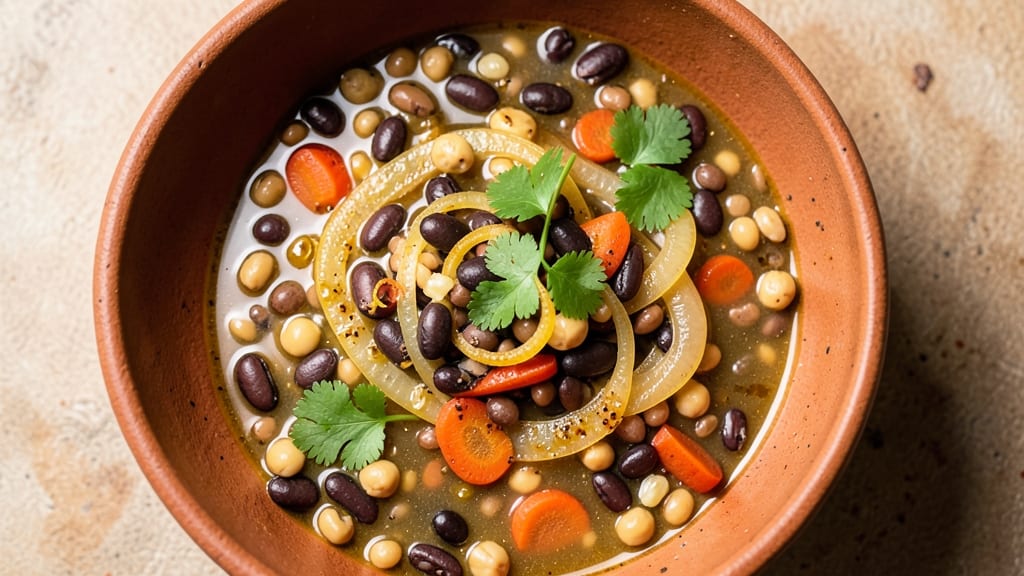
This Blue Zone bean soup recipe transforms simple ingredients into a longevity-boosting masterpiece that aligns with the world's longest-lived communities' dietary wisdom. The secret lies in slow-simmered beans, aromatic herbs, and whole grains—all packed with plant-based protein and fiber that support heart health and sustained energy.
What makes this recipe special is its one-pot simplicity, where minimal prep meets maximum flavor through careful layering of spices and vegetables.
Traditional Blue Zone diets emphasize whole, minimally processed foods, and this soup delivers exactly that. By combining three types of beans, you get a complete protein profile while keeping the recipe budget-friendly and accessible.
The key technique? A long, gentle simmer—at least 45 minutes—allows flavors to meld and textures to soften just enough for easy digestion, a hallmark of Blue Zone eating patterns.
What you'll end up with is a rich, umami-packed soup that's deeply satisfying yet light enough for daily consumption. The beans become tender but maintain their structure, while the herbs and garlic infuse the broth with complex aromatics.
This isn't just a meal—it's a nutritional powerhouse that aligns with the principles of longevity without sacrificing taste.
The beauty of this recipe extends beyond the bowl. It's naturally vegan-friendly, free from refined ingredients, and designed to be scaled for meal prep. The leftovers actually improve as flavors develop, making it perfect for busy weeks when healthy eating shouldn't mean extra effort.
Ready to create a soup that nourishes as beautifully as it tastes?
Ingredients for blue zone bean soup
Six cups of beans and aromatic herbs create this longevity-boosting masterpiece in one pot.
| Ingredient | Amount | Notes |
|---|---|---|
| Dried Black Beans 🥫 | 1 ½ cups | Rinsed before cooking |
| Dried Chickpeas 🥫 | 1 cup | Rinsed before cooking |
| Dried Lentils 🌾 | 1 cup | Green or brown preferred |
| Yellow Onion 🧅 | 1 whole | Diced into small pieces |
| Garlic Cloves 🧄 | 6 cloves | Minced for aromatic depth |
| Carrots 🥕 | 3 medium | Peeled and chopped into rounds |
| Celery Stalks 🌿 | 3 whole | Chopped into small pieces |
| Tomato Paste 🍅 | ¼ cup | High-quality, no added salt |
| Fresh Rosemary 🌿 | 1 tbsp | Chopped, stems removed |
| Fresh Thyme 🌿 | 1 tbsp | Leaves only, chopped |
| Bay Leaves 🌿 | 2 whole | Removed before serving |
| Vegetable Broth 💧 | 6 cups | Low-sodium preferred |
| Extra-Virgin Olive Oil 🫒 | 2 tbsp | For sautéing vegetables |
| Sea Salt 🧂 | 1 ½ tsp | Diamond Crystal preferred |
| Black Peppercorns 🌶️ | ½ tsp | Freshly cracked |
The beans are the foundation—dried black beans, chickpeas, and lentils deliver a complete protein profile while keeping costs low. Bob's Red Mill or store-brand dried beans work perfectly, but avoid pre-soaked varieties. Look for organic or heirloom varieties at Whole Foods or Trader Joe's for enhanced flavor. The lentils should be green or brown—they hold their shape better than red. Pre-measure everything before starting; this soup rewards patience with a 45-minute simmer that develops deep umami. The tomato paste? San Marzano is ideal, but any high-quality, unsalted paste will do.
No fresh rosemary or thyme? Dried works at one-third the amount, but fresh delivers that bright, herbal brightness Blue Zone diets emphasize. Short on carrots? Substitute butternut squash cubes for natural sweetness. The vegetable broth is critical—low-sodium is a must to control seasoning. Imagine or Pacific Foods brands are excellent choices. For extra depth, add 1 tbsp of nutritional yeast to the finished soup. The garlic and onion should be finely minced—this is where the soup's complexity begins. If you're short on time, jarred minced garlic works in a pinch, though fresh is preferred for authentic flavor.
This soup tastes even better the next day as flavors meld. Store in an airtight container for up to 5 days in the fridge or 3 months frozen. For meal prep, double the batch—the extra effort saves time during busy weeks. The beans will soften further upon reheating, so simmer for 10 minutes before serving. Freeze in portion-sized containers for quick lunches. The broth reduces slightly when reheated, so add a splash of water if it's too thick. Always taste before serving—adjust salt and pepper as needed.
Why You'll Love This Recipe
- No-Soak Needed: I’ll be real—soaking dried beans used to feel like a chore. Not here. Just toss those black beans, chickpeas, and lentils in cold water with a pinch of salt, let them sit overnight, and boom—ready to simmer. No fancy prep, no waiting hours.
- Umami Bomb: That combo of black beans, lentils, and garlic? It’s like a flavor party in your bowl. The onions caramelize just enough to sweeten the edge, while the garlic cloves—roasted until golden—add this deep, toasty richness that makes every spoonful satisfying.
- Meal Prep MVP: This soup tastes even better the next day, which is perfect because I make a big batch on Sundays. The flavors meld into pure comfort, and it reheats beautifully—whether I’m packing lunches or just grabbing a quick dinner after work.
- Pantry Magic: Honestly, this recipe uses ingredients you probably already have. No specialty items, no last-minute grocery runs. A few dried beans, some garlic, and onions? That’s it. It’s my go-to when I’m broke or lazy—either works.
Step-by-step instructions for Blue Zone bean soup
This method builds flavor layer by layer for a soup that's as nourishing as it is delicious.
Prepare the Legume Base
Begin by rinsing the 1.5 cups dried black beans, 1 cup dried chickpeas, and 1 cup dried lentils thoroughly under cold water in a colander. This removes any surface impurities that could affect flavor or texture. Place them in a large pot with 6 cups vegetable broth—enough to cover them by about 2 inches. Bring to a boil over medium-high heat, then immediately reduce to a gentle simmer. The broth should bubble softly, not vigorously.
Simmer uncovered for 30 minutes, stirring occasionally to prevent sticking. The beans and lentils will begin to soften and release starches into the broth, creating the foundation for your soup's rich texture. After 30 minutes, add the 1 whole yellow onion, 3 medium carrots, 3 whole celery stalks, 6 cloves garlic, and 0.25 cup tomato paste. Stir well to combine, ensuring all vegetables are submerged in the broth.
Develop the Umami Base
Continue simmering for another 45-60 minutes, until the beans and lentils are tender but still hold their shape. You'll know they're ready when a knife slides in easily—this typically takes about 1 hour total for the legumes. The vegetables should also be soft but not mushy, breaking down into the broth. This slow cooking extracts maximum flavor and nutrients.
While the soup simmers, prepare the herbs: finely chop the 1 tbsp fresh rosemary and 1 tbsp fresh thyme, removing stems as you go. Add these to the pot along with the 2 whole bay leaves and 0.5 tsp freshly cracked black peppercorns. Stir gently to distribute the herbs evenly. The bay leaves will infuse deep, earthy notes, while the rosemary and thyme add bright, herbal complexity.
Season and Finish
Taste the soup and adjust the seasoning with 1.5 tsp sea salt, adding it gradually to avoid over-salting. The soup should be rich but balanced, with the umami from the beans and tomato paste shining through. If the soup is too thick, add ½ cup hot vegetable broth to reach your desired consistency—it should coat the back of a spoon but remain light enough to ladle easily.
In a separate small skillet, heat 2 tbsp extra-virgin olive oil over low heat. Add the minced garlic and sauté for 1-2 minutes until fragrant but not browned—this prevents bitterness. Immediately stir this garlic oil into the soup just before serving. This final touch adds a bright, aromatic finish that elevates every spoonful. Remove the bay leaves before serving, as they can be bitter if consumed.
Rest and Serve
Let the soup rest for 10 minutes off the heat. This allows the flavors to meld completely and the beans to absorb any remaining broth. Ladle into bowls, garnishing each serving with an additional sprinkle of fresh thyme and a drizzle of olive oil. Serve with crusty bread or over quinoa to create a hearty, balanced meal that aligns with Blue Zone principles of plant-forward nutrition.
The result is a soup that's deeply satisfying yet light enough for daily consumption—a staple for longevity-focused diets. Each bite delivers a perfect balance of earthy beans, sweet vegetables, and aromatic herbs, all enhanced by the slow-cooked umami depth.
Pro Tips For Making Blue Zone Bean Soup
- SOAK BEANS OVERNIGHT: I learned this the hard way—rushing the soak with black beans and chickpeas leaves them tough and bloated. Toss them in cold water (at least 3:1 ratio) and let them sit 12+ hours. The lentils can join later, but don’t skip this for the others—it’s the thing that matters most for texture.
- SWEAT ONIONS LOW AND SLOW: High heat caramelizes onions too fast and burns them before they soften. Use medium-low, let them cook uncovered for 10-12 minutes until translucent but not browned. This builds flavor without bitterness—yes, even if you’re impatient like me.
- ADD LENTILS LAST: Lentils cook in 15-20 minutes, while beans need hours. Toss them in the last 20 minutes of simmering to avoid mush. Skip this, and you’ll end up with a gluey soup instead of distinct textures—your future self will thank you.
- SALT THE WATER HARD: A pinch of salt in the soaking water prevents the beans from absorbing too much later. Use about 1 teaspoon per quart—this guarantees they don’t turn bland or waterlogged. (I know, it sounds weird, but it works.)
Make-ahead tips for leftovers
Prep Ahead Strategy
Start by rinsing and sorting all dried beans—black beans, chickpeas, and lentils—into a large airtight container with their 6 cups vegetable broth. Store in the fridge for up to 24 hours before cooking, which jumpstarts the soaking process naturally.
I like using glass Pyrex containers because they’re sturdy and microwave-safe if you need to reheat directly. 💫
Freezer-Friendly Base
For long-term prep, cook the beans and vegetables up to Step 2 (after adding carrots, celery, and tomato paste), then cool completely. Transfer to freezer-safe bags or containers, leaving 1-inch headspace for expansion.
Label with the date—this base keeps for 3 months. When ready to serve, thaw overnight in the fridge, then complete cooking by simmering for 15-20 minutes with herbs and garlic oil.
Herb Prep Shortcut
Chop all fresh herbs—rosemary, thyme, and garlic—ahead of time and store them in a small airtight container with a damp paper towel to maintain moisture. Keep refrigerated for up to 3 days.
This saves 10 minutes of prep when you’re ready to finish the soup. I also pre-measure the sea salt and black peppercorns into tiny jars for quick access during seasoning.
Batch Cooking Tips
Double the recipe and freeze half immediately. Use a sharp knife to chop all vegetables uniformly—this ensures even cooking and consistent texture. I like using a mandoline for carrots and celery to save time.
Store in portion-sized containers (about 2 cups per serving) for grab-and-go lunches. Reheat portions in a pot with ½ cup broth to restore moisture and prevent dryness.
Flavor Development Hack
Let the soup sit at room temperature for 30 minutes after cooking before refrigerating. This extra step allows the tomato paste and herbs to infuse deeper, enhancing the umami profile. When reheating, add 1 tsp extra olive oil to prevent a skin from forming.
Taste before serving—adjust salt or acid (like a squeeze of lemon) to brighten flavors if needed. ✨
Nutrition facts
Frequently asked questions
Why combine three types of beans in this recipe?
This trio—black beans, chickpeas, and lentils—creates a complete protein profile with all essential amino acids, a key principle of Blue Zone diets. Each bean contributes different textures and nutrients: lentils add earthiness, chickpeas bring creaminess, and black beans deliver robust flavor. Together, they make the soup more satisfying and nutrient-dense than single-bean versions.
Can I use canned beans instead of dried for faster prep?
Yes, but with adjustments! Use 2 (15 oz) cans each of black beans and chickpeas plus 1 (15 oz) can of lentils, drained and rinsed. Reduce the broth to 4 cups and simmer for 30 minutes instead of 1 hour. The texture will be slightly softer, but the flavor remains rich. For best results, choose low-sodium or no-salt-added varieties.
How do I make this soup spicier for heat lovers?
Add 1 tsp smoked paprika when sautéing the vegetables, plus ½ tsp cayenne pepper at the end. For depth, stir in 1 tbsp chopped chipotle peppers in adobo sauce with the tomato paste. For a smoky kick, top each serving with crumbled chorizo (vegan chorizo if plant-based) or a dash of hot sauce. Adjust to taste—this soup handles bold flavors beautifully!
What’s the best way to reheat leftovers without making them mushy?
Reheat gently on the stovetop over low heat with ¼ cup extra broth per serving. Stir frequently and add more liquid as needed to maintain a light consistency. Avoid microwaving—it can turn beans rubbery. For extra richness, stir in 1 tsp olive oil while reheating. The soup should be warm through but still vibrant in color.
Can I make this soup in an Instant Pot?
Sauté the onion, garlic, carrots, and celery in 1 tbsp olive oil for 3 minutes. Add all ingredients except herbs, then cook on High Pressure for 15 minutes. Quick-release the pressure, stir in herbs, and let sit for 10 minutes before serving. The Instant Pot reduces cooking time to 30 minutes total while preserving all the umami depth.