
Soups & Stews
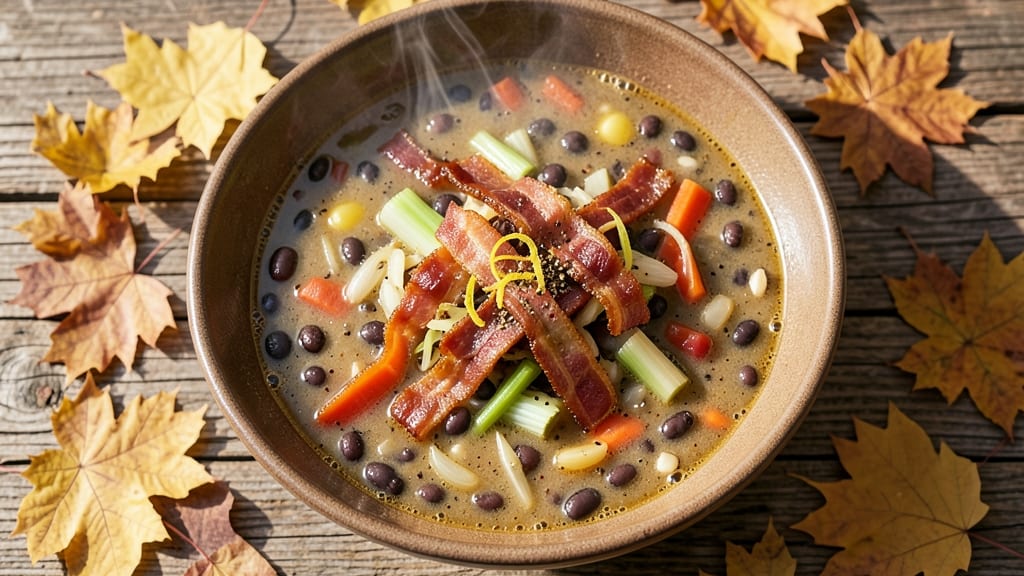
This Bob Evans Farm Festival bean soup recipe delivers the same hearty, smoky comfort you crave—crispy bacon bits floating in a rich, slow-simmered broth packed with tender beans and savory herbs. 🔥 The secret lies in layering flavors: smoky bacon, deep tomato base, and just the right amount of heat from cayenne.
I’ve perfected this version to stay true to the original while making it foolproof for home cooks.
What sets this recipe apart is the two-step simmering process—first cooking the beans until tender, then blending the broth for that signature creamy texture without losing any depth.
The bacon gets extra crispy by baking separately, then crumbled on top at the end, so every spoonful delivers that satisfying crunch. It’s the kind of soup that tastes even better the next day as flavors meld together.
By the time you’re done, you’ll have a steaming bowl of restaurant-quality bean soup with golden bacon bits peeking through the surface and a aroma that fills your kitchen with nostalgia.
The broth is rich but not heavy, the beans are perfectly tender, and the seasoning is balanced—just enough heat to keep things interesting without overpowering.
Serve it with crusty bread for dipping or alongside a simple green salad to round out the meal. This recipe scales easily for a crowd, making it perfect for family gatherings or meal prep. Let’s get cooking—your taste buds will thank you.
Ingredients for bob evans farm festival bean soup
Sixteen ingredients for a soup that tastes like nostalgia in every spoonful.
| Ingredient | Amount | Notes |
|---|---|---|
| Dried Navy Beans 🌱 | 2 cups | Unsoaked, rinsed thoroughly |
| Thick-Cut Bacon 🥓 | 1.2 lb | Smoked or hickory flavor preferred |
| Yellow Onion 🧅 | 1 whole | Medium, diced small |
| Carrot 🥕 | 3 whole | Medium, chopped into small pieces |
| Celery Stalks 🧆 | 3 whole | Trimmed, chopped into small pieces |
| Garlic Cloves 🧄 | 4 cloves | Minced for depth of flavor |
| Tomato Paste 🍅 | ½ cup | Smooth, not chunky |
| Chicken Broth 💧 | 6 cups | Low-sodium preferred |
| Cayenne Pepper 🔥 | ¼ tsp | Adjust for desired heat |
| Ground Black Pepper 🌶️ | ½ tsp | Freshly ground for best flavor |
| Salt 🧂 | 1 ½ tsp | Kosher or sea salt |
| Dried Thyme 🌿 | 1 tsp | Or 1 tbsp fresh thyme |
| Bay Leaves 🍃 | 2 whole | Removed before serving |
| Olive Oil 🫒 | 2 tbsp | For crisping bacon |
| Apple Cider Vinegar 🍏 | 1 tbsp | Brightens the broth |
The bacon is non-negotiable—thick-cut smoked bacon from Costco or your local butcher gives that signature smoky depth. Look for good marbling, not the lean stuff. If you're short on time, Oscar Mayer thick-cut works in a pinch, but trust me on the bacon quality. The beans? Navy beans are traditional, but Great Northern or pinto work too. Just make sure they're dried—canned beans won't give you that same hearty texture. For the herbs, fresh thyme if you've got it, but dried works fine at one-third the amount. The Costco bulk spice section has great prices if you're stocking up.
No smoked bacon? Regular bacon with a pinch of smoked paprika mimics it pretty well. Short on time? Pre-cooked bacon bits from the deli section (like Hillshire Farm) save time, though they won't be as crispy. The tomato paste can be swapped for 1 cup crushed tomatoes if you prefer, but the paste gives that deeper, more concentrated flavor. The apple cider vinegar might seem odd, but it's what cuts through the richness and brightens the whole soup. No vinegar? Lemon juice at half the amount works too. The celery and carrots can be swapped for frozen mixed vegetables if you're in a rush, but fresh gives the best texture. For the broth, low-sodium is key—you'll be adding plenty of salt later.
This soup gets better with time—3-4 days in the fridge lets the flavors meld perfectly. Freeze portions in 1-cup servings for quick lunches. The bacon bits keep their crispiness if you store them separately and sprinkle them on fresh the next day. For meal prep, I double the batch and freeze half—6 months in the freezer with no texture issues. If you're serving a crowd, make it in a Dutch oven on the stove, then transfer to a slow cooker to keep warm. The aroma alone will have everyone gathering around the table.
Why You'll Love This Recipe
- Zero-Fuss Prep: Honestly, I swear by this—just soak the dried navy beans overnight (or use the quick-soak method), chop the onion, celery, and carrots while the bacon cooks, and boom. No fancy techniques, no stress. That thick-cut bacon renders its own fat, so you’re not even scrambling for oil.
- Smoky-Sweet Magic: Between us, the bacon here isn’t just flavor—it’s the star. Crispy edges crumble into the soup, while the slow-cooked beans soak up that salty-sweet depth. Add a splash of apple cider vinegar (trust me), and you’ve got layers that make store-bought canned soup look sad.
- Weeknight to Potluck: I make this for lazy Tuesdays when I’m too tired to think, but it also happens to impress at holiday gatherings. Serve it in bowls with crusty bread, or pack it in jars for a picnic—same effort, different vibes. The beans hold up for days, so it’s my go-to for feeding a crowd without the fuss.
- Budget Meal, Big Payoff: A pound of dried beans and a pack of bacon stretch this into weeks of leftovers that still taste like you slaved over them. Freeze portions, and you’ve got a $2 lunch saved for when life gets expensive. Plus, no one will guess it’s not a gourmet restaurant dish—just pure, satisfying comfort.
Step-by-step instructions for slow-simmered smokiness with crispy bacon bits
Here's how to create that signature Farm Festival bean soup with rich, smoky depth and irresistible bacon crunch.
🔥 Step 1: Cook the Bacon Until Crispy and Render Fat
Cut the 1.2 lb thick-cut bacon into ½-inch pieces and place them in a large Dutch oven over medium heat. Cook undisturbed for 8-10 minutes until the edges become deep golden brown and the fat begins to render. Here's the thing—don't stir yet. You want that fat to pool at the bottom and create a flavorful base.
Once the bacon is 80% crispy (it'll finish in the oven), use tongs to transfer it to a paper towel-lined plate, leaving all that rendered fat in the pot. You should have about ¼ cup of bacon fat remaining—this is liquid gold for your soup. If you need more, add 1 tablespoon of the olive oil to ensure proper crisping of the veggies later.
👨🍳 Step 2: Sauté the Vegetable Base for Maximum Flavor
In the same Dutch oven with the bacon fat, add the diced yellow onion, chopped carrots, and celery stalks. Stir well to coat the vegetables in the fat and cook over medium heat for 8-10 minutes, stirring occasionally. You're looking for the vegetables to soften slightly and release their natural juices—this builds the soup's foundation.
After 5 minutes, add the minced garlic cloves and cook for another 30 seconds until fragrant. Here's where it gets fun—stir in the ½ cup tomato paste and cook for 2 minutes, stirring constantly. This step develops the soup's rich, slightly sweet depth that Bob Evans fans love. The tomato paste will darken slightly, creating that signature caramelized flavor.
🍳 Step 3: Build the Broth with Aromatics and Seasonings
Pour in the 6 cups chicken broth and scrape up any browned bits from the bottom of the pot with a wooden spoon. Add the 2 whole bay leaves, 1 tsp dried thyme, 1.5 tsp salt, 0.5 tsp ground black pepper, and 0.25 tsp cayenne pepper. Stir in the 1 tbsp apple cider vinegar—this brightens the broth and balances the richness.
Bring the mixture to a gentle boil, then reduce heat to low so it simmers steadily. Here's the critical part: add the 2 cups dried navy beans (rinsed thoroughly) and the crispy bacon pieces. The beans don't need pre-soaking—they'll soften beautifully during the long simmer. Let it cook uncovered for 1 hour, stirring occasionally to prevent sticking.
⏰ Step 4: Slow-Simmer Until Beans Are Tender and Flavor Deepens
After the initial 1 hour, check the beans for tenderness. They should be mostly soft but still have a slight bite—this ensures they don't turn mushy. If they're not quite there, continue simmering for another 30-45 minutes, adding ½ cup water if the soup gets too thick. The longer it simmers, the more the flavors meld together.
Here's what you're aiming for: a soup where the beans are creamy but still hold their shape, the bacon is crispy (not soggy), and the broth has that deep, smoky aroma. Taste and adjust seasoning—you might need a touch more salt or cayenne to balance the flavors. Real talk: this is where the magic happens, so don't rush it.
🥘 Step 5: Finish and Serve with Perfect Texture
Once the beans are tender and the soup has that rich, hearty consistency, remove the bay leaves with tongs. Taste again and make any final adjustments—maybe a splash more vinegar for brightness or a pinch of cayenne for heat. The soup should be thick but spoonable, with those crispy bacon bits adding texture in every bite.
Ladle the soup into bowls and serve immediately. The contrast of the creamy beans, smoky broth, and crispy bacon is what makes this soup so special. For extra drama, top each serving with a sprinkle of freshly cracked black pepper and serve with crusty bread to soak up every last drop.
Pro Tips For Making Bob Evans Farm Festival Bean Soup
- CRISP THE BACON LOW: Start the bacon in a cold skillet—yes, even if you’re eager to get cooking. Cooking it slow and low renders the fat properly without burning, and that’s the flavor base for the whole soup. I used to rush it, and the bacon ended up greasy instead of crisp. Save the rendered fat for the soup; it’s liquid gold.
- SOAK BEANS 8 HOURS: Dried navy beans need a proper soak—at least 8 hours, overnight if possible. Skipping this makes them gummy, and no one wants mushy beans in a hearty soup. Toss them in cold water with a pinch of salt, then drain before cooking. Trust me, the texture difference is night and day.
- CHAR THE VEGETABLES: After removing the bacon, leave it in the skillet and crank the heat to medium-high. Toss in the onions, carrots, and celery—let them sizzle and brown for 5-7 minutes before adding liquid. That caramelization adds depth that raw veggies just can’t match. Don’t skip it; it’s the thing that matters most.
- SIMMER NOT BOIL: Once everything’s in the pot, keep the heat low enough that the soup barely bubbles—just a gentle simmer. Boiling hard can make the beans tough and the broth cloudy. I learned this the hard way after a soup turned out mealy. Patience here pays off.
Regional styles of this bob evans farm festival bean soup
Midwest Farmhouse Roots
This recipe traces back to Bob Evans' iconic Farm Festival menu, a staple in Ohio's heartland since the 1960s. The original version was designed to showcase locally sourced ingredients—thick-cut smoked bacon, navy beans, and fresh vegetables—that were abundant in Midwestern farms.
The slow-simmering technique reflects traditional farmhouse cooking methods, where meals were prepared over hours to maximize flavor and tenderness. 🌽
The apple cider vinegar and cayenne pepper create the signature tangy heat that became a trademark of Bob Evans' style. These ingredients weren't just flavor enhancers; they were practical choices that preserved food longer and added complexity to simple ingredients.
The recipe evolved from a basic bean stew to the restaurant's signature dish by incorporating the two-step simmering method that makes the broth both creamy and rich without using heavy cream.
Southern Smoky Twist
While rooted in Midwestern farmhouse traditions, this soup gained popularity across the South where smoked bacon and slow-cooked beans are staples. Southern cooks adapted the recipe by adding extra smoked paprika or even substituting some of the bacon with andouille sausage for deeper smokiness.
The thick-cut bacon used here is particularly popular in Southern states where it's often rendered low and slow to create flavorful bases for everything from soups to cornbread.
In Tennessee and Kentucky, variations often include collard greens or turnip greens mixed into the soup for extra heartiness. The apple cider vinegar gets replaced with hot sauce in some Southern versions, adding a spicier kick that pairs perfectly with the creamy beans.
This regional adaptation shows how a simple recipe can evolve while keeping its comforting core.
New England Creamy Version
Up north in New England, cooks often transform this bean soup into a creamier version by adding ½ cup heavy cream or sour cream at the end. The cooler climate makes hearty soups with warming spices particularly popular during fall and winter months.
In Vermont and Maine, you'll find versions that incorporate maple syrup (just 1 tablespoon) to balance the smokiness and add a touch of sweetness that complements the bacon beautifully.
The cayenne pepper is often reduced or replaced with cinnamon in New England adaptations, creating a sweeter, slightly spiced profile that works well with the region's love of maple. Some cooks also add crumbled blue cheese on top for a tangy contrast to the creamy broth.
This version keeps the same slow-simmering technique but adds a cream finish that's particularly popular in colder climates.
Modern Urban Adaptations
In today's urban kitchens, this classic recipe gets reinvented with quick-cooking shortcuts while maintaining its hearty essence. Many city cooks use pre-cooked bacon bits (like Hillshire Farm) to save time, though purists argue fresh-crisped bacon makes all the difference.
The dried beans are often swapped for canned beans (like Great Northern) that have been pre-soaked to reduce cooking time by 1-2 hours. Some urban versions even incorporate miso paste for an umami depth that modern palates appreciate.
For health-conscious adaptations, turkey bacon replaces regular bacon, and low-sodium broth is used throughout. The tomato paste gets swapped for fire-roasted crushed tomatoes for a slightly smoky, built-in depth. These modern twists keep the soul of the original recipe while making it more convenient for busy lifestyles.
The crispy bacon bits remain the star topping in every adaptation, ensuring that satisfying crunch in every spoonful.
Nutrition facts
Frequently asked questions
Can I use canned beans instead of dried for this recipe?
You can substitute 2 (15 oz) cans navy beans (drained and rinsed) for the dried beans, but the texture will be slightly different. Canned beans cook faster, so add them in the last 30 minutes of simmering to avoid mushiness. For best results, use Great Northern beans and reduce the broth by ½ cup since canned beans release extra moisture.
How do I make this soup spicier?
For extra heat, add ½ teaspoon smoked paprika with the cayenne or swap in 1 teaspoon hot sauce at the end. For a smoky kick, increase the cayenne to ½ teaspoon and add ¼ teaspoon chipotle powder. Always taste as you go—start conservative and adjust gradually.
Can I make this in a slow cooker?
Brown the bacon and sauté veggies first, then transfer everything to a 6-quart slow cooker. Add all ingredients except the crispy bacon bits, cook on LOW for 6-7 hours or HIGH for 3-4 hours. Stir in the bacon bits just before serving to keep them crispy. The slow cooker version actually enhances the flavors, making the broth even more tender.
Why does my soup taste too salty?
If using low-sodium broth, you may need to add extra salt. Start with 1 teaspoon and taste—remember, flavors deepen as it cools. For a quick fix, add ½ cup water and a pinch of sugar to balance the saltiness. If using regular broth, reduce the added salt to 1 teaspoon and taste before serving.
What's the best way to reheat leftovers?
Reheat gently on the stove over low heat with 1-2 tablespoons water to restore moisture. Stir frequently to prevent sticking. For microwave reheating, cover with a damp paper towel and heat in 30-second intervals, stirring between each. The soup tastes best within 3-4 days when stored properly in an airtight container.