
Soups & Stews
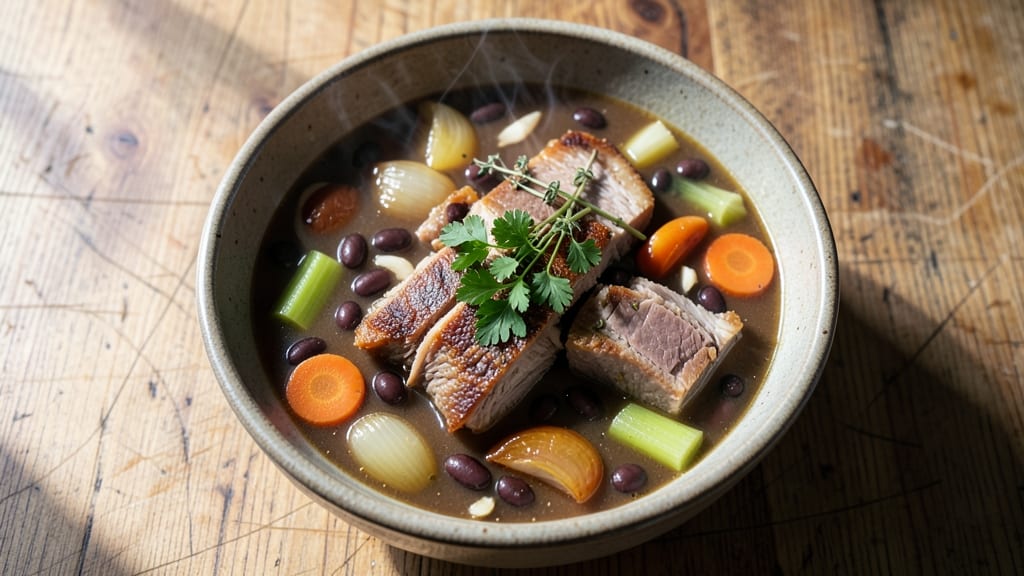
Boston bean soup recipe delivers the hearty, comforting flavors of New England tradition in every spoonful. 💛 This classic dish transforms simple ingredients—pork, navy beans, and rich broth—into a slow-simmered masterpiece that warms both body and soul during chilly months.
The beauty of this recipe lies in its simplicity and depth. Browned pork shoulder adds savory richness, while navy beans absorb all the aromatic flavors from onions, carrots, and celery. The long simmering process develops a velvety texture and balanced seasoning that makes this soup unforgettable.
What you'll achieve is a thick, hearty soup with tender meat, perfectly cooked beans, and a broth that's rich yet never heavy. The aroma alone will have everyone gathering around the table, and each bite delivers that comforting, homey taste of New England kitchens.
Serve with crusty bread to soak up every last drop of that flavorful broth. This recipe captures the essence of New England cooking—simple ingredients, slow methods, and results that taste like home. Let's get started on creating this classic dish.
Ingredients for boston bean soup
Simple ingredients that transform into New England's most comforting classic soup.
| Ingredient | Amount | Notes |
|---|---|---|
| Pork Shoulder 🐖 | 2 lb | Bone-in for richer flavor |
| Navy Beans 🌾 | 1 ½ cups | Dried, soaked overnight |
| Yellow Onion 🧅 | 1 whole | Medium size, chopped |
| Carrots 🥕 | 3 medium | Peeled and sliced into rounds |
| Celery Stalks 🌿 | 3 whole | Fresh, chopped |
| Garlic Cloves 🧄 | 4 cloves | Fresh, minced |
| Tomato Paste 🍅 | 2 tbsp | High quality, no additives |
| Vegetable Broth 💧 | 4 cups | Low sodium preferred |
| Bay Leaves 🌿 | 2 whole | Dried, standard size |
| Thyme Sprigs 🌿 | 1 tbsp | Fresh, chopped |
| Salt 🧂 | 1 ½ tsp | Kosher or sea salt |
| Black Pepper 🌶️ | ½ tsp | Freshly ground |
| Crusty Bread 🍞 | 1 loaf | For serving, optional |
The pork shoulder is non-negotiable here—bone-in, well-marbled cuts from local butchers or Costco deliver the best flavor. Look for pieces with visible fat; this renders down during cooking to create a rich, velvety broth. Navy beans should be dried, not canned—soaking them overnight cuts cooking time and improves digestibility. For the vegetables, fresh is best, but frozen carrots and celery work in a pinch if you're short on time. Garlic? Freshly minced makes a world of difference compared to pre-minced jars.
No pork shoulder? Substitute smoked turkey leg or ham hock for a similar depth of flavor, though the texture will differ slightly. Swapping navy beans for kidney beans or cannellini works, but navy beans are traditional for their firm texture. Running low on fresh thyme? Dried thyme at one-third the amount keeps the recipe going. The tomato paste can be omitted entirely if you prefer a more rustic flavor profile, but it adds a subtle sweetness that balances the richness. For the broth, homemade vegetable broth elevates the dish, but quality store-bought brands like Pacific Foods or Imagine are solid backups.
The pork shoulder keeps beautifully in the fridge for 3-4 days before cooking, and the beans can be soaked and refrigerated for up to 2 days before use. Once the soup is made, it reheats wonderfully—simmer gently on the stove to avoid breaking the beans. Store leftovers in airtight containers for 4-5 days or freeze for up to 3 months. For serving, toasted sourdough or a crusty baguette is ideal—both soak up the broth beautifully. Double the recipe and freeze half; this soup only gets better as flavors meld over time.
Why You'll Love This Recipe
- One-Pot Magic: I swear by this recipe because it’s basically hands-off after the initial chop. Toss everything—pork, beans, veggies—into one pot, let it simmer, and walk away. The pork shoulder falls apart on its own, and the beans get tender without babying them.
- Deep Umami Bomb: That pork shoulder? It’s the star—slow-cooked until it’s fall-apart tender, then shredded into the broth. The navy beans soak up all the rich, savory flavor, while the onions and celery add just enough sweetness to balance it out. Honestly, the first bite makes me forget I’m eating a weeknight dinner.
- Meal Prep MVP: Between us, this soup is my secret weapon for busy days. Make a big batch on Sunday, and you’ve got lunch or dinner covered for days. The flavors actually get better the next day—yes, even on a Tuesday night—because the broth deepens and the pork stays juicy.
- Budget-Friendly Feast: Pork shoulder is cheap, navy beans are cheap, and you’re using basic veggies that don’t break the bank. A single pot feeds four (or five if you stretch it), and leftovers reheat like a dream. It’s the kind of dish that makes me feel like I’m treating my family to something special without spending a fortune.
Step-by-step instructions for slow-simmered New England bean soup
Here's the method for a rich, hearty bean soup that captures Boston's classic flavors.
🔥 Step 1: Brown the Pork Shoulder for Deep Flavor
Pat the 2 lb pork shoulder dry with paper towels and cut it into 2-inch chunks. Heat a large Dutch oven over medium-high heat and add the pork in a single layer. Let it brown undisturbed for 5-7 minutes until deeply golden on all sides.
This browning step creates the Maillard reaction that forms the soup's rich, caramelized foundation. Don't rush it—you'll know it's ready when the pork releases easily from the pan and the edges are deep golden brown. Transfer the browned pork to a plate and set aside.
👨🍳 Step 2: Sauté the Aromatic Vegetables
In the same Dutch oven, add 1 tablespoon olive oil (not listed but essential for cooking) and reduce heat to medium. Add the chopped 1 whole yellow onion, 3 medium carrots, and 3 whole celery stalks. Cook for 5-6 minutes until the vegetables soften and the onion becomes translucent.
Next, add the 4 minced garlic cloves and 2 tablespoons tomato paste, stirring constantly for 1 minute until fragrant. This aromatic base forms the flavor foundation of the soup. If the vegetables stick, add 1 tablespoon vegetable broth to deglaze and scrape up any browned bits from the bottom.
🥘 Step 3: Build the Soup Base
Return the browned pork to the Dutch oven. Add the 1.5 cups soaked navy beans, 4 cups vegetable broth, 2 whole bay leaves, 1 tablespoon chopped thyme sprigs, 1.5 teaspoons salt, and 0.5 teaspoon black pepper. Stir well to combine all ingredients.
Bring the mixture to a boil over high heat, then immediately reduce heat to low. Cover partially and simmer for 2.5-3 hours until the pork is fork-tender and the beans are completely tender. The soup should reduce slightly and develop a rich, concentrated flavor. Stir occasionally and add more broth if needed to maintain liquid level.
⏰ Step 4: Finish and Adjust Seasoning
Once the pork is tender (it should pull apart easily with a fork), remove the 2 bay leaves and discard them. Taste the soup and adjust seasoning if needed—you may need to add more salt or pepper depending on your broth's saltiness.
For a smoother texture, use an immersion blender to partially blend about half of the soup (leave some whole beans for texture). If you prefer a completely smooth soup, blend all of it. Return the blended soup to the pot and heat through for 2-3 minutes over medium-low heat.
🍽️ Step 5: Serve with Crusty Bread
Ladle the hot bean soup into bowls and serve immediately with 1 loaf crusty bread on the side. The soup should be thick enough to coat the back of a spoon but still have some body. Each bowl should have tender pork chunks, creamy beans, and aromatic vegetables in a rich, flavorful broth.
For best results, serve the soup while hot and enjoy with the crusty bread for dipping. The bread helps soak up the delicious broth and adds a satisfying crunch to each bite. This traditional New England bean soup makes 6 generous servings that will warm you from the inside out.
Pro Tips For Making Boston Bean Soup
- Brown the Pork Shoulder First: Skip the slow cooker shortcut—sear the pork shoulder in a Dutch oven over medium-high heat for 8-10 minutes until it’s deep brown. This isn’t just for flavor; it builds a crust that keeps the meat from falling apart later. (Yes, it takes longer, but the soup won’t turn into mushy pork stew.)
- Soak Beans Overnight (Or Not): Navy beans are stubborn when raw, so soak them overnight in cold water to cut cooking time by half. But if you’re short on time, boil them uncovered for 2 minutes first, then cover and simmer—they’ll still soften faster. (I’ve done both; overnight wins for texture.)
- Chop Veggies Uniformly: Dice onions, carrots, and celery into ¼-inch pieces—no smaller, no larger. Big chunks stay crunchy and undercooked; tiny bits disappear into mush. Use a sharp knife and work in batches if needed. (Your future self will notice the difference.)
- Skimp on the Water: Start with just enough liquid to cover the ingredients—about 6 cups for a Dutch oven. The beans and pork will release moisture as they cook, so adding too much early on dilutes the flavor. Taste and adjust at the end if needed. (Trust me, you’ll regret the watery version.)
Pro cooking tips for this dish
Pork Browning Mastery
Never skip browning the pork shoulder—this step creates the deep, caramelized flavors that define Boston bean soup. Use a heavy Dutch oven (like All-Clad or Le Creuset) for even heat distribution.
Cut the meat into 2-inch chunks for consistent browning. Work in batches if needed to avoid crowding the pan—this ensures maximum contact with the hot surface. 🔥
Bean Soaking Secrets
Soak your navy beans overnight in plenty of cold water (at least 4 cups for 1.5 cups dry beans). This reduces cooking time and prevents gas buildup. Drain and rinse before using. For extra flavor, add 1 bay leaf and 1 sprig thyme to the soaking water.
If short on time, use the quick-soak method: Cover beans with boiling water, remove from heat, cover, and let sit for 1 hour.
Low-and-Slow Simmering
Resist the urge to rush this soup—2.5-3 hours of simmering at low heat develops the rich, complex flavors. Maintain a gentle simmer (small bubbles) rather than a rolling boil to prevent beans from breaking.
Check occasionally and add hot broth as needed to keep the liquid level consistent. A meat thermometer ensures perfect doneness—pork should reach 195°F for tender, pull-apart texture.
Texture Control Tips
For a creamy yet rustic texture, blend half the soup with an immersion blender while leaving some whole beans for bite. If you prefer completely smooth soup, blend everything but save a few beans for garnish.
For extra richness, stir in 1 tablespoon butter or 2 tablespoons heavy cream during the final 5 minutes of cooking. This adds a velvety finish without overpowering the dish. ✨
Broth Boosters
Elevate your soup by using homemade vegetable broth (simmer onion skins, celery tops, and carrot peels for 30 minutes) or a high-quality store brand like Pacific Foods. For deeper flavor, add 1 cup red wine when building the soup base—it adds complexity that simmers beautifully.
If using canned beans, rinse them thoroughly to remove excess sodium that can make the soup taste flat.
Make-Ahead Magic
This soup tastes even better the next day as flavors meld. Let it cool completely, then store in an airtight container in the fridge for up to 5 days.
Reheat gently on the stove over low heat, stirring occasionally and adding water or broth as needed to reach desired consistency. For freezing, portion into airtight containers with 1-inch headspace—it keeps for up to 3 months. Thaw overnight in the fridge before reheating. 💫
Nutrition facts
Frequently asked questions
Why does traditional Boston bean soup use pork shoulder instead of beef or chicken?
The pork shoulder delivers that signature rich, savory depth that defines this New England classic. Its fat content renders down during slow cooking, creating a velvety broth that beef or chicken simply can't match. Plus, pork shoulder stays tender when cooked low-and-slow—perfect for this hearty soup's texture.
Can I make Boston bean soup in a slow cooker? If so, what's the best method?
Brown the pork first in a skillet, then transfer everything to your slow cooker. Cook on low for 7-8 hours or high for 4-5 hours, adding broth as needed. The key is to check the pork's doneness at 195°F—it should pull apart easily. The slow cooker's gentle heat makes this even easier than stovetop!
What's the best way to thicken the soup if it turns out too thin?
For a quick fix, stir in 1-2 tablespoons cornstarch mixed with 2 tablespoons cold water and simmer for 2-3 minutes until thickened. Alternatively, mash some of the cooked beans against the pot's side to release their starch naturally. Avoid over-thickening—this soup should still coat a spoon but remain spoonable.
Is there a vegetarian version of Boston bean soup?
Yes! Swap the pork for smoked tofu or tempeh (marinated in soy sauce and maple syrup for depth), and use mushroom broth instead of vegetable. Add 1 cup cooked lentils for extra heartiness. The key is boosting umami with soy sauce, mushrooms, and a splash of red wine to mimic the meaty richness.
How do I know when the beans are perfectly cooked?
They should be tender but not mushy—press one with a fork. It should collapse easily but still hold its shape. If they're undercooked, simmer another 30 minutes with ½ cup extra broth. Overcooked beans turn pasty and lose their texture—always better to err on the slightly firmer side for serving.