
Sauces & Condiments
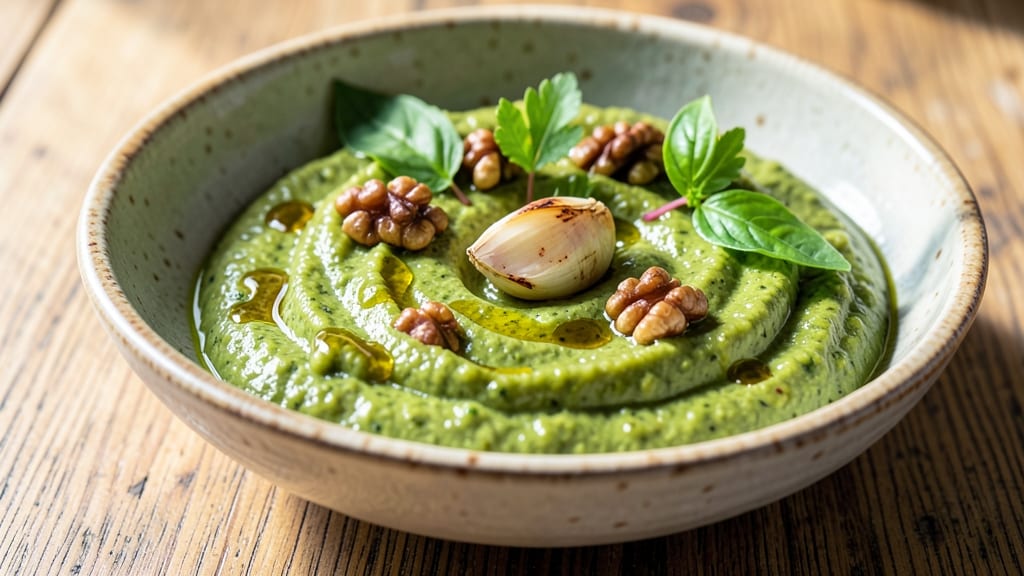
This broad bean pesto recipe transforms humble broad beans into a vibrant, vegan-friendly sauce with nutty depth and herbal brightness. The secret lies in blending cooked broad beans with fresh basil, garlic, and toasted walnuts—creating a creamy, spreadable texture that’s richer than traditional basil pesto.
It’s the perfect plant-based alternative for pasta, sandwiches, or dips, packed with protein and flavor.
What sets this pesto apart is its nutty, earthy base from broad beans, which adds a satisfying texture and depth that walnuts alone can’t match. The fresh herbs—parsley and basil—bring a bright, aromatic punch, while a splash of lemon juice keeps the flavors balanced.
Unlike traditional pesto, this version stays creamy without cheese, making it ideal for vegans or anyone looking for a lighter option.
The best part? This pesto stays fresh for up to 5 days in the fridge or freezes beautifully for later use.
Spread it on toast, toss it with pasta, or use it as a dip for crudités. The blend of broad beans and herbs creates a complex flavor profile that’s both comforting and refreshing—proof that plant-based sauces can be just as bold as their dairy-based counterparts.
For an extra touch of richness, stir in a spoonful of vegan parmesan before serving. The result is a versatile sauce that elevates any dish while keeping it light, fresh, and full of texture. Let’s make this pesto—your taste buds will thank you.
Ingredients for broad bean pesto
Nine simple ingredients create this vibrant, nutty, vegan pesto that’s richer than the classic.
| Ingredient | Amount | Notes |
|---|---|---|
| Cooked Broad Beans 🌱 | 1 ½ cups | Shells removed, slightly mashed |
| Fresh Basil Leaves 🌿 | 1 ½ cups | Packed, stems removed |
| Fresh Flat-Leaf Parsley 🌿 | ½ cup | Packed, stems removed |
| Toasted Walnuts 🥜 | ½ cup | Lightly toasted, roughly chopped |
| Garlic Cloves 🧄 | 4 cloves | Peeled, rough chopped |
| Extra-Virgin Olive Oil 🫒 | ½ cup | High quality, fruity |
| Lemon Juice 🍋 | 2 tbsp | Freshly squeezed |
| Salt 🧂 | ½ tsp | Sea salt preferred |
| Black Pepper 🌶️ | ¼ tsp | Freshly ground |
| Vegan Parmesan Cheese 🧀 | ¼ cup | Optional, for serving |
Broad beans are the star—fresh ones taste best, but frozen works in a pinch. Look for them at Trader Joe's or specialty markets in spring/summer. If you can’t find fresh, canned beans (drained and rinsed) are fine, but they’ll be softer. Toast the walnuts in a dry pan until fragrant—3-4 minutes max—or they’ll turn bitter. Fresh herbs are non-negotiable here; basil and parsley should be bright and vibrant, not wilted. For extra flavor, use garlic cloves that are plump and firm.
No walnuts? Pine nuts or cashews work, but toast them first. Short on basil? Swap in spinach or arugula, but reduce to 1 cup total. The olive oil matters—avoid cheap brands that taste bitter. No vegan parmesan? Nutritional yeast at half the amount adds a cheesy note. For a smoother texture, blend the broad beans first before adding other ingredients. If you prefer it chunkier, pulse everything briefly instead of blending smooth.
This pesto stays fresh for 5 days in the fridge, covered with a thin layer of olive oil. For longer storage, freeze in ice cube trays—perfect for single servings. Thaw in the fridge overnight. The walnuts will separate slightly when frozen, but blend again when ready to use. The lemon juice keeps it bright, but if you’re using it in pasta, add a splash of pasta water to loosen it up. Leftovers? Toss with grains or roasted veggies for a quick meal.
Why You'll Love This Recipe
- No Food Waste Hero: I turn last week’s broad beans into this pesto—no sad, wilted pods in the fridge. Just blitz them with basil, parsley, and walnuts, and suddenly you’ve got a jar of gold that tastes like summer. (Yes, even when you forgot to shell them fresh.)
- Crunchy-Garlicky Magic: That toasted walnut crunch meets blistered garlic? It’s the kind of flavor that makes you pause mid-bite. The broad beans add this weirdly luxurious creaminess—like hummus and pesto had a baby, and it’s ridiculously good.
- Pasta’s Best Friend: Slather it on spaghetti, yes, but also toss it with roasted veggies, dollop it on toast, or mix it into scrambled eggs. It’s my go-to for lazy dinners, potlucks, or when I’m too tired to think. (Between us, it’s also great on grilled chicken.)
- Budget Brightener: Fresh herbs and walnuts might sound fancy, but broad beans are cheap and shelf-stable. A big batch lasts me all week—perfect for when you’re broke but still want to feel like you’re eating well. Plus, it freezes like a dream.
Step-by-step instructions for broad bean pesto
This bright green pesto packs a nutty punch and herbaceous freshness—perfect for elevating any dish.
Prepare the Base Ingredients
Start by combining the 1.5 cups cooked broad beans in a food processor. I like to give them a quick pulse first—just until they break down slightly and release their vibrant green color. This creates a smooth base without turning into a puree. If your broad beans are still whole, you might need to pulse them a bit longer, but be careful not to over-process or they’ll turn mushy.
Next, add the 4 cloves rough-chopped garlic and 0.5 cup toasted walnuts to the processor. The walnuts should still have some texture—you want that nutty crunch to shine through in the final pesto. Pulse everything together for about 10 seconds to break down the garlic and walnuts while keeping the broad beans mostly intact. This step builds the foundation of your pesto’s rich, layered flavor.
Blend in Herbs and Seasonings
Add the 1.5 cups packed fresh basil leaves and 0.5 cup packed fresh flat-leaf parsley to the processor. These herbs are the heart of your pesto, so don’t skip the stems—they pack extra flavor. Pulse again for 5-7 seconds until the herbs are finely chopped but still retain some texture. You want a balance: smooth enough to blend seamlessly with the broad beans, but not so fine that it loses its fresh, herby brightness.
Now, sprinkle in the 0.5 tsp salt and 0.25 tsp black pepper directly into the processor. These seasonings will infuse evenly into the pesto, so don’t hold back. Pulse once more to distribute them uniformly. The salt enhances the broad beans’ natural sweetness, while the pepper adds a subtle kick that cuts through the richness of the walnuts.
Stream in Olive Oil for Creamy Perfection
With the processor running, slowly drizzle in the 0.5 cup extra-virgin olive oil. I like to use a high-quality, fruity olive oil here—its flavor will shine through in the final pesto. Start with a slow stream, then increase the speed to medium-high as the pesto begins to emulsify. This step is all about creating that signature creamy texture. Stop occasionally to scrape down the sides of the processor bowl with a spatula to ensure everything blends evenly.
Once the pesto comes together into a thick, vibrant green paste, add the 2 tbsp freshly squeezed lemon juice. The acidity brightens the flavors and balances the richness of the olive oil and walnuts. Pulse just once or twice to incorporate—you don’t want to over-blend or the lemon’s freshness will fade. Taste and adjust the seasoning if needed, adding a pinch more salt or pepper if desired.
Finish and Serve
Transfer the pesto to a serving bowl and give it a final taste. If it’s too thick, thin it out with a splash of water or a bit more olive oil. The pesto should coat the back of a spoon with a silky, vibrant consistency. Here’s where the optional 0.25 cup vegan parmesan cheese comes in—sprinkle it on top for a cheesy finish that pairs beautifully with the broad beans and herbs.
Serve immediately over pasta, spread on toast, or dollop alongside grilled vegetables. This pesto keeps well in the fridge for up to 3 days, stored in an airtight container with a thin layer of olive oil on top to preserve its freshness. The flavors only deepen over time, so it’s perfect for meal prep or gifting to friends.
Pro Tips For Making Broad Bean Pesto
- Blanch Broad Beans First: Skip the peeling hassle—drop cooked broad beans in boiling water for 30 seconds, then shock in ice water. The skins slide off like magic, and you save 20 minutes of tedious work. (Yes, even if you're impatient like me.)
- Pulse Don’t Blend: After toasting walnuts and garlic, pulse them in a food processor in short bursts—no more than 2 seconds at a time. You want texture, not paste. I learned this the hard way when my first batch turned into walnut butter.
- Use Parsley Stems: Don’t toss those tough parsley stems—they’re packed with flavor. Roughly chop them with the leaves before adding to the pesto. It’s the thing that makes my pesto taste more complex than everyone else’s.
- Toast Walnuts Low: Toast walnuts over medium-low heat in a dry pan, stirring constantly for 5–7 minutes until golden. High heat burns them fast, and you end up with bitter bits. (Your future self will notice.)
Wine and beer pairings for these flavors
Crisp White Wine
For this vibrant, herb-forward pesto, I recommend a dry Italian white wine like Vermentino or Pinot Grigio. Their bright acidity and citrus notes mirror the lemon juice in the pesto, cleansing your palate with each bite.
A chilled glass from Alto Adige or Sardinia will highlight the broad beans' earthy sweetness while keeping the dish's freshness front and center. 🍷
Light-Bodied Red
If you prefer red, go for a light, acidic option like Valpolicella Classico or Chianti. The wine's cherry undertones complement the walnuts' nuttiness, while its acidity balances the pesto's richness.
Look for a 2020 vintage with 12-13% alcohol—just enough body to stand up to the dish without overpowering it.
Craft Beer Pairings
A Belgian witbier like Hoegaarden or Stella Artois works beautifully with this pesto. The beer's coriander and citrus notes echo the lemon juice, while its effervescence cuts through the walnuts' creaminess.
For a bolder option, try a German Helles Lager—its malty sweetness pairs surprisingly well with the broad beans' earthy depth.
Non-Alcoholic Options
For a refreshing non-alcoholic match, serve with sparkling apple cider or a lemon-infused iced tea. The effervescence and citrus in both drinks mirror the pesto's brightness, while their light sweetness balances the walnuts' richness.
A chilled hibiscus tea with a squeeze of lime also works—its floral notes complement the herbs beautifully. 💧
Wine Service Tips
Serve white wine slightly cooler than room temperature—45-50°F—to enhance its crispness. For reds, chill briefly (60-65°F) to soften tannins. I like to pour a small amount first, swirl, and smell before serving—this helps the wine open up and marry with the pesto's flavors.
A large-bowled glass with a wide rim lets the wine breathe and showcases its aroma alongside the dish.
Nutrition facts
Frequently asked questions
Why use broad beans instead of basil in traditional pesto?
Broad beans add a nutty, earthy depth that traditional basil pesto lacks, while keeping the dish creamy and vegan-friendly. Their natural sweetness balances the bright herbs and walnuts, creating a more complex flavor profile. Plus, they're packed with plant-based protein!
Can I make this pesto without a food processor?
Yes! Use a mortar and pestle for a more rustic texture. Start by crushing the walnuts and garlic, then add the broad beans and herbs in small batches. Finish with olive oil and lemon juice, pressing with the pestle. It'll take more effort, but the flavor will be just as vibrant.
How do I fix pesto that's too thick or too thin?
Too thick? Thin with 1 tsp water or olive oil at a time. Too thin? Simmer uncovered in a saucepan for 2-3 minutes to reduce the liquid. Always taste as you go—adjust gradually to avoid altering the flavor balance.
What's the best way to store leftover pesto?
Store in an airtight container with a thin layer of olive oil on top to preserve freshness. It keeps for 5 days in the fridge or 3 months in the freezer. For freezing, portion into ice cube trays—perfect for single servings later. Thaw overnight in the fridge.
Can I substitute broad beans with other legumes?
Yes, but texture and flavor will change. Try white beans or chickpeas (1.5 cups, drained) for creaminess, but broad beans' natural sweetness and mild flavor are irreplaceable. For a closer match, blend the beans first to mimic the broad beans' smooth texture.