
Side Dishes
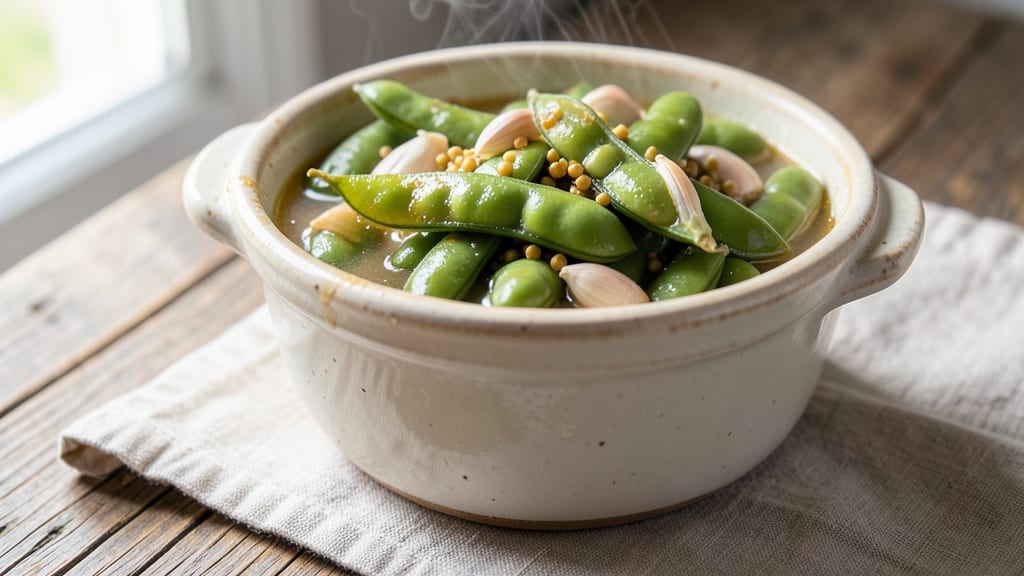
This broad bean pickle recipe transforms humble broad beans into tangy, crunchy bites that elevate any meal. The secret lies in a simple vinegar brine with mustard seeds, garlic, and bay leaves—just 10 minutes of prep before the flavors develop over days.
I first made this while researching traditional European pickling methods, and the results are always crisp, bright, and packed with umami depth.
The process is straightforward: blanch the beans to soften them, then pack them into sterilized jars with a flavorful vinegar mixture that includes turmeric for color and black pepper for heat.
Unlike quick pickles, this recipe benefits from at least 24 hours of refrigeration, allowing the beans to absorb the tangy, aromatic liquid while staying pleasantly firm. The texture is a perfect balance—crisp enough to stand up to rich dishes but tender enough to melt in your mouth.
What makes this pickle special is its versatility—serve it as a side with grilled meats, spread it on crusty bread, or use it to top salads for a bright, crunchy contrast. It’s also naturally vegetarian and vegan, making it a great addition to plant-based meals.
The jars keep for up to 3 months in the fridge, so you can make a big batch and enjoy it throughout the season.
For best results, use fresh broad beans and sterilize your jars properly to ensure safety and longevity. The longer it sits, the more complex the flavors become—think of it as a low-effort, high-reward project that rewards patience with incredible taste. Let’s get started on this tangy, crunchy masterpiece.
Ingredients for broad bean pickle
Fresh broad beans and a tangy vinegar blend create this vibrant, crunchy pickle masterpiece.
| Ingredient | Amount | Notes |
|---|---|---|
| Fresh Broad Beans 🌿 | 1 ½ lb | Pods removed, blanched for 3 minutes |
| White Vinegar 💧 | 2 cups | Distilled preferred for clarity |
| Water 💧 | 1 cup | Filtered or bottled for best results |
| Granulated Sugar 🍚 | ½ cup | White or raw cane sugar |
| Yellow Mustard Seeds 🌶️ | 1 tbsp | Whole seeds for texture |
| Garlic Cloves 🧄 | 4 cloves | Smashed lightly for infusion |
| Ground Turmeric 🌿 | 1 tsp | For vibrant color |
| Ground Black Peppercorns 🌶️ | 1 tsp | Freshly cracked preferred |
| Bay Leaves 🌿 | 2 whole | Fresh or dried |
| Salt 🧂 | 1 ½ tsp | Diamond Crystal kosher salt |
| Small Mouth Mason Jars 🥫 | 2 pieces | Pint-sized, sterilized |
| Fresh Dill Sprigs 🌿 | ¼ cup | Optional for herbaceous note |
The broad beans are the star—fresh is non-negotiable for that crisp texture. Local farmers markets or specialty produce sections at Whole Foods usually have them in season. Look for pods that are firm but not woody. If you can't find fresh, frozen broad beans work in a pinch—just thaw and drain them well. The mustard seeds and turmeric are what give this pickle its signature depth and color. Penzeys carries excellent quality spices if you want to splurge, but the grocery store stuff works fine. Sterilize your jars properly: boil them in water for 10 minutes or run them through a dishwasher cycle.
No mustard seeds? Substitute with 1 tsp ground mustard, but you'll lose that satisfying crunch. Running short on turmeric? Paprika at half the amount gives a similar color boost. The dill is optional but adds a bright herbal note—fresh is best, but dried works at one-third the quantity. For the vinegar, apple cider vinegar adds a fruity twist if you prefer it over white. The sugar can be swapped for agave nectar if you're avoiding refined sugar. If you're making this for a crowd, double the recipe—just use quart-sized jars instead of pints.
This pickle gets better with time—24 hours minimum, but 3 months max in the fridge. The jars should stay submerged in the brine, so pack them tightly. If you're gifting these, paraffin wax seals add a professional touch. Store in the coldest part of your fridge for maximum crispness. The flavor profile evolves beautifully over time, developing a complex balance of tangy, sweet, and umami notes that make it irresistible. Use within 3 months for best texture.
Why You'll Love This Recipe
- Here’s what sold me: that perfect balance of sharp vinegar and just enough sugar to keep it from being too harsh. The mustard seeds add a tiny pop of heat, and the beans? They hold their texture like nobody’s business. It’s the kind of pickle that makes you reach for seconds without even thinking.
- I’ll be real: I make a big batch and forget about it until the jar’s nearly empty. The vinegar keeps it fresh for ages, and the flavor only gets better as it sits. Plus, it’s one of those recipes where the ingredients are so simple you won’t break the bank—just beans, vinegar, and sugar. Minimal cost, maximum satisfaction.
Step-by-step instructions for vinegar-bright broad bean pickle
This vibrant pickle comes together faster than you can say "crunchy" - let's make it shine.
Blanch and Prepare the Broad Beans
Start by removing the pods from the 1.5 lb of fresh broad beans - I use a small paring knife to carefully slice along the seam and pop out the beans. This step is crucial for texture - you want the beans to stay firm but tender. Transfer them to a pot of boiling water and blanch for exactly 3 minutes. The moment they float to the surface, you'll know they're perfectly cooked.
Immediately drain the beans in a colander and plunge them into ice water to stop the cooking process. This shock treatment preserves their bright green color and crisp texture. Once cooled, you can either leave them whole or cut them in half lengthwise if you prefer smaller pieces. I like to keep them whole for that satisfying crunch.
Create the Flavor-Packed Vinegar Brine
In a medium saucepan, combine the 2 cups of white vinegar, 1 cup of water, 0.5 cup of granulated sugar, 1 tbsp of yellow mustard seeds, 4 smashed garlic cloves, 1 tsp of ground turmeric, 1 tsp of ground black peppercorns, 2 bay leaves, and 1.5 tsp of salt. I always use distilled vinegar here - it's clearer and gives a brighter final product.
Bring this mixture to a gentle simmer over medium heat, stirring occasionally until the sugar dissolves completely. The turmeric will give your pickle that gorgeous golden hue, while the mustard seeds add delightful texture. Let it simmer for exactly 5 minutes - this ensures all the flavors meld together beautifully. Real talk: don't skip this step, as it makes all the difference in flavor development.
Sterilize and Pack the Mason Jars
While the brine simmers, prepare your 2 small mouth mason jars by sterilizing them in boiling water for 10 minutes. This is non-negotiable for safe preservation. I like to use a jar lifter to handle them - the jars stay hot and ready for filling. Pack the blanched broad beans tightly into each jar, leaving about 1 inch of headspace at the top.
Here's where it gets fun - divide the 0.25 cup of fresh dill sprigs between the jars, adding them to each one. The dill adds that herbaceous freshness that makes this pickle stand out. Pour the hot brine over the beans, making sure each bean is completely submerged. Use a non-reactive spoon to press down the beans if needed to ensure full coverage.
Seal and Process for Perfect Preservation
Wipe the rims of the jars clean with a damp cloth to ensure perfect seals. Place the lids on the jars and screw on the bands until they're fingertip tight - not too tight, not too loose. This is the moment that matters: process the jars in a boiling water bath for 10 minutes. The water should cover the jars by at least 1 inch.
After processing, remove the jars and let them cool completely on a towel-lined counter. You'll hear the satisfying "ping" as the lids seal - that's your cue they're properly preserved. Once cooled, store them in a cool, dark place. This pickle will keep for up to 6 months, but I guarantee it won't last that long!
Pro Tips For Making Broad Bean Pickle
- Blanch Beans First: Fresh broad beans need a quick 2-minute blanch in boiling water before pickling—this stops enzymes that turn them mushy later. I learned this the hard way after a jar of sad, limp beans that tasted like nothing but vinegar.
- Use Distilled Vinegar: White vinegar’s acidity varies wildly by brand, and cheap stuff can make your pickle taste harsh. Distilled or pickling vinegar (about 5% acidity) keeps flavors balanced—no one wants a pickle that stings like a wasp.
- Toast the Mustard Seeds: Dry-toast the yellow mustard seeds in a pan for 30 seconds until they smell nutty—this prevents bitterness and adds depth. Skip this, and your pickle will taste flat, like someone forgot the spice.
- Simmer, Don’t Boil: After combining everything, simmer the mixture gently for 10 minutes to dissolve sugar and infuse flavors. Boiling hard makes the beans rubbery and the liquid cloudy—slow and steady wins the pickle war.
Essential equipment for broad bean pickle
Sterilizing Essentials
Your mason jars are the heart of this recipe, so proper sterilization is non-negotiable. I use a large stockpot filled with water to boil jars and lids for 10 minutes—this kills bacteria and ensures a perfect seal.
A jar lifter makes handling hot jars safer, and I always keep a clean kitchen towel nearby to dry the rims before sealing. For extra peace of mind, I sterilize my jars in the dishwasher’s sanitize cycle if I’m short on time. 🥫
Vinegar and Sugar Tools
A medium saucepan with a heat diffuser (like a silicone mat) prevents scorching when simmering the vinegar-sugar mixture. I stir with a wooden spoon—metal can react with the acid. For measuring, a digital kitchen scale ensures precise 0.5 cup sugar and 2 cups vinegar ratios.
A fine-mesh strainer helps remove any impurities if using non-distilled vinegar. Pro tip: Keep a small bowl of ice water ready for quick cooling of the brine if needed. 💧
Bean Prep Gear
Removing broad beans from pods requires a small paring knife or bean podder—I find a sharp chef’s knife works best for slicing along the seam.
A colander with a deep bowl is perfect for blanching, and I always keep ice water in a large mixing bowl nearby for shocking the beans. A slotted spoon helps transfer blanched beans to the ice bath without overcrowding.
For cutting beans in half, a sharp chef’s knife and cutting board are essential. 🌿
Flavor Infusion Tools
Smashed garlic cloves need a garlic press or the flat side of a knife blade—never a mortar and pestle, as it can bruise the beans. A small mortar and pestle works well for lightly crushing mustard seeds and black peppercorns if you prefer texture over powder.
A fine-mesh strainer helps filter any loose spices from the brine if you’re particular about clarity. For the dill sprigs, a pair of kitchen shears trims them neatly. 🌶️
Sealing and Storage
A canning funnel simplifies packing beans into jars without spills, and a lid wand (or jar lifter) ensures clean rims for sealing. For processing, a large stockpot with a canning rack keeps jars submerged evenly.
A towel-lined counter is perfect for cooling jars—listen for that satisfying "ping" as lids seal! For long-term storage, I label jars with masking tape and a permanent marker, noting the date. A cool, dark pantry or fridge preserves freshness for up to 6 months. ❄️
Nutrition facts
Frequently asked questions
Can I use dried broad beans instead of fresh?
Fresh broad beans are ideal for their crisp texture, but you can use dried beans if that's all you have. Soak them overnight in water, then boil for 45-60 minutes until tender before blanching. The flavor will be similar, but the texture will be slightly softer. For best results, use 1 lb dried beans for every 1.5 lb fresh called for in the recipe.
How long does it take for the pickle to be ready to eat?
The beans are technically ready to eat immediately after processing, but the flavors develop beautifully with time. For best results, wait 24 hours before opening a jar. The longer it sits (up to 3 months in the fridge), the more complex and tangy the flavors become. The first bite after 48 hours is when you'll taste the magic!
What can I do if my jars don't seal properly?
If the lids don't seal with that satisfying "ping," don't panic! Refrigerate the jars immediately and use them within 1 week. The pickles will still be safe and delicious. To reseal, boil fresh lids for 10 minutes, dry the jar rims, and reprocess for 10 minutes. If the problem persists, try adding a bit more vinegar to the brine—sometimes the acidity level affects sealing.
Can I make this pickle without sugar?
Yes, you can omit the sugar completely, but it helps balance the acidity and adds subtle sweetness. If you skip it, increase the vinegar by 0.25 cup to maintain proper preservation. For a different flavor profile, try 1 tsp honey or 1 tbsp apple cider vinegar instead. The texture and preservation will still be excellent—just the flavor will be more tart.
How do I know when the broad beans are blanched properly?
The beans are perfectly blanched when they float to the surface after 3 minutes of boiling. If they sink, cook them 30 seconds longer. Overcooking makes them mushy, while undercooking leaves them tough. For extra assurance, cut one open—the flesh should be tender but still hold its shape. The ice water bath stops the cooking process and locks in that perfect texture.