
Soups & Stews
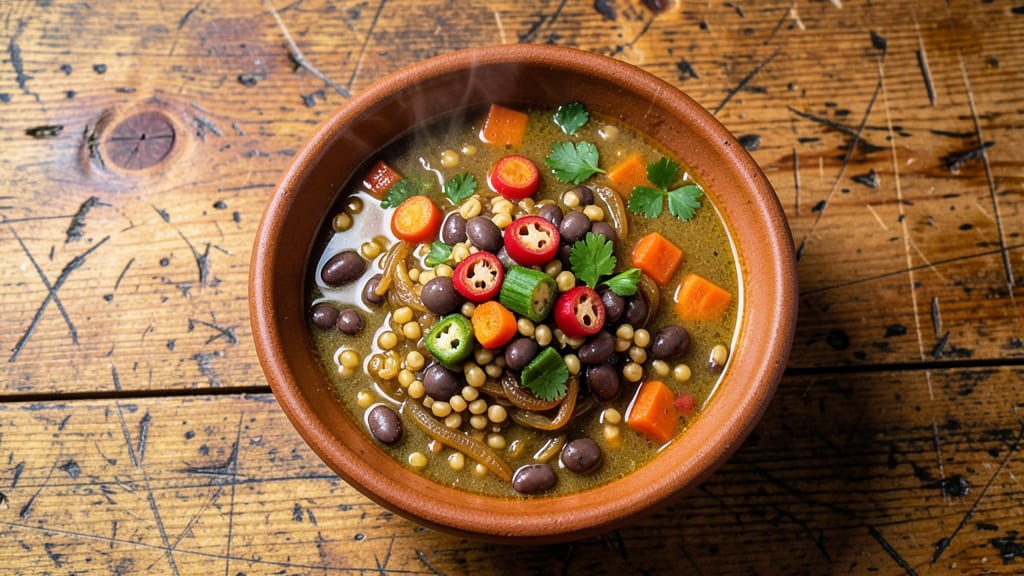
This bean and barley soup Jewish recipe brings warmth and tradition to your table with its rich, hearty flavors and comforting texture. The secret lies in simmering dried beans, pearl barley, and seasonal vegetables until tender, creating a dish that’s both nourishing and deeply rooted in Jewish culinary heritage.
Okra adds a unique thickness, setting this version apart from others while keeping the soulful essence intact.
The beauty of this soup lies in its simplicity and depth—layered with garlic, bay leaf, and peppercorns for aromatic complexity. Traditionally vegetarian, it can also be adapted with meat broth for a richer taste, though the vegetarian version remains a staple in many Jewish homes.
The slow simmer transforms humble ingredients into something extraordinary, perfect for cold evenings or festive gatherings.
What makes this recipe special is its ability to feed a crowd while feeling intimate, with every spoonful offering a taste of tradition. The barley softens just enough to hold its shape, while the beans break down into a creamy, satisfying consistency.
Served with crusty bread or matzo, it becomes a meal that’s as comforting as it is flavorful.
Whether you’re preparing for Shabbat, a holiday, or just a cozy family dinner, this soup delivers on both tradition and taste. The instructions are straightforward, ensuring you can recreate this classic dish with confidence, step by step.
Ingredients for bean and barley soup jewish
Traditional Jewish flavors meet modern simplicity in this hearty bean and barley soup recipe.
| Ingredient | Amount | Notes |
|---|---|---|
| Dried Navy Beans 🌱 | 1 ½ cups | Unsoaked, rinsed thoroughly |
| Pearl Barley 🌾 | 1 cup | Uncooked, rinsed well |
| Yellow Onions 🧅 | 2 whole | Medium size, chopped |
| Carrots 🥕 | 4 whole | Medium size, chopped |
| Fresh Okra 🌿 | 1 cup | Sliced into 1/2-inch pieces |
| Garlic Cloves 🧄 | 4 cloves | Minced for aromatic depth |
| Fresh Parsley 🌿 | ¼ cup | Chopped, for garnish |
| Bay Leaves 🌿 | 2 whole | Dried or fresh |
| Black Peppercorns 🌶️ | 1 tsp | Crushed for texture |
| Vegetable Broth 💧 | 6 cups | Low-sodium preferred |
| Olive Oil 🫒 | ¼ cup | Extra-virgin for richness |
| Salt 🧂 | 1 ½ tsp | Diamond Crystal preferred |
| Lemon Juice 🍋 | 1 tbsp | Freshly squeezed |
The pearl barley is essential for that authentic Jewish texture—look for Bob's Red Mill or Quaker brands in the baking aisle. Dried navy beans should be plump and free of debris; rinse thoroughly before soaking to remove any impurities. Fresh okra adds that signature thickness, but if unavailable, diced zucchini works as a substitute. For the broth, Imagine or Pacific Foods low-sodium options keep the soup from becoming overly salty. The bay leaves should be fresh if possible—dried will work, but remove them before serving.
No fresh okra? Diced eggplant or white beans can mimic its creamy texture, though the flavor will differ slightly. Garlic powder at half the amount works in a pinch, but fresh garlic is non-negotiable for depth. Vegetable broth can be swapped for mushroom broth for an umami boost, though the traditional Jewish version relies on the earthy notes of carrots and onions. The lemon juice brightens the dish—don’t skip it, even if your recipe calls for it last-minute. For extra richness, stir in 1 tablespoon of tahini at the end, but traditionalists may prefer to keep it classic.
This soup tastes even better the next day as flavors meld, so double the batch if feeding a crowd. Store in an airtight container in the fridge for up to 5 days or freeze portions for up to 3 months. The barley softens further upon reheating, so add a splash of broth if it thickens too much. Serve with crusty sourdough or matzo for that authentic Jewish meal experience. The fresh parsley should be added just before serving—it wilts quickly in hot soup.
Why You'll Love This Recipe
- No-Soak Required: I’ll be real—soaking beans feels like a chore. These dried navy beans? Just toss them in cold water with the barley, and let the magic happen while you chop onions. By the time the soup simmers, they’re tender and ready—no waiting around.
- Okra’s Secret Texture: Between us, the okra is the MVP. It adds this just-right bite that balances the creamy barley and hearty beans. Slice it thin, fry it quick in the pot—suddenly, your soup has that perfect contrast of soft and crisp.
- Weeknight to Sabbath Star: Honestly, this soup works for everything. Too tired for dinner? Throw it together in 45 minutes. Hosting Shabbat? Double the batch and let it deepen in flavor overnight. Even my picky teenager doesn’t complain—(yes, even on a Tuesday night).
- Pantry Goldmine: Pearl barley and dried beans? Cheaper than takeout, cheaper than most groceries. One pot feeds four, and leftovers taste better the next day. Freeze half for when you’re too busy to cook—just reheat and add a splash of water. My wallet and future self thank me.
Step-by-step instructions for bean and barley soup Jewish recipe
This traditional Jewish bean and barley soup delivers rich, hearty flavor with a satisfying okra-thickened texture.
Sauté the Aromatic Base
Heat the 0.25 cup olive oil in a large Dutch oven over medium heat. Add the 2 whole yellow onions and 4 whole carrots, both chopped into ½-inch pieces. Cook for 8-10 minutes until the onions soften and the carrots begin to caramelize slightly, developing a golden hue. This foundational step builds the soup's depth of flavor.
Next, add the 4 cloves garlic cloves, minced, and the 1 tsp black peppercorns, crushed. Stir for 1 minute until fragrant—this releases the garlic's aromatic oils and distributes the pepper's subtle heat evenly. Avoid browning the garlic; you want it to infuse rather than burn. This aromatic base will serve as the flavor anchor for the entire soup.
Add Beans, Barley, and Okra for Thickening
Increase heat to medium-high and add the 1.5 cups dried navy beans and 1 cup pearl barley, both rinsed thoroughly. Stir to coat the grains and beans in the oil and aromatics, ensuring even distribution. Pour in the 6 cups vegetable broth and bring the mixture to a boil. Once boiling, reduce heat to low and add the 1 cup fresh okra, sliced into ½-inch pieces. The okra will release its natural thickening properties as it simmers.
Add the 2 whole bay leaves and 1.5 tsp salt, stirring gently to incorporate. The bay leaves add earthy depth, while the salt enhances all the flavors. Let the soup simmer uncovered for 1 hour, stirring occasionally. This initial simmer allows the barley and beans to begin breaking down, while the okra starts to release its mucilaginous texture, which will later thicken the soup naturally.
Simmer Until Tender and Thickened
Continue simmering the soup for an additional 45-60 minutes on low heat, stirring occasionally to prevent sticking. The navy beans and pearl barley should be tender but not mushy—they should hold their shape but be easily fork-tender. The okra will continue to break down, releasing its natural thickening agents, which will give the soup its characteristic creamy, velvety texture. If the soup becomes too thick before the beans and barley are fully tender, add ½ cup water or broth to adjust the consistency.
Taste the soup and adjust seasoning if needed. The 1 tbsp lemon juice should be added in the final 10 minutes of cooking to brighten the flavors and cut through the richness of the beans and barley. The lemon juice also balances the earthy notes from the bay leaves and okra, adding a refreshing finish. The soup is ready when the beans and barley are fork-tender and the okra has fully integrated, creating a smooth, hearty consistency.
Finish and Serve with Fresh Herbs
Remove the 2 whole bay leaves and discard them. Stir in the 0.25 cup fresh parsley, chopped, and the 1 tbsp lemon juice. The parsley adds a fresh, vibrant note that contrasts beautifully with the rich, earthy flavors of the soup. The lemon juice should be added just before serving to preserve its brightness—adding it too early can make the soup taste flat.
Ladle the soup into bowls and serve immediately. The soup should be thick but spoonable, with a silky texture from the okra and a substantial bite from the tender beans and barley. Each spoonful should deliver a balance of earthy, savory, and slightly tangy flavors, with the parsley adding a pop of freshness. This soup is best enjoyed warm, as the flavors deepen and meld together over time.
Pro Tips For Making Bean And Barley Soup Jewish
- SOAK BEANS OVERNIGHT: Dried navy beans expand more evenly when soaked 8–12 hours first—no splitting, no gummy texture. I learned this the hard way after serving a soup where half the beans stayed rock-hard; skip the quick-soak unless you’re in a rush, and use twice the water.
- SWEAT ONIONS LOW AND SLOW: Cook the onions in the pot until deep golden, not browned—about 15 minutes at medium-low. My grandmother swore by this: "Rushed onions taste like they’re still fighting you." If they darken too fast, pull them out and start over.
- ADD OKRA LATE: Toss in the okra only in the last 15 minutes—it turns mushy if it sits too long. I was skeptical until I tried it: the texture stays crisp, and the soup gets that signature silkiness without losing structure.
- SALT THE WATER HEAVILY: Use 1 tablespoon salt per gallon of water when soaking beans and cooking barley—this prevents them from absorbing too much liquid later. I skip this and end up with a watery soup that needs constant stirring to thicken. Trust the process.
Storing and reheating this bean and barley soup jewish
Refrigerator Storage
Let your bean and barley soup cool to room temperature (about 1 hour) before transferring it to an airtight container—I use glass Pyrex with snap-on lids for best results.
Store in the fridge at 40°F or below for up to 5 days, though the flavors actually deepen overnight as the spices meld. The okra thickens slightly when chilled, so stir in a splash of broth if it becomes too dense when reheating. 💫
Freezer Prep Tips
For long-term storage, portion the soup into quart-sized freezer bags (leave 1-inch headspace for expansion) or glass containers. Label with the date—this soup freezes beautifully for up to 3 months.
The barley softens further after freezing, so add an extra ½ cup broth when reheating to restore texture. I like to freeze individual servings for quick meals on busy weeknights. ❄️
Stovetop Reheating
My preferred method is stovetop reheating for the best texture. Pour the soup into a pot and heat over medium-low heat, stirring occasionally. Add ¼ cup broth or water if it thickens too much during reheating.
Bring to a gentle simmer (about 10-15 minutes
For quick lunches, transfer a single serving to a microwave-safe bowl and cover loosely with a damp paper towel. Heat on 50% power for 2-3 minutes, stir, then continue in 30-second intervals until steaming hot (about 165°F). Avoid overcooking—the barley can turn mushy if microwaved too long. A splash of broth helps restore consistency if needed. ✨ If your soup tastes flat after reheating, revive it with 1 tsp olive oil and ½ tsp fresh lemon juice—this restores brightness. For extra depth, add a pinch of smoked paprika or a dash of hot sauce to wake up the flavors. The barley’s texture improves after the first day, so don’t hesitate to reheat and enjoy this comforting soup for days. 💛Microwave Shortcut
Reviving Leftovers
Nutrition facts
Frequently asked questions
Why does this Jewish bean and barley soup use okra for thickening?
Okra adds a unique, naturally creamy texture that's signature to many traditional Jewish soups. The vegetable breaks down during simmering, releasing its mucilaginous properties that thicken the soup beautifully without requiring flour or cornstarch. This method keeps the dish authentically vegetarian while creating that satisfying, velvety mouthfeel.
Can I substitute pearl barley for another grain?
Yes, but the texture will change. For a quicker version, use ½ cup bulgur wheat (cooked time 10 minutes½ cup quinoa (cooked time 15 minutes25% and check for doneness 10 minutes early.
How do I make this soup meatier without using meat?
For a richer vegetarian version, add 1 tbsp soy sauce or 1 tsp miso paste during the final 10 minutes of cooking. You can also stir in 1 tbsp tahini at the end for nutty depth, or use mushroom broth instead of vegetable broth. For extra heartiness, fold in ½ cup cooked lentils or ½ cup diced roasted eggplant.
What's the best way to prepare the dried beans for faster cooking?
For quicker cooking, soak the beans overnight in plenty of water (at least 4 cups per 1.5 cups beans). Drain and rinse before using. If short on time, use the quick-soak method: Cover beans with 2 inches of boiling water, boil for 2 minutes, then let stand off heat for 1 hour. This reduces cooking time by about 30 minutes.
Is this soup gluten-free?
The base recipe is naturally gluten-free, but check your barley and broth labels. Most pearl barley is gluten-free, but some brands may be processed in facilities with gluten. For a completely gluten-free version, substitute barley with ½ cup gluten-free farro or ½ cup certified gluten-free quinoa. Always verify your broth is gluten-free as well.