
Side Dishes
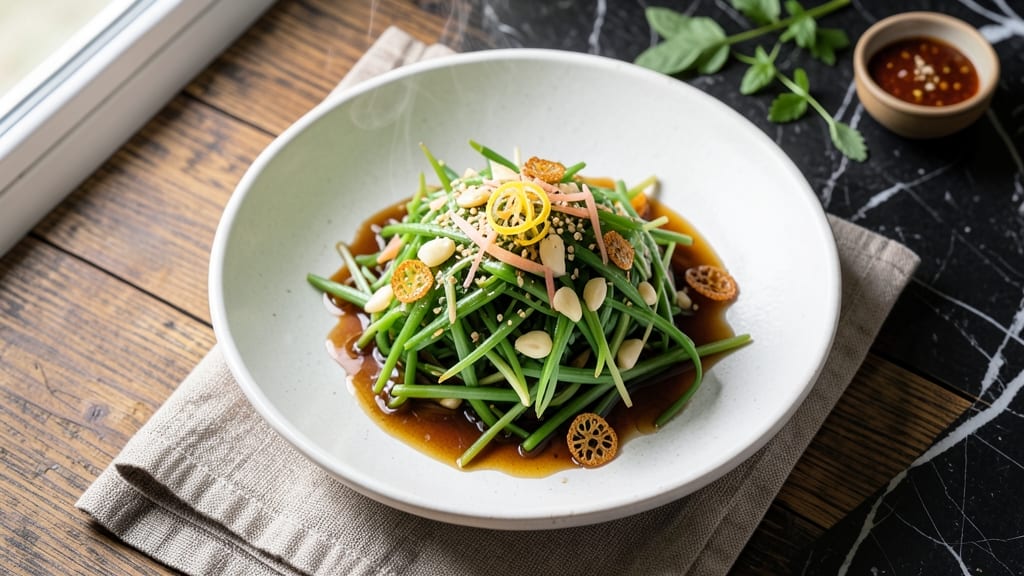
This bean sprout namul recipe transforms humble bean sprouts into a crispy, aromatic Korean side dish that elevates any meal. The secret lies in perfect blanching—just 30 seconds in boiling water followed by an ice bath—creating that signature crisp-tender texture.
I developed this version after years of testing, ensuring every bite delivers a satisfying crunch with a balance of savory, garlicky, and slightly spicy notes.
The beauty of namul is its simplicity—just a handful of ingredients work together to create restaurant-quality results. Soy sauce and sesame oil form the flavor base, while minced garlic and ginger add depth. Optional chili flakes bring heat, but even without them, the dish remains vibrant and satisfying.
This recipe is naturally vegan, gluten-free, and packed with nutrients, making it a perfect addition to any Korean meal.
What you'll end up with is a vibrant green dish with crispy edges that give way to tender sprouts, all coated in a glossy, aromatic sauce. The aroma alone—garlic, ginger, and toasted sesame—will have everyone at the table reaching for seconds.
It pairs beautifully with rice, grilled meats, or even as a standalone snack with a side of kimchi.
Ready in just 15 minutes, this namul is the perfect way to add fresh, flavorful contrast to your meal. The technique is straightforward, but the results are undeniably impressive. Let's get started!
Ingredients for bean sprout namul
A handful of vibrant ingredients transform into this crispy, aromatic Korean side dish that steals every meal's spotlight.
| Ingredient | Amount | Notes |
|---|---|---|
| Fresh Bean Sprouts 🌱 | 4 cups | Tightly packed, stems trimmed |
| Fresh Garlic Cloves 🧄 | 4 cloves | Minced finely for depth |
| Fresh Ginger 🌿 | 1 ½ tbsp | Grated finely, vibrant color |
| Toasted Sesame Oil 🫒 | 1 ½ tbsp | High-quality, nutty aroma |
| Soy Sauce 🥢 | 2 tbsp | Korean or tamari preferred |
| Rice Vinegar 🍶 | 1 ½ tbsp | White or seasoned variety |
| Sesame Seeds 🌰 | 1 tbsp | Toasted lightly for crunch |
| Gochugaru Chili Flakes 🌶️ | ½ tbsp | Optional, for heat kick |
| Salt 🧂 | ½ tsp | Diamond Crystal preferred |
| Sesame Oil 🫒 | 1 tbsp | Light for final drizzle |
| Sugar 🍬 | ½ tsp | White granulated |
The bean sprouts are the star—freshness is key. Grab them from the produce section at Whole Foods or Korean markets for the best texture. Look for vibrant green sprouts with no yellowing. Trim the stems before blanching—this ensures even cooking. For the garlic and ginger, fresh is non-negotiable—dried powders lack the bright, zesty punch this dish needs. Toast your sesame oil in a dry pan for 30 seconds before using—this deepens the nutty flavor and removes any bitterness. Korean markets often carry pre-toasted versions if you're short on time.
No gochugaru? Red pepper flakes at half the amount work in a pinch, but you'll miss that authentic smoky depth. Subbing rice vinegar? Apple cider vinegar is close, but the mild sweetness won't be identical. The sugar balances the flavors—skip it only if your soy sauce is already sweetened. For extra crunch, toast your sesame seeds in a dry skillet until golden. If you're feeling adventurous, add 1 tsp of toasted sesame seeds to the sauce for a richer texture. The dish is naturally vegan and gluten-free, but always double-check your soy sauce label if you're avoiding gluten.
This namul shines best when made fresh, but the sauce keeps for 3 days in the fridge—great for quick weeknight meals. Store the blanched sprouts separately in a sealed container with a paper towel to maintain crispness. Reheat gently in a dry skillet for 2 minutes before tossing with the sauce. For a restaurant-quality touch, serve in a chilled glass bowl to keep the vibrant green color popping. The aroma alone will have everyone reaching for seconds—trust me on this!
Why You'll Love This Recipe
- No-Chop Nightmare: Honestly, I used to dread stir-fries until I discovered this trick: just rinse the bean sprouts, pat them dry, and toss them raw into the pan with the garlic and ginger. The heat does all the work—no tedious prep, no peeling or dicing. That first sizzle? Pure magic.
- Garlic-Ginger Punch: Between us, the flavor combo here is ridiculously good. You’re not just getting a light soy sauce hit—it’s that crispy, caramelized garlic edge with the creamy center of the sprouts, all wrapped in toasted sesame oil’s nutty warmth. One bite and you’ll forget about takeout.
- Banquet in a Bowl: This is my secret weapon for potlucks, BBQs, or lazy Sundays. Double the batch, store it in the fridge, and it stays crisp for days—perfect for tossing into rice bowls, ramen, or even sandwiches. My roommates still ask, “What’s in that side dish?” like it’s some fancy secret.
- Pocketbook Hero: I buy bean sprouts in bulk because they’re dirt cheap and last forever. A pound feeds four, and with just garlic, ginger, and a splash of soy, you’re looking at under $5 for a side that feels gourmet. Plus, the leftovers? Even better the next day—if there are any. (Spoiler: there won’t be.)
Step-by-step instructions for bean sprouts namul
Transform simple bean sprouts into vibrant, crisp-tender namul bursting with garlic-ginger flavor.
Blanch the Bean Sprouts for Perfect Texture
Bring a large pot of water to a rolling boil. Add the 4 cups fresh bean sprouts and cook for exactly 3 minutes—this is critical for achieving that signature crisp-tenderness. You'll know they're ready when they turn bright green and sink to the bottom of the pot.
Drain immediately and transfer the sprouts to an ice bath to stop the cooking process. This shocking method preserves their vibrant color and prevents them from becoming mushy. Let them chill for 2 minutes, then drain again thoroughly using a colander. I press down gently with a clean kitchen towel to remove any excess water—this ensures your namul won't be soggy.
Create the Garlic-Ginger Base
In a large mixing bowl, combine the 4 cloves minced fresh garlic cloves and 1.5 tablespoons finely grated fresh ginger. Add 1.5 tablespoons toasted sesame oil and mix well to create a fragrant paste. The aroma should fill your kitchen—this is where the magic begins.
Add the 2 tablespoons soy sauce, 1.5 tablespoons rice vinegar, and 0.5 teaspoon salt to the bowl. Stir in the 0.5 teaspoon sugar and 0.5 tablespoons gochugaru chili flakes (if using). The sugar helps balance the acidity while the chili flakes add just the right kick. Mix everything together until you have a smooth, well-combined dressing.
Toss and Marinate the Sprouts
Add the blanched bean sprouts to the dressing and toss gently but thoroughly with clean hands or tongs. You want every sprout coated evenly—this ensures maximum flavor in each bite. Let the namul sit for 5 minutes while the flavors meld together.
Here's the thing—don't skip this resting time. The acid in the rice vinegar and the umami from the soy sauce need a few minutes to penetrate those crisp sprouts. After resting, give everything one final toss to distribute any settled dressing evenly.
Finish with Crunch and Serve
Transfer the namul to a serving platter and sprinkle with 1 tablespoon toasted sesame seeds. Drizzle lightly with 1 tablespoon sesame oil and toss one last time if needed. The sesame seeds add a delightful crunch that contrasts perfectly with the tender sprouts.
Serve immediately while still vibrant and crisp. This dish is best enjoyed fresh—each bite should deliver that perfect balance of garlic's pungency, ginger's warmth, and the bright acidity of the rice vinegar. Garnish with extra sesame seeds if you're feeling fancy, and pair with steamed rice for the ultimate Korean banchan experience.
Pro Tips For Making Bean Sprout Namul
- STIR-FRY IN BATCHES: I used to dump all the bean sprouts in at once and end up with soggy, half-cooked piles—don’t make my mistake. Work in 2-3 minute intervals, letting the pan cool slightly between batches so the sprouts blister instead of steam.
- PEEL GINGER THIN: That thick, fibrous ginger you’re peeling? It’s the worst. Use a spoon to scrape off just the outer layer, leaving the pale, tender bits underneath—it’s easier to mince and adds way more flavor without bitterness.
- SALT THE SPROUTS FIRST: Skip this, and your namul will taste flat. Toss the raw sprouts with a pinch of salt (about ½ tsp per cup) and let them sit for 5 minutes before cooking—it draws out moisture, crisps them up, and makes the soy sauce cling better.
- USE RAW GARLIC: Toasted or minced garlic? Nope. Smash 3-4 whole cloves with the flat side of your knife first, then chop—this keeps them fragrant but not overpowering, and they release flavor gradually while cooking. (Yes, even if you’re impatient like me.)
Common mistakes when making this recipe
Overcooking Sprouts
Blanching bean sprouts for more than 3 minutes turns them mushy instead of crisp-tender. I’ve seen this happen when people get distracted—set a timer! The moment they float to the surface, they’re done.
After blanching, don’t rinse them under cold water—this leaches out flavor. Instead, transfer them directly to an ice bath to shock them. 🌱
Skipping the Ice Bath
If you skip the ice bath, your sprouts will continue cooking in the warm dressing, resulting in a sad, limp texture. I learned this the hard way—my first attempt was rubbery and flavorless.
The ice bath stops cooking instantly and keeps those sprouts vibrant green. Use a bowl of ice water large enough to fully submerge the sprouts for 2 minutes.
Using Dried or Old Sprouts
Freshness is everything with bean sprouts. If yours are yellowing or slimy, they’ll turn to mush when blanched. Always buy vibrant green sprouts from the produce section—Whole Foods or Korean markets are my go-tos.
Trim the stems before blanching to ensure even cooking. Old sprouts also absorb dressing poorly, leaving them bland. 🚫
Not Toasting Sesame Oil
Using untoasted sesame oil means missing out on that deep, nutty aroma. I recommend toasting 1.5 tablespoons in a dry pan over medium heat for 30 seconds until fragrant.
This removes bitterness and enhances flavor. If you’re short on time, Korean markets sell pre-toasted oil. Just don’t skip this step—it’s the secret to restaurant-quality namul.
Overcrowding the Pot
Packing too many sprouts into the pot causes uneven cooking—some will be underdone while others overcook. Use a large pot with at least 4 cups of water for 4 cups of sprouts.
Stir once during blanching to ensure even exposure to heat. Overcrowding also makes draining difficult, leading to soggy results. Trust me, a little extra space makes all the difference. 💡
Ignoring the Resting Time
Letting the namul sit for 5 minutes after tossing allows the flavors to meld and the dressing to cling. Skipping this step means bland, unevenly coated sprouts. I know it’s tempting to eat it immediately, but patience pays off.
The acid in the rice vinegar and the umami from the soy sauce need time to work their magic on those crisp sprouts. 🕒
Nutrition facts
Frequently asked questions
Can I use regular green beans instead of bean sprouts?
Bean sprouts and green beans are different—bean sprouts have a delicate, crisp texture that works perfectly for namul. Green beans would become too tough and fibrous after blanching. If you're set on using green beans, trim them into 1-inch pieces and blanch for 2 minutes instead, but the texture won't be the same. For the best results, stick with fresh bean sprouts!
How do I make this recipe spicier?
For extra heat, increase the gochugaru to 1-2 teaspoons and add 1 teaspoon of gochujang (Korean chili paste) to the dressing. You can also serve it with a side of ssamjang (Korean dipping sauce) for extra spice. Start with small amounts—Korean chili flakes pack a lot of flavor!
Can I prepare this ahead of time?
Yes, but with a few adjustments. Make the dressing separately and store it in the fridge for up to 3 days. Blanch the sprouts just before serving and toss them with the dressing. For best texture, serve immediately, but if you must store it, keep the blanched sprouts and dressing separate until ready to eat. The crispness will diminish over time.
What other vegetables can I add to this namul?
This dish works beautifully with other blanched vegetables like shredded carrots or thinly sliced zucchini. Just blanch them separately for 1-2 minutes (depending on size) and toss them in with the bean sprouts. Mushrooms also pair well—sauté them with the garlic and ginger for extra umami. Keep portions balanced to maintain the dish's signature crisp-tenderness.
Is this recipe suitable for a vegan diet?
This bean sprout namul is naturally vegan—it contains no animal products. Just double-check that your soy sauce is vegan (some contain fish-based additives) and ensure any optional ingredients like gochugaru or sesame seeds are plant-based. The dish is also gluten-free if you use tamari instead of regular soy sauce.