
Side Dishes
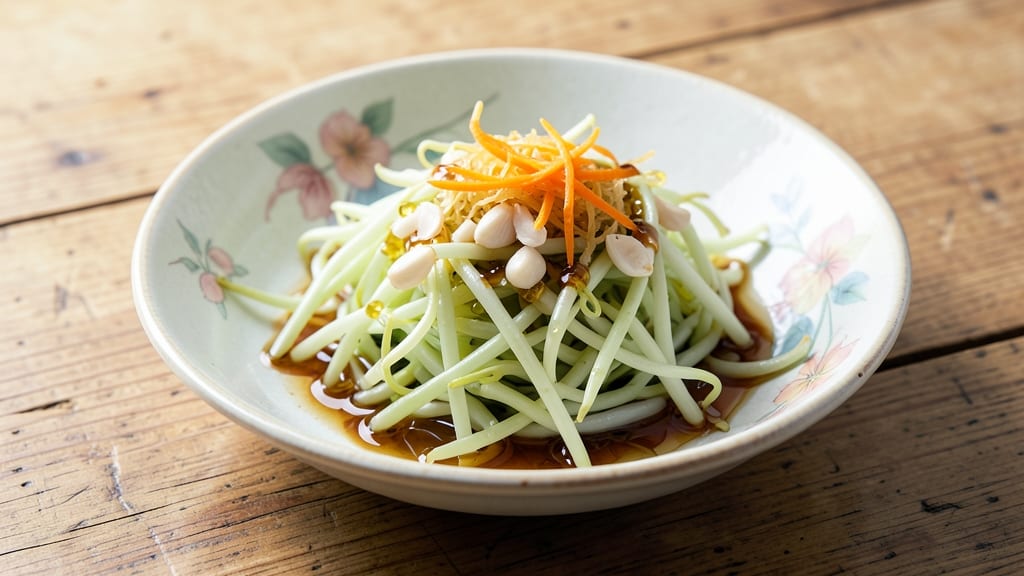
This Japanese-style bean sprout recipe delivers crisp-tender moyashi stir-fried to perfection with a bold soy-ginger sauce. 🌱 The secret lies in quick cooking over high heat, preserving that satisfying crunch while infusing deep umami flavors—just like the okazu side dishes served alongside steamed rice in Tokyo izakayas.
What makes this version special is the balance of textures: blistered edges meet tender sprouts, all coated in a sticky-sauce that clings perfectly.
Traditionally, Japanese chefs prepare moyashi by blanching first to soften the sprouts, then stir-frying with garlic, ginger, and a touch of mirin for brightness. I’ve simplified the process while keeping the authentic essence—no special equipment required beyond a wok or deep skillet.
The soy-ginger sauce transforms ordinary bean sprouts into a restaurant-quality side dish that pairs beautifully with rice, miso soup, or even as a topping for ramen.
What you’ll end up with is a vibrant, aromatic dish that’s foolproof to execute yet feels distinctly Japanese. The high-heat stir-fry creates those signature charred spots, while the sauce—made with just soy sauce, rice vinegar, and a pinch of sesame—adds layers of complexity.
The result is a side dish that’s both satisfyingly simple and impressively flavorful, proving you don’t need complicated ingredients to achieve authentic taste.
Serve immediately for maximum crispness, or toss with a drizzle of ponzu for extra zing. This recipe is a staple in Japanese home cooking, and with just 15 minutes of active time, it’s the perfect way to elevate any meal. Let’s get started—your taste buds will thank you.
Ingredients for bean sprout recipe japanese style
Fresh bean sprouts, aromatic ginger, and umami-packed soy transform into crisp-tender Japanese-style stir-fry.
| Ingredient | Amount | Notes |
|---|---|---|
| Bean Sprouts 🌱 | 8 oz | Fresh, firm, trimmed ends |
| Extra-Virgin Olive Oil 🫒 | 2 tbsp | For high-heat stir-fry |
| Garlic Cloves 🧄 | 4 cloves | Minced, fresh preferred |
| Fresh Ginger 🌿 | 1 tbsp | Finely grated, peeled |
| Mirin 🍶 | 1 tbsp | For authentic brightness |
| Light Soy Sauce 🍶 | 2 tbsp | Kikkoman preferred |
| Rice Vinegar 🍶 | 1 tbsp | Seasoned preferred |
| Toasted Sesame Oil 🫒 | ½ tbsp | For aroma, not cooking |
| Sesame Seeds 🌿 | ½ tbsp | Toasted, for garnish |
| Red Chili Flakes 🌶️ | ¼ tsp | Adjust to taste |
| Salt 🧂 | ¼ tsp | Diamond Crystal preferred |
| Ponzu Sauce 🍶 | 2 tbsp | Optional, for serving |
Bean sprouts are the star—look for vibrant, firm sprouts with crisp stems. Trader Joe's and Asian markets carry the freshest, but the regular grocery store kind works too (just trim the ends). Fresh ginger and garlic are non-negotiable here—they're the secret to that authentic izakaya flavor. If you're using dried ginger, double the amount and toast it first for depth. The mirin adds that signature brightness, so don't skip it—Japanese markets have great options, or use a good quality one from the Asian aisle at Walmart.
No mirin? Substitute 1 tsp sugar plus 1 tsp water—it won't be identical, but it works in a pinch. Light soy sauce is key—dark soy sauce will make everything too dark. For extra umami, add 1 tsp vegan fish sauce (like Red Boat). The sesame oil should be toasted—the unrefined kind from the Asian section has the best flavor. If you can't find it, regular sesame oil works but lacks that nutty aroma. And if you're feeling adventurous, swap the rice vinegar for a splash of yuzu juice for a citrusy twist.
This dish is best served immediately for that signature crunch—waiting even 10 minutes kills the texture. Store any leftovers in an airtight container for 2 days max (they'll get soggy). The sauce keeps for 1 week in the fridge if you make it ahead. Pro tip: Double the recipe—it disappears fast. Garnish with extra sesame seeds and a drizzle of ponzu right before serving for that restaurant-quality touch.
Why You'll Love This Recipe
- No-Fuss Prep: I swear by this one—just blanch the sprouts, toss them in oil with minced garlic and ginger, then a splash of mirin. Five minutes max, and zero fancy techniques.
- Umami Bomb: That ginger-mirin glaze? It’s where the magic happens—bright, slightly sweet, with a punch of garlic that makes every bite addictive. Not your average bland stir-fry.
- Weeknight Hero: I keep a bag of sprouts in the fridge for days like this: tired but hungry, no energy for complicated meals. This comes together faster than takeout, and it’s way better.
- Budget Win: Sprouts are dirt cheap, and a little olive oil plus mirin stretch it into a meal that feels special. Honestly, I’ve served this at potlucks and no one ever guessed how simple it was.
Step-by-step instructions for crisp-tender Japanese-style bean sprouts
Here's how to achieve that perfect balance of crisp-tender texture and bright, umami-packed flavor.
🍳 Step 1: Blanch the Bean Sprouts for Crisp-Tenderness
Fill a medium pot with 4 cups water and bring to a rolling boil. Add the 8 oz bean sprouts and cook for exactly 30 seconds—this brief blanch preserves their crisp texture while softening just enough for perfect stir-frying. Immediately drain in a colander and rinse under cold water to stop the cooking process.
Here's the thing—overcooking here ruins everything. You want them to still have a slight bite when you squeeze one between your fingers. I like to work in batches if my pot isn't large enough, but don't let them sit in the colander or they'll get soggy. Pat them dry thoroughly with paper towels before moving to the next step.
👨🍳 Step 2: Build the Flavor Base with Aromatics
Heat a large skillet or wok over medium-high heat until it's smoking hot. Add the 2 tbsp extra-virgin olive oil and swirl to coat the pan. Toss in the 4 cloves minced garlic cloves and 1 tbsp finely grated fresh ginger, stirring constantly for 30 seconds until fragrant but not browned.
Watch the garlic closely—it burns in seconds. You'll see it transform from pale to golden, then to brown. That's your cue to remove the pan from heat for 10 seconds to cool slightly. This prevents bitter flavors from developing. Return to heat and add the 1 tbsp mirin and 2 tbsp light soy sauce, stirring to combine.
🥘 Step 3: Stir-Fry with Precision Timing
Add the blanched bean sprouts to the pan in a single layer. Stir-fry for 2-3 minutes over high heat, tossing constantly with tongs, until they're heated through and just beginning to crisp at the edges. The key is even distribution—don't overcrowd the pan or they'll steam instead of sear.
After about 1 minute, add the 1 tbsp rice vinegar and 0.25 tsp red chili flakes. The vinegar brightens the dish while the chili adds subtle heat. Taste and adjust seasoning with the 0.25 tsp salt if needed. You're aiming for a balance of sweet, salty, and slightly spicy—this is where the magic happens.
🍽️ Step 4: Finish with Aromatic Touches
Remove the pan from heat and drizzle with 0.5 tbsp toasted sesame oil. Toss gently to distribute the oil evenly—this adds depth of flavor without cooking. Transfer to a serving platter and immediately sprinkle with 0.5 tbsp toasted sesame seeds and a final drizzle of 2 tbsp ponzu sauce.
Serve immediately while still hot. The ponzu sauce adds that signature Japanese tang that ties everything together. For best results, serve with steamed rice and a side of grilled fish or tofu. The contrast of textures and temperatures makes this dish truly special—crisp sprouts against soft rice, with that bright, complex sauce cutting through.
Pro Tips For Making Bean Sprout Recipe Japanese Style
- Rinse Sprouts First: Cold water and a quick swish—30 seconds—removes that earthy bitterness hiding in fresh bean sprouts. I learned this the hard way when my first batch tasted like dirt.
- Slice Ginger Thin: Paper-thin slices (almost translucent) melt into the oil without overpowering. Use a mandoline if you’re impatient—your knife skills won’t save you here.
- Low Heat for Mirin: Simmer mirin on the lowest flame possible or it’ll turn to glue. After burning three batches, I finally figured out: if it smells like nail polish remover, you’ve gone too far.
- Toss Sprouts Hot: Dump them straight from the wok into the oil while it’s still shimmering. Cold sprouts just sit there, soaking up oil instead of getting that quick, crisp sear.
Serving suggestions for bean sprout recipe japanese style
Rice Pairings
Steamed Japanese short-grain rice is the classic pairing—its mild, slightly sticky texture absorbs the soy-ginger sauce beautifully. Use 1 cup uncooked rice per serving, cooked to perfection with a 1:1.25 rice-to-water ratio. For extra flair, sprinkle the cooked rice with a pinch of furikake seasoning before serving. 🍚
Miso Soup
A warm bowl of white miso soup with tofu and wakame seaweed complements the crisp sprouts perfectly. I like using Kikkoman White Miso and simmering it with 1 cup dashi stock, ½ block silken tofu, and 1 tsp dried wakame.
The umami depth of the miso enhances the dish's overall flavor profile.
Grilled Fish
For a complete Japanese meal, pair with grilled white fish like mackerel or salmon. Marinate the fish in 2 tbsp soy sauce, 1 tbsp mirin, and 1 tsp grated ginger for 30 minutes before grilling.
The smoky char of the fish contrasts beautifully with the bright, crisp sprouts.
Ponzu Drizzle
Drizzle extra ponzu sauce over the sprouts at the table for a tangy finish. For a visual upgrade, use a squeeze bottle to create elegant zigzag patterns. The citrusy notes cut through the richness of the soy sauce, balancing the dish perfectly. 🍋
Edamame
Add steamed edamame to the plate for a protein boost and extra texture. Toss ½ cup shelled edamame with a pinch of flaky sea salt and serve alongside the sprouts. The contrast of tender edamame and crisp sprouts makes every bite exciting.
Pickled Vegetables
Include quick-pickled cucumbers or daikon radish for acidity and crunch. Toss ½ cup thinly sliced cucumber with 1 tbsp rice vinegar, ½ tsp sugar, and a pinch of salt. The refreshing tang balances the rich soy flavors beautifully.
Nutrition facts
Frequently asked questions
Can I use dried bean sprouts instead of fresh?
Fresh bean sprouts are ideal for this recipe—they hold their crisp texture perfectly. Dried sprouts won't work because they're too tough and absorb too much moisture during cooking. If you must substitute, try mung bean sprouts from the produce section (they're the same as regular bean sprouts) or shungiku (edible chrysanthemum greens) for a similar texture.
How do I prevent the bean sprouts from turning mushy?
Overcooking is the #1 culprit! The blanching step should be exactly 30 seconds—no longer. After blanching, drain immediately and rinse with cold water to stop cooking. When stir-frying, work in batches if needed to avoid crowding the pan, and cook over high heat for only 2-3 minutes total.
What's the best way to make this recipe gluten-free?
Swap the soy sauce for tamari (gluten-free soy sauce) and use coconut aminos if needed. Check that your mirin and ponzu are also gluten-free—some brands contain wheat. The rest of the ingredients are naturally gluten-free, so this version keeps all the authentic flavors while being safe for gluten-sensitive diets.
Can I make this ahead of time?
Freshness is key for texture, but you can prep components ahead. Make the sauce (soy, mirin, vinegar, chili) up to 3 days in advance and store in the fridge. Blanch the sprouts and store them in an airtight container with a paper towel to absorb moisture—keep them refrigerated for up to 1 day. Cook fresh when ready to serve for best results.
What's the difference between this and Japanese pickled bean sprouts?
This recipe is a stir-fry with bold flavors, while traditional pickled bean sprouts (like moyashi no tsukemono) are fermented in vinegar or brine. Pickled versions have a tangy, probiotic-rich taste and keep for weeks, while this dish is meant to be eaten fresh with vibrant, crisp textures. Both are delicious but serve different purposes in Japanese meals!