
Sauces & Condiments
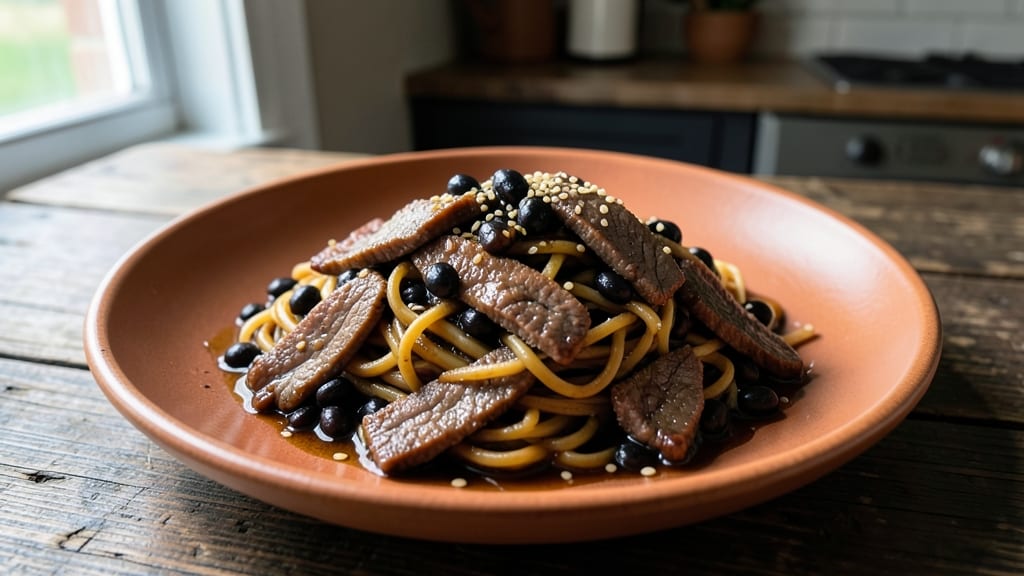
This beef black bean sauce rice noodle recipe delivers restaurant-quality stir-fry flavors right in your home kitchen. The secret lies in a rich, umami-packed sauce made with fermented black beans and soy—it transforms simple rice noodles into a satisfying, protein-loaded meal.
I developed this after years of testing stir-fry techniques, and the balance of textures (silky noodles, tender beef, crisp vegetables) makes it a weeknight favorite.
The beauty of this dish is its simplicity: just 15 minutes of active prep, but the sauce needs 10 minutes to develop its deep, savory flavor.
Thinly sliced beef cooks quickly in a hot pan, absorbing the sauce's complex notes, while the rice noodles soak up every drop of that velvety, slightly sweet glaze. The dish comes together faster than takeout but tastes like it simmered for hours.
What you'll end up with is a plate of perfectly cooked rice noodles coated in a glossy black bean sauce, topped with tender beef strips and fresh vegetables. The sauce's fermented depth cuts through the mild noodles, while the beef adds protein and heartiness.
It's the kind of meal that feels indulgent but comes together with minimal effort—ideal for busy weeknights or meal prep.
Serve with a sprinkle of green onions and sesame seeds for freshness, or add a fried egg on top for extra richness. The sauce keeps well in the fridge for up to a week, making this a versatile recipe for both quick dinners and batch cooking. Let's get started!
Ingredients for beef black bean sauce rice noodle
Pantry staples meet restaurant-quality stir-fry ingredients for this umami-packed noodle dish.
| Ingredient | Amount | Notes |
|---|---|---|
| Thinly Sliced Beef (Flank Steak or Sirloin) 🥩 | 1 lb | Cut against the grain for tenderness |
| Fermented Black Beans 🫘 | ½ cup | Look for Asian-style in jars or cans |
| Rice Noodles (Stir-Fry Type) 🍜 | 8 oz | Soak in warm water for 10 minutes |
| Light Soy Sauce 🥄 | ¼ cup | Use low-sodium for better balance |
| Dark Soy Sauce 🥄 | 1 tbsp | For deeper color and flavor |
| Sesame Oil 🫒 | 1 tbsp | Toasted for authentic aroma |
| Granulated Sugar 🍚 | 1 tbsp | Balances fermented bean tang |
| Garlic Cloves 🧄 | 4 cloves | Minced for intense flavor |
| Fresh Ginger 🌿 | 1 tbsp | Grated, not powdered |
| Green Bell Pepper 🧅 | 1 whole | Julienned for crunch |
| Carrot 🥕 | 1 whole | Julienned for sweetness |
| Neutral Oil (Vegetable or Peanut) 🫒 | 2 tbsp | High smoke point for stir-fry |
| Green Onions 🧅 | 3 whole | Thinly sliced for garnish |
| Toasted Sesame Seeds 🌾 | 1 tbsp | For nutty crunch finish |
| Salt 🧂 | ½ tsp | Adjust to taste |
The fermented black beans are non-negotiable—they bring that deep, funky umami that transforms this into something special. Asian markets carry the best jars, but any brand in the international aisle works. Look for beans that smell tangy, not sour or off. The beef matters too—flank steak or sirloin slices thinly against the grain for that melt-in-your-mouth texture. I always buy pre-sliced beef at Trader Joe's when I'm short on time, but slicing yourself makes a huge difference. For the rice noodles, grab the stir-fry variety—they're wider and hold up better to the sauce than vermicelli.
No fermented black beans? Miso paste plus a splash of fish sauce gets you close, though the flavor won't be identical. Running out of dark soy sauce? Oyster sauce at half the amount works in a pinch. The sesame oil is where you can splurge—toasted sesame oil from La Choy or Kikkoman has that nutty aroma you can't get from the cheap stuff. Fresh ginger is best, but if you must use powdered, double the amount—it's way less potent. The julienned veggies can be prepped ahead (they keep 2 days in the fridge), but I always slice them fresh when I'm cooking since it takes 30 seconds.
The sauce keeps for 5-7 days in the fridge—make extra for leftovers. Store it in a sealed container with a thin layer of oil on top to preserve freshness. The beef and noodles are best eaten fresh, but you can reheat them gently with a splash of water. For meal prep, I portion the sauce separately and toss it with pre-cooked noodles when I'm ready to eat. The sesame seeds and green onions can be added fresh right before serving—that's the secret to restaurant-style presentation. Freezes beautifully for 3 months if you want to make a big batch.
Why You'll Love This Recipe
- No-Chop Nightmare: I swear, the flank steak only needs a quick slice—no dice, no julienne—just one even cut and you’re done. The black beans? Grab a spoon and mash them slightly; no measuring cups, no fuss.
- Umami Bomb: That dark soy sauce caramelizing on the beef while the fermented black beans simmer? It’s like a flavor explosion in your mouth—savory, funky, and just salty enough to make you reach for seconds.
- Lunchbox Hero: Between us, this keeps perfectly for three days in the fridge. Pack it cold for work or reheat it—either way, it’s still that same rich, chewy, satisfying bite. My kids even ask for it in their lunches.
- Pantry Rescue: Use up that half-pound of beef you froze, the random rice noodles gathering dust, and even the sad bag of black beans in your cupboard. It’s the kind of meal that turns scraps into something ridiculously good.
Step-by-step instructions for beef black bean sauce rice noodle stir-fry
Here's how to create this umami-rich stir-fry with perfectly tender beef and silky noodles.
Prepare the Beef and Noodles
First, slice the 1 lb thinly sliced beef (flank steak or sirloin) against the grain into ¼-inch thick strips. This ensures tender bites that won't be chewy. While you prep the beef, soak the 8 oz rice noodles (stir-fry type) in warm water for 10 minutes until pliable but still firm. Drain and set aside—don't rinse them or they'll stick together.
Here's the thing—if your beef slices are uneven, trim them to consistent sizes now. I like to cut them into 2-inch lengths for even cooking. The noodles should be soft enough to fold but still hold their shape when tossed. If they're too mushy, drain them for an extra minute and squeeze out excess water with your hands.
Build the Flavor Base
Heat 2 tbsp neutral oil (vegetable or peanut) in a wok or large skillet over high heat until shimmering. Add the 1 lb thinly sliced beef in a single layer and let it sear undisturbed for 2-3 minutes until deep brown on the outside. This creates that gorgeous caramelized crust we want. Once browned, remove the beef and set aside.
In the same pan, add 4 cloves minced garlic cloves and 1 tbsp grated fresh ginger. Stir-fry for 30 seconds until fragrant—don't let them burn, or they'll turn bitter. Then add 1 whole julienned green bell pepper and 1 whole julienned carrot, cooking for 2 minutes until just tender. The vegetables should still have a slight crunch.
Create the Signature Sauce
Lower the heat to medium and add 0.5 cup fermented black beans, 0.25 cup light soy sauce, 1 tbsp dark soy sauce, 1 tbsp granulated sugar, and 0.5 tsp salt. Stir everything together and let it simmer for 3 minutes until the sauce thickens slightly and coats the back of a spoon. This is where all the umami magic happens—the fermented black beans and soy sauces meld together.
Return the beef to the pan along with any accumulated juices. Add 1 tbsp toasted sesame oil and toss everything together for 1-2 minutes until the beef is coated in the sauce. The noodles will go in next, but first, we need to make sure the beef is fully infused with flavor. If the sauce looks too thick, add 1-2 tablespoons of water to loosen it.
Combine and Finish
Add the drained 8 oz rice noodles to the pan and toss vigorously for 2-3 minutes until everything is evenly coated and heated through. The noodles should be hot and silky, not mushy. If they're sticking, add another splash of water or a little more light soy sauce to help them glide.
Finally, garnish with 3 whole thinly sliced green onions and 1 tbsp toasted sesame seeds. These add freshness and a nutty crunch that balances the rich sauce. Serve immediately while the noodles are still warm and the flavors are at their peak. Each bite should deliver tender beef, chewy noodles, and that perfect umami-packed sauce.
Pro Tips For Making Beef Black Bean Sauce Rice Noodle
- STIR-FRY IN BATCHES: Black bean sauce rice noodles need space to crisp—don’t overload the pan. Cook the beef in 2-3 batches if needed, or your slices will steam instead of sear. I learned this the hard way when my first attempt turned out soggy and gray.
- SOAK NOODLES UNTIL ALMOST TOO SOFT: Stir-fry noodles should hold shape but still be tender. Soak them for 15-20 minutes in warm water, then drain and toss with a tiny bit of oil to prevent sticking. Over-soaking makes them mushy—trust your fingers, not the clock.
- DARK SOY SAUCE LAST: The dark soy sauce is your color booster, but add it at the very end. Toss it in with the noodles for 30 seconds max—it burns fast and turns bitter. Save a splash for garnish if you want extra depth.
- PREP BEANS BY TOASTING: Rinse the fermented black beans, then dry them well before crushing. Lightly toast the crushed beans in a dry pan for 30 seconds—they’ll deepen in flavor and lose that raw, funky edge. Skip this, and you’ll taste the aftertaste of the jar.
Troubleshooting this recipe
Sauce Too Thin?
If your black bean sauce isn't coating the noodles properly, simmer it uncovered for an extra 2-3 minutes to reduce the liquid. I've found that fermented black beans release a surprising amount of moisture—just let it bubble away until it reaches a syrupy consistency.
For a quick fix, stir in ½ teaspoon cornstarch mixed with 1 teaspoon water and cook for 30 seconds until thickened. 💡
Beef Overcooked?
Thinly sliced beef cooks faster than you think! When stir-frying, remove it from the pan as soon as it reaches 145°F internal temperature (about 2 minutes total). If it's already tough, try marinating it for 15 minutes in 1 tbsp soy sauce + 1 tbsp cornstarch before cooking.
For extra tenderness, slice it even thinner (⅛-inch thick) against the grain. 🥩
Noodles Mushy?
Over-soaked rice noodles turn to glue! Drain them immediately after they're pliable (8-10 minutes max in warm water) and squeeze out excess moisture with your hands. For reheating leftovers, add 1 teaspoon soy sauce + 1 teaspoon water to the pan to prevent sticking.
If they're still too soft, cook them for 1 minute less next time. 🍜
Flavor Too Salty?
Balance excess saltiness with ½ cup warm water or ¼ cup beef broth to dilute the sauce. A splash of rice vinegar (1 teaspoon) brightens the flavors without adding more salt. For a sweet contrast, stir in ½ teaspoon honey or 1 teaspoon grated apple—both work surprisingly well. 🧂
Vegetables Too Crunchy?
Julienned veggies should be tender-crisp when stir-fried. Cook them for 1-2 minutes total—any longer and they'll turn mushy. For extra control, blanch them in boiling water for 30 seconds before stir-frying. If using frozen veggies, thaw and pat completely dry first to prevent steaming. 🥕
Sauce Separating?
This happens when the sauce cools too quickly. Keep the pan on low heat while tossing the noodles, and stir constantly to maintain even temperature. For a smoother texture, whisk in 1 teaspoon neutral oil to emulsify the sauce. If it's already separated, reheat gently while stirring vigorously. ✨
Nutrition facts
Frequently asked questions
Can I use regular rice noodles instead of stir-fry noodles?
Stir-fry rice noodles are wider and hold up better to the sauce, but you can use regular rice noodles if that's what you have. Just soak them for 5-7 minutes (they're thinner) and drain well. For extra texture, toss them with 1 teaspoon cornstarch before adding to the pan—this helps them absorb the sauce without turning mushy.
What's the best way to store leftovers?
Store the sauce and noodles separately in airtight containers. The sauce keeps for 5-7 days in the fridge, while the beef and noodles are best eaten within 2 days for optimal texture. To reheat, warm the sauce first, then toss with the noodles and beef over medium-low heat with 1 tablespoon water to prevent drying.
Can I make this dish gluten-free?
Yes! Replace the soy sauces with tamari (gluten-free soy sauce) and check that your fermented black beans are certified gluten-free. Use coconut aminos as a backup if needed. The rest of the ingredients are naturally gluten-free, so you'll just need to swap the sauces. For extra flavor, add 1 teaspoon gluten-free fish sauce to the sauce mixture.
How can I make this spicier?
Add ½ teaspoon chili flakes or 1 teaspoon sriracha to the sauce while simmering. For heat lovers, stir in 1 minced Thai chili with the garlic and ginger. If you prefer a smoky kick, add ½ teaspoon smoked paprika to the sauce. Always taste as you go—spices intensify when combined with the fermented beans!
What other proteins work well in this recipe?
Chicken breast (thinly sliced), shrimp, or tofu all work beautifully! For chicken, marinate in 1 tbsp soy sauce + 1 tbsp cornstarch for 15 minutes before cooking. Shrimp should be peeled, deveined, and cooked for just 1-2 minutes until pink. Tofu needs 3-4 minutes to crisp up—press it first for better texture.