
Main Courses
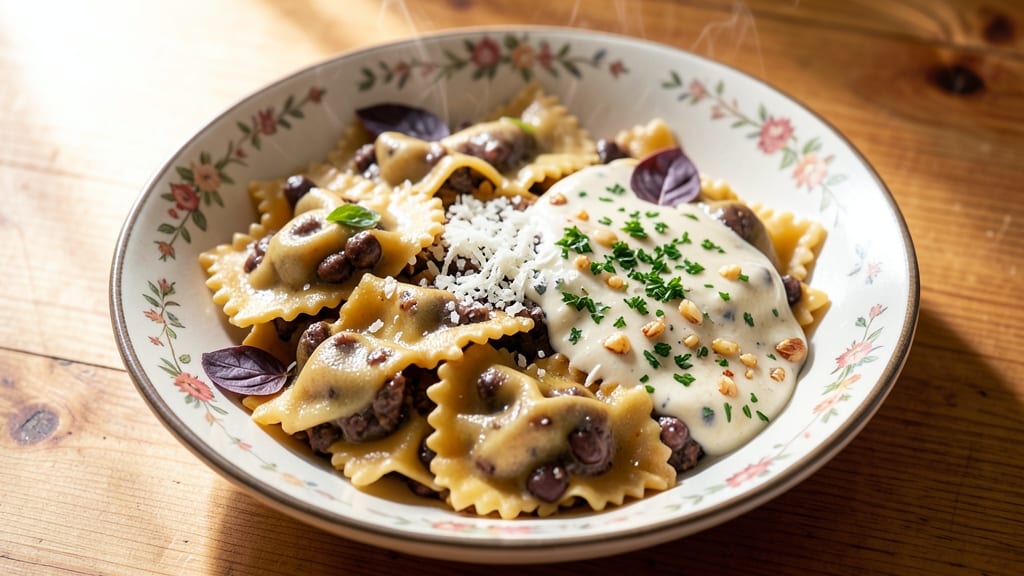
This black bean ravioli recipe delivers restaurant-quality stuffed pasta with a protein-packed filling and silky herby cream sauce. The secret lies in balancing tender dough with a flavorful black bean mixture—no special equipment needed, just patience and precision.
I've perfected this vegetarian dish over years of testing, ensuring the filling stays cohesive while the pasta cooks al dente every time.
The dough begins with simple ingredients—flour, eggs, and water—mixed to a smooth consistency that rolls out effortlessly. Meanwhile, the filling combines black beans, garlic, herbs, and just enough cheese to bind without overpowering.
The real magic happens when you seal the edges perfectly, creating ravioli that won't leak during cooking. This method transforms a weeknight into a gourmet experience without the fuss.
Once boiled to perfection, these ravioli transform into a luxurious dish when tossed in a velvety cream sauce infused with fresh herbs and a touch of lemon. The contrast between the earthy black beans and creamy sauce creates a balance that's both hearty and refined.
Serve with a simple arugula salad or a drizzle of marinara for an extra layer of flavor. The result? A vegetarian main course that feels indulgent yet wholesome.
What makes this recipe stand out is its versatility—pan-fry for crispy edges, bake for a golden finish, or keep it classic with a simple sauce. The filling's texture remains firm yet tender, and the dough achieves that perfect al dente bite.
Whether you're feeding a crowd or treating yourself, these ravioli deliver restaurant-quality results at home. Let's get started on creating your own chef-style pasta.
Ingredients for black bean ravioli
Simple ingredients transform into restaurant-quality black bean ravioli with perfect dough and flavorful filling.
| Ingredient | Amount | Notes |
|---|---|---|
| All-Purpose Flour 🌾 | 2 ½ cups | Sifted for smooth dough |
| Large Eggs 🥚 | 3 whole | Room temperature preferred |
| Cold Water 💧 | ½ cup | Gradually added to dough |
| Black Beans 🥣 | 1 ½ cups | Canned, drained and rinsed |
| Garlic Cloves 🧄 | 4 cloves | Minced for filling |
| Fresh Parsley 🌿 | ¼ cup | Chopped, for freshness |
| Fresh Basil 🌿 | ¼ cup | Chopped, for herby flavor |
| Vegetable Oil 🫒 | ½ tbsp | For dough rolling |
| Parmesan Cheese 🧀 | ½ cup | Freshly grated, for binding |
| Heavy Cream 🥛 | 1 cup | Full-fat for richness |
| Lemon Juice 🍋 | 1 tbsp | Freshly squeezed |
| Salt 🧂 | 1 ½ tsp | Kosher or sea salt |
| Ground Black Pepper 🌶️ | ½ tsp | Freshly ground preferred |
| Olive Oil 🫒 | 2 tbsp | For cooking ravioli |
The flour is key here—King Arthur or Caputo Tipo 00 if you want to splurge, but all-purpose works beautifully. Look for eggs with fresh, firm whites—they mix more smoothly. For the black beans, canned low-sodium varieties save time, but rinsing is non-negotiable. If you're feeling fancy, Trader Joe's or Whole Foods carry high-quality canned beans with better texture. The herbs should be bright green and vibrant—wilted parsley or basil will make the filling taste sad. Store your flour in a cool, dark place to preserve freshness for up to 1 year.
No fresh herbs? Dried oregano or basil at one-third the amount works in a pinch, though texture suffers. For a richer filling, swap half the black beans with mashed white beans or cooked lentils. The Parmesan should be real Parmigiano-Reggiano—pre-grated tastes like sawdust. If you're making this ahead, cook the ravioli and freeze them uncooked on a floured tray before transferring to a bag. The cream sauce can be made a day ahead and reheated gently—just add a splash of milk to loosen. For extra flavor, toast the garlic in olive oil for 30 seconds before mincing.
The dough keeps 2 days wrapped in plastic in the fridge or 3 months frozen. Once shaped, ravioli can be refrigerated 1 day before cooking or frozen 2 months on a floured tray. The filling ingredients hold 4 days in the fridge, but herbs lose potency after 2 days. For best results, cook ravioli fresh—frozen ones release filling more easily. Store cooked ravioli in the sauce to keep them moist for 3 days.
Why You'll Love This Recipe
- No-Fuss Dough: I swear, the dough comes together in five minutes—just flour, eggs, and water. No yeast, no resting, no stress. My kids even "help" dump the water while I mix.
- Garlic-Bean Magic: That crushed garlic and mashed black beans? It’s the secret weapon. Earthy, rich, and just enough bite to wake up every bite—like a hug from your favorite abuela’s kitchen.
- Weeknight to Potluck: Toss these in a pan with olive oil and cherry tomatoes for a quick dinner. Or freeze them—yes, freeze them—so you’ve got a fancy appetizer ready for game day. (Yes, even on a Tuesday night.)
- Pantry Powerhouse: Black beans and eggs stretch this into a meal that feels special without breaking the bank. Leftovers? Reheat in butter and sage for a second night that tastes just as good as the first.
Step-by-step instructions for black bean ravioli
Mastering homemade pasta starts with these precise techniques—perfectly balanced dough and flavorful filling.
Prepare the Black Bean Filling
Drain and rinse the 1.5 cups black beans thoroughly to remove excess starch. Mash them lightly with a fork in a medium bowl—you want a chunky texture, not a puree. Add the 4 cloves minced garlic, 0.25 cup chopped parsley, 0.25 cup chopped basil, 0.5 cup freshly grated parmesan cheese, 1.5 teaspoons salt, and 0.5 teaspoon ground black pepper. Mix well until fully combined and set aside.
This filling should hold its shape when packed into ravioli but still be flavorful enough to stand up to the creamy sauce. If the mixture feels too wet, add a spoonful of the 2.5 cups all-purpose flour to absorb moisture. The herbs and parmesan will give your ravioli that signature umami depth.
Make and Roll the Dough
In a large bowl, combine the 2.5 cups all-purpose flour and 1.5 teaspoons salt. Create a well in the center and add the 3 whole large eggs and 0.5 cup cold water. Gradually mix with a fork until a shaggy dough forms, then knead by hand for 8-10 minutes until smooth and elastic. Wrap in plastic wrap and rest for 30 minutes at room temperature.
After resting, divide the dough into 4 equal portions. Roll each portion into a thin sheet using a pasta machine, starting at the widest setting and gradually decreasing to the thinnest. Dust each sheet with flour to prevent sticking. The dough should be translucent with no visible flour specks—this ensures tender ravioli.
Assemble and Cut the Ravioli
Place one rolled dough sheet on a lightly floured surface. Using a 1-inch round cutter, cut circles for the ravioli shells. Spoon 1 teaspoon of black bean filling into the center of each circle, then top with another circle. Press gently around the edges to seal, trapping the filling inside. Repeat with remaining dough and filling.
For a professional finish, use a fork to crimp the edges of each ravioli, pressing down firmly to create a tight seal. If the filling leaks during assembly, adjust the amount—too much will burst the pasta, while too little will make the ravioli flat. Work quickly to keep the dough from drying out.
Cook the Ravioli
Bring a large pot of salted water to a rolling boil. Add the ravioli in batches, stirring gently to prevent sticking. Cook for 3-4 minutes until they float to the surface and are al dente. Reserve 1 cup of pasta water before draining.
While the ravioli cooks, heat 2 tablespoons olive oil in a large skillet over medium heat. Once the ravioli are drained, add them to the skillet along with 1 cup heavy cream and 1 tablespoon lemon juice. Toss gently to coat, adding 2-3 tablespoons of reserved pasta water if needed to loosen the sauce. Cook for 1-2 minutes until heated through.
Finish and Serve
Transfer the ravioli to warmed plates and garnish with additional chopped parsley and freshly cracked black pepper. The sauce should be silky and cling to the ravioli, with a bright lemon note balancing the richness of the cream. Serve immediately while the pasta is hot and the sauce is glossy.
This dish delivers a perfect balance of textures—tender pasta, hearty bean filling, and velvety sauce. The key is precision in assembly and timing, ensuring every bite is cohesive and flavorful. Enjoy your chef-style black bean ravioli with a crisp green salad or garlic bread to soak up the sauce.
Pro Tips For Making Black Bean Ravioli
- Mash Beans Properly: Drain and rinse the black beans first, then mash them with a fork until they’re mostly smooth but still have a few small chunks—this prevents the filling from turning mushy later. I learned this the hard way after making ravioli that collapsed in the pot like sad dumplings.
- Chill the Dough: Wrap the dough in plastic and refrigerate for at least 30 minutes before rolling—this firms it up and makes cutting cleaner shapes. I used to skip this, and the dough stuck to everything like glue.
- Use Cold Water for Pasta: Reserve some of the cold water from the dough-making process to boil the ravioli in—it keeps the pasta from sticking together and cooks more evenly. Trust me, your future self will thank you when the ravioli slide out neatly instead of clumping.
- Pre-Cook the Filling: Sauté the garlic and black beans with a pinch of salt and pepper before mixing into the dough—this builds flavor and reduces moisture in the filling, so your ravioli won’t get waterlogged. Sounds weird, but it works.
Regional styles of black bean ravioli
Italian Tradition
In Italy, ravioli is a staple of Northern cuisine, where it originated as a way to use seasonal vegetables and legumes. Traditional versions often feature ricotta or spinach, but black bean ravioli reflects modern adaptations using protein-rich ingredients.
The Emilia-Romagna region, famous for its pasta traditions, would likely make this with a touch of Parmigiano-Reggiano and fresh herbs—just like my recipe. 🌿
Mexican-Inspired Twist
For a bold fusion, swap the herby cream sauce for a smoky chipotle-tomato sauce with 1 tablespoon adobo sauce and ½ cup diced tomatoes. Top with avocado slices and cilantro for a Southwestern flair.
This version works beautifully with corn tortilla shells instead of pasta dough for extra texture. 🌶️
Southern U.S. Adaptation
In the American South, ravioli often gets a heartier treatment. Add ½ cup cooked diced ham or smoked sausage to the filling for a meaty twist. Serve with a Cajun butter sauce made by melting 4 tablespoons butter with 1 teaspoon Cajun seasoning and a splash of hot sauce.
This version feels like a cozy comfort dish. 🔥
Mediterranean Herb Variation
For a lighter take, infuse the cream sauce with 1 teaspoon dried oregano and ½ teaspoon red pepper flakes. Add ¼ cup crumbled feta cheese to the filling for a tangy contrast.
Garnish with toasted pine nuts and a drizzle of balsamic glaze for a Mediterranean-inspired dish that’s both vibrant and balanced. 💫
Vegetarian-Friendly Customization
To make this dish fully plant-based, replace the eggs in the dough with 2 tablespoons ground flaxseed mixed with 6 tablespoons water (let sit for 5 minutes). Use nutritional yeast instead of Parmesan in the filling and swap heavy cream for coconut cream in the sauce.
This version keeps all the hearty texture while being dairy-free. 🌱
Nutrition facts
Frequently asked questions about black bean ravioli
Can I make the dough without a pasta machine?
Roll the dough by hand using a rolling pin on a floured surface. Start with the thickest setting you can manage, then gradually roll thinner. For even thickness, fold the dough in thirds after each roll and repeat until you reach your desired thinness. The key is patience—work in small sections to prevent drying.
How do I prevent the filling from leaking during cooking?
Seal the edges tightly with a fork by pressing down firmly all around each ravioli. Use slightly less filling than 1 teaspoon per piece—overfilling causes leaks. Also, ensure your dough is rolled thin enough (1/16-inch) but not so delicate it tears during assembly. A quick test: press a ravioli gently—if it holds shape, it's sealed properly.
What's the best way to store leftover ravioli?
For uncooked ravioli, freeze them on a floured tray until solid, then transfer to a bag for 2 months. Cook from frozen by adding 1 minute to boiling time. Cooked ravioli keep 3 days in the fridge submerged in sauce, or freeze for 1 month. Reheat gently in sauce over low heat—never microwave dry ravioli.
Can I make this recipe gluten-free?
Yes! Replace the all-purpose flour with a 1:1 gluten-free flour blend (like Bob's Red Mill) and add 1 extra egg to improve elasticity. The dough will be more delicate, so handle it gently. For the filling, ensure your beans and herbs are certified gluten-free. Test small batches first—some blends absorb more liquid.
What if my dough cracks while rolling?
Cracking usually means the dough is too dry. Sprinkle a little cold water (1 teaspoon at a time) and knead gently to redistribute moisture. If cracks persist, let the dough rest 10 minutes longer before rolling. For extra insurance, cover it with a damp towel while resting to prevent surface drying.