
Main Courses
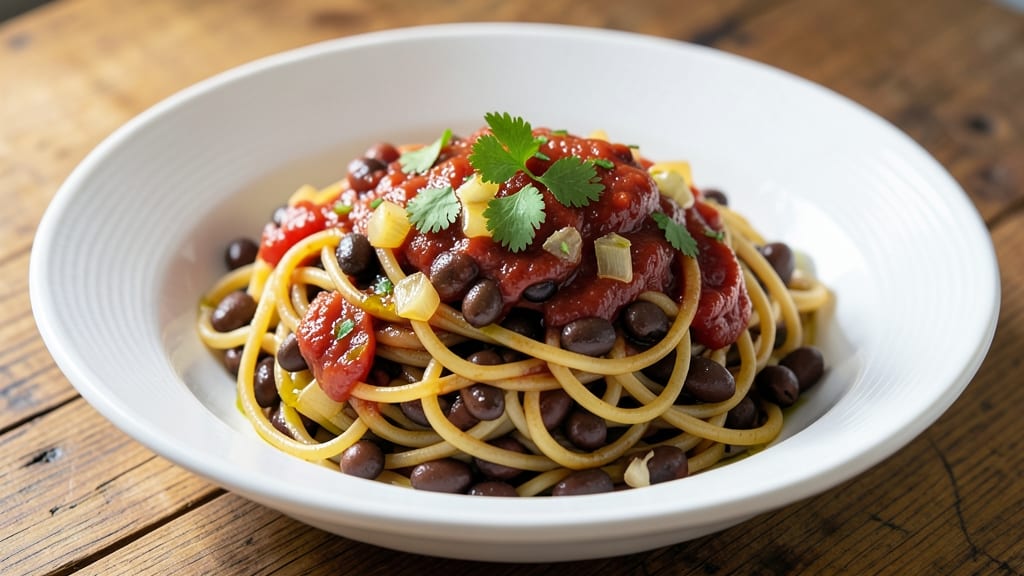
Black bean spaghetti noodles transform a simple pasta dish into a protein-packed, one-pot wonder that’s hearty enough for dinner but quick enough for weeknights. This recipe proves you don’t need meat to create a satisfying, flavorful meal—just black beans, spaghetti, and a few pantry staples. The secret lies in blending the beans directly into the cooking water, creating a creamy, savory base that coats every noodle without extra effort.
What makes this dish special is its simplicity and nutrition. With just 15 minutes of active prep and a single pot to clean, you’ll end up with a dish that’s rich in plant-based protein, fiber, and complex flavors.
The garlic, onion, and tomato paste build a deep, aromatic foundation, while a splash of pasta water ensures the sauce is silky and clings perfectly to the noodles. No fancy techniques—just smart ingredient choices.
The result is a bowl of spaghetti with a velvety, slightly chunky sauce that’s both comforting and satisfying. The black beans add heartiness and earthy depth, while the pasta absorbs the flavors into every bite.
This isn’t just a vegan dish—it’s a meal that rivals traditional pasta recipes in both taste and texture. Serve it with a sprinkle of fresh parsley, a drizzle of olive oil, and a side of garlic bread for the full experience.
Perfect for meal prep, this recipe scales easily for a crowd and tastes even better the next day. The one-pot method ensures minimal cleanup, making it ideal for busy evenings.
Whether you’re feeding a family or just craving a cozy meal, this black bean spaghetti delivers on flavor, convenience, and nutrition—without compromise.
Ingredients for black bean spaghetti noodles
Pantry staples meet plant-based protein for a one-pot pasta that's hearty, flavorful, and ready in 15 minutes.
| Ingredient | Amount | Notes |
|---|---|---|
| Black Beans 🫘 | 1 ½ cups | Canned, drained and rinsed |
| Spaghetti Noodles 🍝 | 12 oz | Regular or whole wheat |
| Yellow Onion 🧅 | 1 whole | Diced, medium size |
| Garlic Cloves 🧄 | 4 cloves | Minced, fresh preferred |
| Tomato Paste 🍅 | 2 tbsp | Smooth, no sugar added |
| Extra-Virgin Olive Oil 🫒 | ¼ cup | For cooking and finishing |
| Vegetable Broth 💧 | 2 cups | Low-sodium preferred |
| Lemon Juice 🍋 | 1 tbsp | Freshly squeezed |
| Salt 🧂 | 1 ½ tsp | Kosher or sea salt |
| Black Pepper 🌶️ | ½ tsp | Freshly ground |
| Fresh Parsley 🌿 | ¼ cup | Chopped, for garnish |
| Nutritional Yeast 🧀 | 2 tbsp | For cheesy flavor |
| Red Pepper Flakes 🌶️ | ½ tsp | Optional, for heat |
The black beans are the star here—Trader Joe's or Dixie brand cans work perfectly, but any low-sodium variety will do. Look for beans with good marbling and no signs of rust on the cans. The spaghetti? Barilla or De Cecco are reliable choices, but any good-quality dried pasta will work. Fresh garlic and onion are non-negotiable for that deep, aromatic base—Trader Joe's sells pre-minced garlic if you're in a rush, but nothing beats fresh. For the tomato paste, Mueller's or Rao's are solid options, but even the basic canned paste at the grocery store will suffice.
No fresh parsley? Dried parsley at one-third the amount works in a pinch, though it won't have the same brightness. Short on vegetable broth? Water plus 1 tsp bouillon powder gets you close. Want more richness? Stir in 2 tbsp cashew cream at the end. The nutritional yeast adds that cheesy depth—Bob's Red Mill is my go-to brand, but any store-brand works. For the red pepper flakes, Penzeys has great options, but the basic jar at the grocery store is fine too. If you're making this ahead, skip the parsley garnish until serving—it wilts fast when mixed in.
This dish tastes even better the next day—3-4 days in the fridge, no problem. For leftovers, store in an airtight container with a splash of pasta water to keep it creamy. Freezes beautifully for up to 3 months—just thaw and reheat with extra pasta water. I always make a double batch because it disappears fast. The one-pot method means minimal cleanup, but if you're really pressed, soak the pot in warm, soapy water immediately after cooking to prevent the sauce from setting.
Why You'll Love This Recipe
- Pantry Magic: I swear by this recipe when I forget to grocery shop. Black beans, onion, and tomato paste—those are my pantry’s secret weapons. Toss in garlic and you’ve got a meal that tastes like you slaved over it, even when you didn’t.
- Umami Bomb: The tomato paste and black beans create this deep, savory punch that clings to every noodle. Honestly, the first time I made it, I thought, “Wait, this is actually good?”—and then I went back for seconds.
- Double-Duty Dinner: Make a big batch and you’ve got lunch tomorrow or a quick fix after work. I’ll be real: my kids beg for this when they’re too tired to eat anything fancy. (Yes, even on a Tuesday night.)
- Budget Hero: This recipe costs me less than half what a jar of fancy pasta sauce would. The black beans stretch the flavor, and the noodles? Basic spaghetti that doesn’t break the bank. My wallet and my taste buds win every time.
Step-by-step instructions for black bean spaghetti noodles
This one-pot method delivers hearty, protein-rich pasta with minimal cleanup.
Sauté Onion and Garlic Until Transparent
Heat the 0.25 cup extra-virgin olive oil in a large pot over medium heat. Add the diced yellow onion and cook for 5-6 minutes until softened and translucent. The onions should release their natural moisture but not brown.
Add the 4 cloves minced garlic and cook for 30 seconds until fragrant. Watch closely—garlic burns quickly. Remove the pot from heat temporarily if it starts to darken. This aromatic base forms the flavor foundation for the entire dish.
Add Tomato Paste and Cook Until Darkened
Return the pot to medium heat and stir in the 2 tbsp tomato paste, spreading it evenly across the bottom of the pot. Cook for 2-3 minutes until the paste darkens slightly and releases its rich, concentrated flavor. This step deepens the sauce's complexity.
Be patient here—don't rush the process. The paste should develop a slightly caramelized edge while remaining smooth. This transformation is what transforms simple tomato paste into a flavorful base for your pasta.
Combine Beans, Broth, and Seasonings
Add the 1.5 cups drained black beans, 2 cups vegetable broth, 1.5 tsp salt, and 0.5 tsp black pepper to the pot. Stir well to combine all ingredients. The mixture should bubble gently as it comes to a simmer.
Bring to a gentle boil for 5 minutes to allow the flavors to meld together. This initial cooking phase ensures the beans and broth develop a cohesive taste before adding the pasta. Keep the heat at medium-low to prevent vigorous boiling.
Cook the Spaghetti Noodles
Add the 12 oz spaghetti noodles to the pot and stir gently to coat them with the bean mixture. Return to a simmer and cook for 10-12 minutes, stirring occasionally, until the pasta is al dente. You'll know it's ready when it floats to the surface and has a slight bite.
I like to check the pasta at the 10-minute mark—this ensures it doesn't overcook while absorbing all the flavorful liquid. If the mixture looks too thick, add ½ cup water to maintain the right consistency for tossing.
Finish with Lemon, Nutritional Yeast, and Garnish
Remove the pot from heat and stir in the 1 tbsp lemon juice, 2 tbsp nutritional yeast, and 0.5 tsp red pepper flakes (if using). The lemon brightens the dish while the nutritional yeast adds a cheesy, umami depth. Taste and adjust seasoning if needed.
Let the pasta rest for 2 minutes off the heat before serving. This allows the sauce to thicken slightly and the flavors to meld. Garnish with the 0.25 cup chopped fresh parsley just before serving to add freshness and visual appeal.
Pro Tips For Making Black Bean Spaghetti Noodles
- SOAK THE BEANS: I learned this the hard way—skipping the soak means your black beans will turn the sauce into a gluey mess. Drain, rinse, and soak them overnight (or at least 4 hours), then give them a quick rinse before cooking. The starch stays in the water, not your spaghetti.
- SWEAT THE ONIONS LOW: High heat caramelizes onions too fast, and you’ll end up with bitter bits instead of sweet, jammy flavor. Cook them over medium-low for 8-10 minutes, stirring occasionally, until they’re translucent and just starting to soften—this is where the real depth comes from.
- TOAST THE PASTE: Stir in that tomato paste over medium heat for 2-3 minutes before adding liquid. It’ll darken and deepen the flavor, giving your sauce a richer, more complex base than if you just dump it in cold. (Yes, it looks weird, but trust the process.)
- RESERVE PASTA WATER: Starchy pasta water isn’t just for emergencies—it’s the glue that keeps your black bean sauce clinging to the noodles. Before draining, scoop out ½ cup of the starchy water and toss it into the finished dish. It’ll make all the difference in texture.
Essential equipment for perfect results
Large Pot Essentials
A large, deep pot with a 4-6 quart capacity is non-negotiable for this recipe—I use my All-Clad Stainless Steel Dutch Oven (10-inch diameter) because it handles both the initial sautéing and pasta cooking beautifully.
The deep sides prevent splattering when adding beans and broth, while the stainless steel construction ensures even heat distribution. If you don’t own a Dutch oven, any heavy-bottomed pot with a lid will work—just avoid thin aluminum or nonstick pans that can’t maintain consistent heat. 🔥
Wooden Spoon Must-Have
Invest in a high-quality wooden spoon (I recommend OXO Good Grips) to stir the sauce without scratching your pot. Wood handles heat better than plastic and won’t melt or warp like silicone.
The spoon’s flat edge helps scrape up any stuck-on bits from the tomato paste, ensuring a smooth, even sauce. Avoid metal spoons—they can react with acidic ingredients over time and leave marks on your pot’s surface.
Fine-Mesh Strainer
A fine-mesh strainer is critical for rinsing your black beans thoroughly after draining. I use a collapsible silicone strainer from OXO because it’s easy to clean and fits perfectly over my sink. Rinsing removes excess sodium and prevents a metallic taste in your dish.
If you’re using dried beans, a pot with a built-in strainer (like a Cuisinart MultiCooker) can save you from extra steps.
Chef’s Knife and Board
For chopping the yellow onion and mincing garlic, a sharp 8-inch chef’s knife (like Mercer Culinary Genesis) paired with a cutting board (I prefer Teakhaus bamboo) makes all the difference. A dull knife leads to uneven cuts and unsafe handling.
If you’re short on time, pre-minced garlic from Trader Joe’s works, but fresh garlic adds unmatched depth. Always keep your knife sharp—it’s the secret to effortless prep. ✨
Measuring Spoons Set
Precision matters when measuring tomato paste, nutritional yeast, and red pepper flakes. My OXO Stainless Steel Measuring Spoons are my go-to because they’re durable and easy to read.
For the 2 tbsp tomato paste, use a small offset spatula to scrape every last bit from the can—those remnants pack serious flavor. A scale isn’t necessary, but if you’re feeling fancy, it ensures consistency for future batches.
Lid for Even Cooking
Your pot’s tight-fitting lid is key to trapping steam and cooking the pasta evenly. If your lid doesn’t fit snugly, prop it up slightly with a wooden spoon handle to allow excess steam to escape and prevent boiling over.
I also keep a small towel nearby to wipe away any condensation that drips back into the pot—it keeps the sauce clean and prevents dilution. A clear glass lid lets you monitor the pasta’s progress without lifting it constantly. 💫
Nutrition facts
Frequently asked questions
Can I use dried black beans instead of canned?
Yes, but you'll need to soak them first! For 1.5 cups of dried black beans, soak overnight in 4 cups water with 1 tsp salt. Drain and rinse before using. Cooking time will increase by about 45-60 minutes—add them to the pot after the onion and garlic step, then simmer until tender.
How do I make this dish creamier without dairy?
Blend ½ cup of the cooked black beans with ¼ cup water until smooth, then stir it back into the pot. For extra richness, add 2 tbsp cashew butter or ¼ cup coconut milk at the end. The lemon juice will balance any heaviness while keeping it plant-based.
Can I make this gluten-free?
Swap regular spaghetti for gluten-free noodles like brown rice or chickpea pasta. Cooking times may vary—check the package instructions and test for doneness at 10 minutes. The bean sauce will still cling beautifully to gluten-free pasta, though you might need ¼ cup extra water if the sauce seems too thick.
Why did my pasta turn mushy?
Overcooking is the most likely culprit! Check pasta at 10 minutes and remove immediately when it floats. If the sauce seems too watery, reduce heat to low and simmer uncovered for 2-3 minutes to thicken. Never cover the pot with a lid during the final cooking phase—steam makes pasta soggy.
What are good side dishes to serve with this?
Try crispy garlic-roasted Brussels sprouts or a simple arugula salad with lemon vinaigrette. For a hearty meal, add toasted sourdough bread with olive oil and sea salt. The earthy flavors of the black bean pasta pair beautifully with bright, fresh sides that cut through the richness.