
Salads
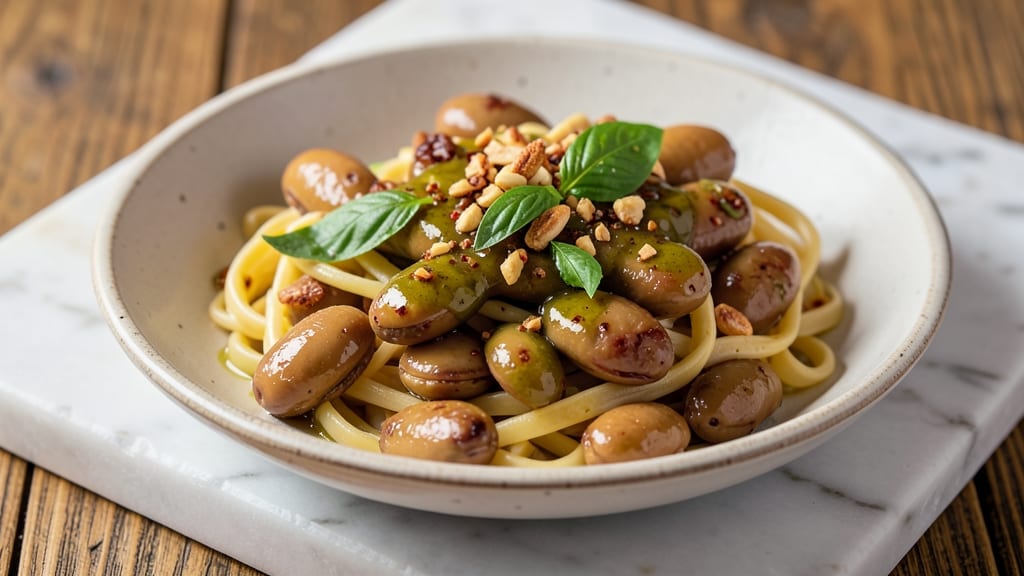
This broad bean pasta recipe transforms humble broad beans into a luxurious vegetarian dish with vibrant green pesto and nutty crunch. 💚 The secret lies in perfectly blanched beans blended into a silky sauce, brightened with fresh herbs and lemon, then tossed with al dente pasta for a restaurant-worthy meal that's surprisingly simple to make at home.
The recipe begins with blanching broad beans to remove skins effortlessly, then pureeing them with garlic, basil, and olive oil for a rich, earthy pesto base. Toasted pine nuts add textural contrast while keeping the dish vegetarian.
What makes this stand out is the balance of flavors—creamy from the beans, bright from lemon, and nutty from the toasted nuts—all coming together in a sauce that clings perfectly to the pasta.
By the time you're done, you'll have a plate of vibrant green pasta with tender broad bean pesto, crisp nuts, and fresh herbs scattered on top. The dish is hearty enough to satisfy as a main course but light enough for a summer meal.
Serve immediately while the pasta is still al dente and the sauce is warm, or let it sit for 10 minutes to allow flavors to meld even more.
This recipe works beautifully with any short pasta shape—penne, fusilli, or farfalle all provide excellent surfaces for the sauce to cling to. For extra protein, add grilled chicken or shrimp, but the vegetarian version holds its own with the robust flavor of the broad beans. Let's get cooking!
Ingredients for broad bean pasta
Earthy broad beans meet vibrant herbs in this vegetarian pasta with nutty crunch and bright lemon.
| Ingredient | Amount | Notes |
|---|---|---|
| Dried Broad Beans 🌱 | ½ lb | Soaked overnight, skins removed |
| Extra-Virgin Olive Oil 🫒 | ½ cup | High quality, fruity flavor |
| Fresh Basil Leaves 🌿 | 1 ½ cups | Packed, stems removed |
| Garlic Cloves 🧄 | 4 cloves | Peeled, rough chopped |
| Pine Nuts 🥜 | ½ cup | Toasted for richness |
| Lemon Juice 🍋 | 2 tbsp | Freshly squeezed |
| Short Pasta 🍝 | 12 oz | Penne or fusilli preferred |
| Vegetable Broth 💧 | 1 cup | Low-sodium preferred |
| Salt 🧂 | 1 ½ tsp | Diamond Crystal preferred |
| Black Pepper 🌶️ | ½ tsp | Freshly ground |
| Nutritional Yeast 🧀 | 2 tbsp | For cheesy flavor |
| Fresh Lemon Zest 🍋 | 1 tsp | Fine grated |
The broad beans are the star—look for dried at specialty stores or fresh at farmers markets in season. Soaking overnight softens them perfectly; Trader Joe's carries pre-soaked if you're short on time. Fresh basil should be bright green with no wilting—Whole Foods bulk bins offer the freshest. Toast your pine nuts in a dry pan until golden (about 3 minutes)—Costco sells them cheaper in bulk. The pasta needs to be al dente; De Cecco or Barilla are reliable brands for this texture.
No fresh basil? Dried oregano at half the amount works in a pinch, though it won't be as bright. Substitute walnuts for pine nuts—they're more budget-friendly and still add great texture. For a richer sauce, blend in 1/4 cup silken tofu with the beans. The lemon juice can be swapped for white wine vinegar at the same amount, though fresh lemon brightens the dish more. If you prefer a smoother pesto, strain through a fine-mesh sieve after blending. For extra protein, add white beans or chickpeas to the finished dish.
Toasted nuts lose crunch quickly, so store them in an airtight container at room temperature for up to 3 days. The pesto sauce keeps for 5 days in the fridge if covered with a thin layer of olive oil. Pasta reheats best in a dry pan with a splash of water—never microwave. For meal prep, cook the pasta and sauce separately, then toss when ready to serve. The lemon zest can be zested fresh daily or stored in the freezer for up to 1 month in a sealed container.
Why You'll Love This Recipe
- I swear by this trick: just toss the dried broad beans in boiling water for 10 minutes while I chop garlic—no pre-soaking, no fuss. They soften right into the sauce, blending seamlessly with the olive oil and basil.
- No-Soak Required: I swear by this trick: just toss the dried broad beans in boiling water for 10 minutes while I chop garlic—no pre-soaking, no fuss. They soften right into the sauce, blending seamlessly with the olive oil and basil.
- Earthy Crunch Contrast: That toasted pine nut crumble on top? It’s the secret weapon. The broad beans add a nutty depth, while the garlic and basil brighten it up—like a Mediterranean hug in a bowl. (Yes, even my basil-phobic husband asks for seconds.)
- Lunchbox Hero: Between us, this is my go-to for packed lunches. The flavors hold up for days, and the broad beans keep the dish satisfying—no sad, soggy pasta here. Just reheat, toss with a drizzle of olive oil, and you’ve got a meal that feels fancy.
Step-by-step instructions for earthy green pesto pasta
Here's how to transform simple ingredients into a vibrant, nutty pasta dish with bold flavors.
👨🍳 Step 1: Prepare the Broad Beans
Start by draining the soaked broad beans and gently rubbing them between your palms under cold water to remove any remaining skins. This step ensures a silky texture in your pesto. Transfer the peeled beans to a pot and cover with fresh water, then bring to a boil over medium-high heat. Once boiling, reduce to medium-low heat and simmer for 15-20 minutes until fork-tender but not mushy.
Drain the beans and let them cool slightly. While still warm, transfer them to a food processor along with the 4 cloves rough chopped garlic. Pulse until you have a smooth, vibrant green purée—this forms the base of your pesto. Set aside while you prepare the remaining ingredients. The beans should yield about 1 cup of purée, which will be the heart of your sauce.
🍳 Step 2: Toast the Pine Nuts and Cook the Pasta
Heat a dry skillet over medium heat and add the 0.5 cup pine nuts. Toast them for 3-4 minutes, stirring constantly, until they're fragrant and just beginning to turn golden. Watch them closely—they burn quickly. Remove from heat immediately and set aside to cool slightly. Their nutty aroma will intensify as they cool.
While the pine nuts toast, bring a large pot of salted water to a boil. Add the 12 oz short pasta and cook according to package instructions until al dente. Reserve 1 cup of pasta water before draining, then set the pasta aside to cool slightly. The starchy water will help emulsify your pesto later.
🥘 Step 3: Blend the Pesto to Perfection
In the food processor with the broad bean purée, add the 1.5 cups packed fresh basil leaves, 2 tbsp nutritional yeast, 1.5 tsp salt, and 0.5 tsp black pepper. Pulse until everything is finely chopped but not completely smooth. With the processor running, slowly drizzle in the 0.5 cup extra-virgin olive oil until the mixture becomes creamy and well combined.
Add the toasted pine nuts and pulse just until incorporated. Finally, add the 2 tbsp lemon juice and 1 tsp lemon zest, processing until fully combined. Taste and adjust seasoning if needed—you may want to add a pinch more salt or lemon juice to balance the flavors. The pesto should be vibrant green with a rich, nutty aroma.
🍽️ Step 4: Combine and Finish the Dish
Return the cooked pasta to the pot and add the 1 cup vegetable broth. Toss gently to coat the pasta with the warm liquid. Add the pesto to the pasta and toss vigorously for 1-2 minutes until everything is evenly coated. If the pesto seems too thick, add reserved pasta water 1 tablespoon at a time until you reach a silky, sauce-like consistency.
Serve immediately while the pasta is still warm. The dish should have a vibrant green color from the basil and broad beans, with visible pine nuts adding texture. Each bite should deliver a perfect balance of earthy broad bean flavor, nutty crunch, and bright lemon notes. Pair with a simple arugula salad for a complete meal.
Pro Tips For Making Broad Bean Pasta
- SOAK BEANS 12 HOURS: Dried broad beans need patience—skip the overnight soak and they’ll turn to mush. I learned this the hard way: 12 hours in cool water (changed once) guarantees tender beans without losing texture. No, you can’t rush it—even a pressure cooker won’t fix under-soaked beans.
- TOAST PINE NUTS LOW: Pine nuts burn faster than you’d think. Cook them in a dry pan over low heat, stirring constantly, until they’re just golden—about 3-4 minutes. Overcook them, and they’ll taste bitter; undercook, and they’ll feel raw. A splash of pasta water at the end keeps them crisp.
- PEEL BEANS AFTER COOKING: Peeling broad beans raw is a nightmare—messy and tedious. Cook them first, then rub them under cold water while wearing rubber gloves. The skins slip off like magic. (Yes, it’s weird, but it works.)
- SAVE THE BASIL WATER: When wilting basil for the sauce, don’t toss the water—it’s packed with flavor. Strain it, reduce it by half, and swirl it into the finished pasta. It’s the difference between a good sauce and one that tastes like it came from a jar.
Make-ahead tips for this recipe
Pesto Prep Ahead
Make the broad bean pesto up to 3 days in advance and store it in an airtight container covered with a thin layer of extra-virgin olive oil. This prevents oxidation and keeps the vibrant green color.
I like to store mine in a glass mason jar—it’s easy to shake and use later. When ready to serve, simply toss the pesto with freshly cooked pasta and reserved pasta water. 💚
Pasta Pre-Cooking
Cook the pasta 1 minute less than package instructions suggest, then drain and rinse briefly under cold water to stop the cooking process. Store the pasta in a sealed container in the fridge for up to 2 days.
When reheating, toss it in a dry pan over medium heat for 2-3 minutes with a splash of water to revive the texture. Never microwave—it makes pasta mushy!
Freezer-Friendly Tips
Freeze the pesto in ice cube trays for portion control. Once frozen, transfer the cubes to a ziplock bag and store for up to 3 months. Thaw overnight in the fridge, then blend briefly to restore creaminess.
For pasta, cook it fresh when serving—it reheats poorly after freezing. I always label my freezer bags with the date to track freshness. ❄️
Make-Ahead Assembly
Assemble the dish 1 hour before serving by combining the pesto with cold pasta and a splash of vegetable broth. Cover and let it sit at room temperature—this allows flavors to meld beautifully. Just before serving, reheat the pasta in a pan for 3-4 minutes until warm.
The lemon zest should be added fresh at the table for maximum brightness. This method keeps the texture perfect without overcooking.
Batch Cooking
Double the recipe and store components separately for easy weeknight meals. Cook 24 oz pasta and divide into two airtight containers. Make 2 cups pesto and freeze half. When ready to serve, cook fresh pasta, toss with thawed pesto, and add a pinch of black pepper for extra zing.
This strategy saves time and ensures restaurant-quality results every time. 💡
Lemon Zest Storage
Zest 2 lemons at once and store the zest in a small airtight container in the freezer for up to 1 month. This brightens multiple meals without extra effort. I keep a container in my freezer just for this purpose—it’s a game-changer for quick flavor boosts.
Add the zest fresh when serving to maintain the dish’s vibrant, fresh taste. 🍋
Nutrition facts
Frequently asked questions
Can I use fresh broad beans instead of dried?
Yes, but you'll need to adjust the preparation. Fresh broad beans require blanching in boiling water for 2-3 minutes to soften them, then peeling while warm. Use about 2 cups of shelled fresh beans to replace the 0.5 lb dried amount. The flavor will be slightly sweeter but equally delicious in your pesto.
What if I can't find pine nuts?
No problem! Substitute with walnuts or almonds for a different nutty texture. Toast them for 4-5 minutes until fragrant, then chop roughly before adding to the pesto. Walnuts add a slightly earthier flavor, while almonds keep the dish lighter. For extra richness, try pecans instead.
How do I fix overly thick pesto?
Add reserved pasta water 1 tablespoon at a time while tossing until you reach a creamy consistency. If you've already served it, simply stir in a splash of warm water or vegetable broth to loosen the sauce. The pesto should coat the pasta lightly without being gluey. For future batches, blend in an extra 1/4 cup silken tofu for a smoother texture.
Can I make this gluten-free?
Use gluten-free pasta like brown rice or chickpea-based noodles. The broad bean pesto remains completely gluten-free as long as you avoid cross-contamination. For extra protein, serve with grilled shrimp or roasted vegetables. Always check labels on nutritional yeast and broth to ensure they're certified gluten-free.
Why does my pesto turn brown?
Exposure to air causes oxidation, which makes pesto lose its vibrant green color and turn brown. To prevent this, always store pesto covered with a thin layer of extra-virgin olive oil in an airtight container. For the freshest color, make it the day you plan to serve. If it does brown, the flavor remains excellent—just add a pinch of lemon juice to brighten it.