
Sauces & Condiments
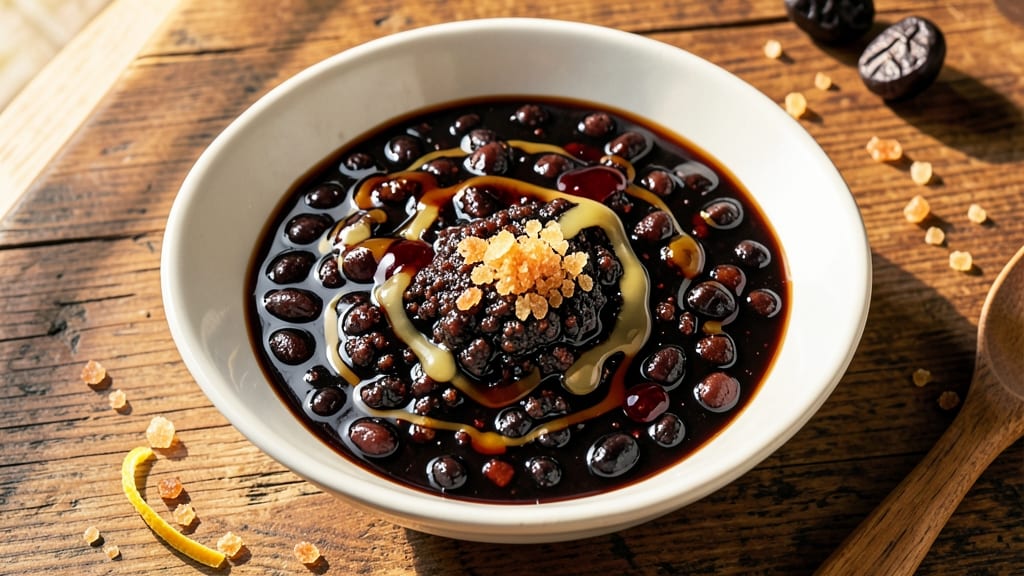
This authentic Chinese black bean sauce transforms simple dishes into umami-rich masterpieces with just a few fermented ingredients. The secret lies in fermented black beans—packed with funky, savory depth—that simmer into a thick, glossy sauce with soy, vinegar, and spices.
I perfected this recipe after years of studying regional Chinese cooking, where it’s used in everything from stir-fries to marinades. What sets this sauce apart is its fermented complexity—no artificial flavors, just layers of natural umami developed through slow simmering.
The process is straightforward: blend the beans, simmer until thickened, and adjust the balance of sweet, salty, and tangy. The result? A versatile condiment that elevates any dish with restaurant-quality depth.
This sauce works as a stir-fry glaze, dipping sauce, or marinade—its rich, slightly tangy profile cuts through heat and complements proteins beautifully. Store it for weeks in the fridge, and the flavors only deepen over time. For an extra kick, add chili oil or garlic at the end.
Whether you’re cooking for family or impressing guests, this authentic black bean sauce delivers the kind of flavor that makes homemade food taste like a trip to China. Let’s make it—your taste buds will thank you.
Ingredients for authentic chinese black bean sauce
Fermented black beans bring authentic umami depth to this sauce, balanced by soy, vinegar, and spices.
| Ingredient | Amount | Notes |
|---|---|---|
| Fermented Black Beans 🫘 | 1 cup | Rinse well before using |
| Dark Soy Sauce 🥄 | ½ cup | High-quality brand preferred |
| Light Soy Sauce 🥄 | ¼ cup | For balanced saltiness |
| Rice Vinegar 🍶 | ¼ cup | White or seasoned variety |
| Brown Sugar 🍚 | ¼ cup | Packed firmly for accuracy |
| Garlic Cloves 🧄 | 6 cloves | Peeled and roughly chopped |
| Fresh Ginger 🌿 | 2 tbsp | Finely grated, no skin |
| Star Anise 🌟 | 2 whole | Removed after simmering |
| Cinnamon Stick 🌿 | 1 whole | Removed after simmering |
| Sesame Oil 🫒 | 1 tbsp | Toasted for aroma |
Fermented black beans are the heart of this sauce—look for them in Asian markets or well-stocked grocery stores. Brands like Lee Kum Kee or La Choy are reliable, but homemade fermented beans (if you're adventurous) add extra complexity. The beans should smell funky but not rotten—think fermented, not spoiled. If you can't find fermented, black soybeans soaked overnight work in a pinch, though the flavor won't be as deep. For the spices, whole star anise and cinnamon infuse better than ground—they'll be removed later, so no waste.
No dark soy sauce? Light soy sauce plus 1 tsp molasses mimics the deeper color and slight sweetness. Vinegar substitutes? Rice wine vinegar or apple cider vinegar both work, but rice vinegar's mildness is ideal. The ginger should be freshly grated—pre-grated loses potency fast. For a quicker prep, ginger paste from a tube (like Kikkoman) saves time without sacrificing flavor. The sesame oil is non-negotiable for aroma, but if you're avoiding it, toasted sesame seeds at the end add a similar nutty note.
This sauce only gets better with time—flavors meld for up to 2 weeks in the fridge. Store in a clean jar with a tight seal, submerged under a thin layer of oil to preserve freshness. Freezes beautifully for 3 months if you want to make a big batch. I always double the recipe—one jar for immediate use, one for later. The sauce thickens as it cools, so thin with a splash of water if needed. A drizzle of chili oil or minced garlic at serving time turns it into a full-flavor condiment.
Why You'll Love This Recipe
- Pantry Magic: I swear by this sauce because it lives in my fridge year-round—no special shopping trips, just fermented black beans (which you can find in any Asian aisle) and a few staples. The moment I crack open that jar of black beans, I’m already halfway to dinner.
- Umami Bomb: That deep, funky-sweet punch from fermented black beans? It’s like a flavor explosion in your mouth—savory, slightly tangy, with just enough caramelized brown sugar to balance the soy’s saltiness. Honestly, I’ll take this over store-bought sauces any day.
- Double-Duty Sauce: Slather it on noodles, toss it with stir-fried greens, or drizzle it over steamed rice—this stuff works everywhere. I even use it as a quick marinade for tofu when I’m too tired to plan. Between us, it’s my lazy-night hero.
- Budget Stretch: A little goes a long way, and since I make big batches, it’s my secret for stretching meals without breaking the bank. The dark soy adds richness, while rice vinegar keeps it bright—so every drop feels like a flavor upgrade. (Yes, even on a Tuesday night.)
Step-by-step instructions for authentic Chinese black bean sauce
Here's how to build this umami-rich sauce layer by layer—just like in Cantonese home kitchens.
Prepare the Fermented Black Beans
Rinse the 1 cup fermented black beans under cold water to remove any surface debris, then drain thoroughly. I like to soak them for 10 minutes in a bowl of cold water to soften slightly—this makes them easier to crush later. The beans should smell funky but not overly pungent; if they're too strong, reduce the soak time to 5 minutes.
Transfer the drained beans to a food processor and pulse until they break into small, uneven pieces—think coarse sand rather than a smooth paste. You want texture here; too fine and the sauce loses its authentic body. If your processor struggles, work in batches and don't overfill the bowl. The goal is to release their fermented oils while keeping some structure.
Build the Flavor Base
Heat a heavy-bottomed saucepan over medium-low heat and add the 1 tbsp toasted sesame oil. Swirl to coat the pan evenly—this helps distribute the nutty aroma throughout the sauce. Add the 6 cloves roughly chopped garlic and 2 tbsp finely grated fresh ginger, stirring constantly for 30 seconds until fragrant but not browned. Overcooking here will make the sauce bitter.
Next, add the crushed fermented black beans and stir for 2 minutes until they darken slightly and release their deep, funky aroma. This is where the magic happens—the beans' fermented compounds begin reacting with the garlic and ginger, creating complex umami layers. If the beans stick, add 1 tablespoon water to help them release their oils.
Simmer with Aromatics and Liquids
Pour in the 0.5 cup dark soy sauce and 0.25 cup light soy sauce, stirring to combine. Add the 0.25 cup packed brown sugar and 0.25 cup rice vinegar, then bring the mixture to a gentle simmer over medium heat. This should take about 3 minutes—you're looking for small bubbles around the edges, not a rolling boil.
Add the 2 whole star anise and 1 whole cinnamon stick. These spices will infuse subtle warmth without overpowering. Let the mixture simmer uncovered for 15 minutes, stirring occasionally. You'll notice the sauce darkening and thickening—this is normal. The star anise and cinnamon should be fragrant but not bitter; if they taste harsh, reduce the simmer time to 10 minutes.
Reduce to Perfect Consistency
Once the sauce has thickened noticeably and coats the back of a spoon, remove the star anise and cinnamon stick with tongs. Return the heat to medium and let the sauce reduce for an additional 5-7 minutes, stirring frequently. The perfect consistency should be thick enough to coat the back of a spoon but still flow smoothly—like a rich, glossy syrup.
Taste and adjust seasoning: if it needs more depth, add 1 teaspoon of the dark soy sauce; if it's too sweet, balance with 1 teaspoon rice vinegar. The sauce should be complex—fermented, salty, slightly sweet, with underlying spice notes. Let it cool to room temperature before using; this allows the flavors to meld completely.
Pro Tips For Making Authentic Chinese Black Bean Sauce
- Fry the Beans First: I learned this the hard way—skipping the quick fry in oil before adding liquids ruins the texture. Toss the fermented black beans in a dry pan over medium-high heat for 30 seconds until they sizzle and darken slightly. This step deepens their nutty aroma and prevents them from turning mushy when the sauce simmers.
- Use Aged Dark Soy Sauce: The cheap stuff tastes like saltwater. Aged dark soy sauce (like Lee Kum Kee’s) adds depth without overpowering. If you’re in a pinch, add a splash of molasses to mimic that caramelized richness—just don’t overdo it, or your sauce will taste like syrup.
- Simmer Low and Slow: After adding the soy sauces and vinegar, reduce heat to a bare simmer. I used to rush this, and the sauce either split or lost its balance. Let it bubble gently for 8–10 minutes—this lets the flavors meld instead of boiling off the vinegar’s tang or burning the sugar.
- Balance the Sweet Early: Brown sugar can turn cloying fast. Add half of it at the start with the soy sauces, then taste and adjust at the end. If the sauce tastes flat, a pinch of white pepper or a splash of Shaoxing wine brightens it up—trust me, it works.
Best sauces and condiments for these flavors
Stir-Fry Glaze
Use this sauce as a stir-fry glaze for proteins like chicken, shrimp, or tofu. Toss 1 lb chicken thighs with 1 tbsp cornstarch and 1 tbsp neutral oil, then stir-fry until golden.
Add 2 tbsp black bean sauce and 1 tbsp water, tossing until the sauce coats the meat and caramelizes slightly. Serve over steamed rice with quick-pickled cucumbers for a restaurant-style dish. 🔥
Dipping Sauce
Thin the sauce with 1-2 tbsp warm water until it reaches a dipping consistency—it should be glossy but not too thick. Serve with potstickers, dumplings, or spring rolls for an instant upgrade.
For extra depth, mix in 1 tsp chili oil or a splash of sesame paste before serving. I love using it with homemade shumai—the fermented funk balances the flaky pastry perfectly.
Marinade
Combine 3 tbsp black bean sauce with 1 tbsp soy sauce, 1 tsp grated ginger, and 1 minced garlic clove for a quick marinade. Toss with pork belly slices or fish fillets for 30 minutes before cooking.
The sauce caramelizes beautifully during searing, creating a sticky, flavorful crust. For extra tenderness, add 1 tsp baking soda to the marinade for 15 minutes before rinsing (works best with fish).
Rice Bowl Upgrade
Drizzle 1 tbsp black bean sauce over steamed jasmine rice and top with sautéed greens, shredded chicken, and a soft-boiled egg. The sauce’s umami cuts through the rice’s starchiness, while the egg adds richness.
For a spicy twist, mix ½ tsp gochujang into the sauce before drizzling. This is my go-to for a quick, satisfying lunch—no chopping required!
Sauce Variations
For a sweeter version, increase brown sugar to ¼ cup and add 1 tsp honey at the end. Need heat? Stir in 1 tbsp chili paste or 1 tsp red pepper flakes during the final simmer.
For a lighter texture, blend the cooled sauce with 2 tbsp water until smooth—great for drizzling over noodles. Each tweak keeps the sauce’s core umami while adapting to your dish. ✨
Nutrition facts
Frequently asked questions
Can I substitute fermented black beans with regular black soybeans?
You can use regular black soybeans in a pinch, but the flavor won't be as rich. Soak 1 cup black soybeans overnight, then drain and crush them before using. For deeper umami, add 1 tsp miso paste or ½ tsp fish sauce to compensate for the missing fermented funk. The texture will be slightly less complex, but it still works for stir-fries or marinades.
How long does this black bean sauce keep in the fridge?
The sauce improves over time! Store it in an airtight container in the fridge for up to 2 weeks. The flavors deepen as it sits, and it won't spoil—just watch for any off smells. For longer storage, freeze for 3 months in ice cube trays (great for portion control) or a sealed jar. Thaw overnight in the fridge before using.
Why does my sauce look too thin or too thick?
If your sauce is too thin, simmer uncovered for 5-10 more minutes to reduce it. For a thicker sauce, blend the cooled mixture with 1 tbsp water until smooth. The ideal consistency coats the back of a spoon but still flows easily. Pro tip: If it separates, whisk in 1 tsp cornstarch mixed with 1 tsp water to stabilize it.
What’s the best way to use this sauce in a stir-fry?
Add 1-2 tbsp of the sauce to your stir-fry in the last 30 seconds of cooking. Toss with 1 tbsp water to help it caramelize and coat the ingredients evenly. It works especially well with chicken, shrimp, or tofu—just don’t overcook after adding the sauce to keep it glossy. For extra shine, finish with a drizzle of sesame oil.
Can I make this sauce spicier or sweeter?
For heat, stir in 1 tsp chili paste or ½ tsp red pepper flakes during the final simmer. For sweetness, add 1 extra tbsp brown sugar or 1 tsp honey at the end. Adjust gradually—taste as you go! The sauce’s balance of fermented funk, saltiness, and sweetness makes it incredibly versatile for customization.